

The Purple Flower That Hummingbirds Love But You'll Regret Planting
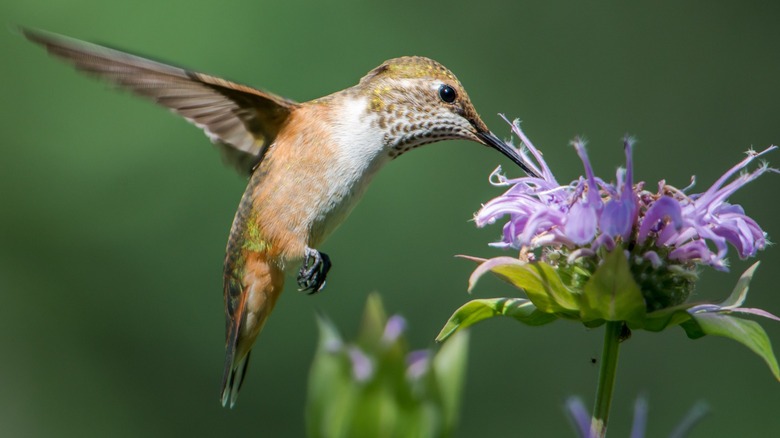
Creating an idyllic garden, complete with stunning hummingbird-attracting plants, can be a rewarding experience. And if you're looking to bring hummers to your yard, bright, trumpet-shaped flowers often do the trick. One example, Foxglove (Digitalis purpurea), is a flower that hummingbirds love for its tall spikes lined up and down with tubular flowers. The trouble is you might end up regretting this attractive, yet problematic, flower after you plant it. Also known as fairy caps and witches' gloves, foxglove is not native to the U.S. Rather, it is a wildflower common to Europe. Many gardeners add this plant to their cottage garden beds for a rustic addition, but it can be a decision you come to regret, due to its toxicity to humans, and its ability to self-seed and spread beyond your garden.
This unique flower is grown as a biennial or short-lived perennial, and is hardy in zones 4 to 9. Typically, you'll need to wait a full year after planting before you see any flowers. You can easily recognize the leaves of this flower from the dark green foliage forming a low rosette. The leaves grow to about a foot long with a downy feel on top. Its flowers, with colors ranging from purple to peach and white, bloom from late spring to early summer and dangle down along the flower spikes. Unfortunately, this whimsical-looking flower actually is not as sweet as it appears, and can be quite irritating (literally).
The dangerous nature of foxglove
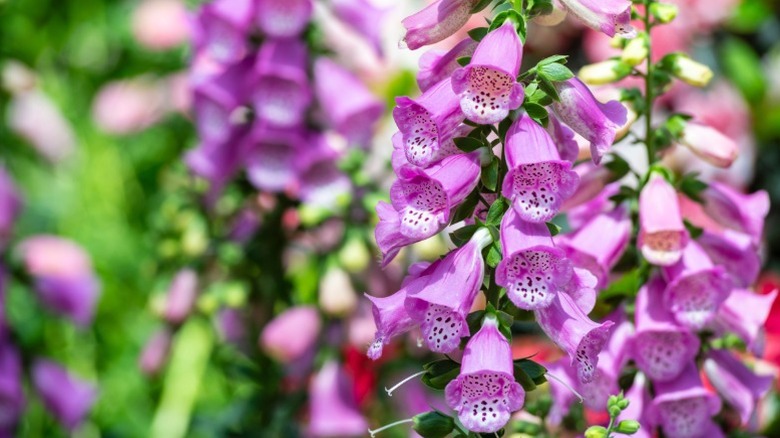
Foxglove is a popular plant for cottage gardens, with its lovely height and charm. But it's also a top choice to add to a poison flower collection. Some of its other common names allude to its dangerous properties, like dead man's bells and bloody fingers. All parts of the foxglove plant are a risk to humans and animals due to cardiac glycosides that can cause dizziness, vomiting, and even hallucinations. Inadvertently growing a toxic flower in your garden bed is one of the sneaky dangers of gardening you should be aware of. Take care where you plant foxglove to avoid any mishaps.
If you do decide to go forward with planting foxglove, take special precautions. You should never plant it where you think small children, pets, or livestock will potentially have access to it. The plant's lovely, bright flowers and dry berries attract the attention of children. Also make sure to handle it with care: There is evidence that even touching this plant could irritate the skin of sensitive individuals.
Skip the trouble of foxglove's insidious growth
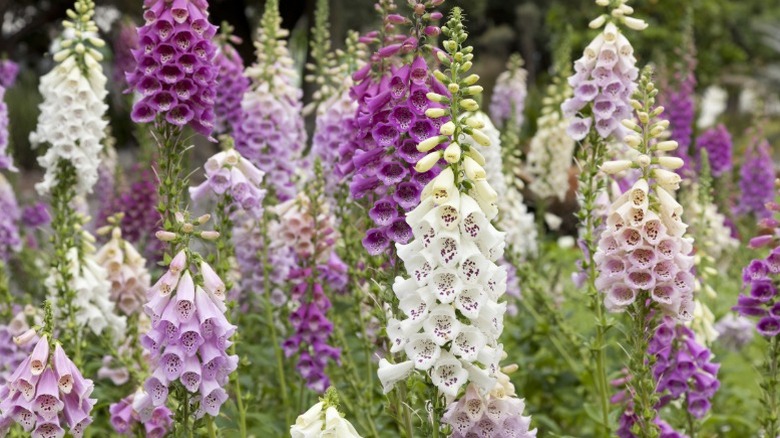
As foxglove is not a native flower, there are several U.S. areas where it has been declared invasive. But even in areas where it is not officially invasive, foxglove can become problematic. A vigorous type of plant, this species self seeds easily and is capable of spreading widely. If you are not careful, planting this aggressive flower can lead to large groupings popping up beyond where you initially planted.
Foxglove grows well in a variety of conditions, including a range of soil types. Once it starts self-seeding, it can colonize areas with ease. Gardeners find it is difficult to remove unwanted outcroppings of foxglove, once they've started growing. Because of its poisonous nature, it's never recommended to burn foxglove, as the smoke can be toxic. Ultimately, it might be safer and easier to not even bother growing problematic foxgloves if you want to attract hummingbirds. Instead try a fast-growing flower that'll turn your yard into a hummingbird haven, like lion's ear (Leonotis leonurus) or cardinal flower (Lobelia cardinalis).