

The Fragrant Tree That Pollinators And Birds Can't Get Enough Of
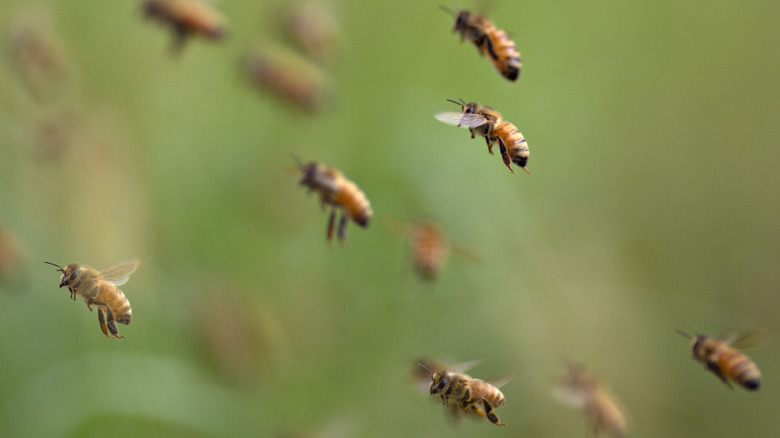
From bees to hummingbirds, pollinators are very welcom visitors to gardens and yards around the world. Whether you're striving to grow a budding vegetable garden or tending to a bounty of beautiful flower blooms, pollinators are an essential part of the process, carrying pollen from flower to flower. As a result, you may find yourself wanting to attract more pollinators to your yard. While you can create container garden combos designed for hummingbirds or create bee-friendly zones, you can also try planting this fast-growing and fragrant tree: the black cherry tree (Prunus serotina).
Also known as the wild black cherry or the rum cherry, the black cherry is a large tree native to North America. There are different varieties of this plant, with its largest variety growing as much as 110 feet tall. Black cherry produces beautiful, fragrant flowers that can leave your yard smelling like spring, all while attracting helpful pollinators and beneficial birds that can help your garden in other ways. Black cherry trees are also fairly easy to grow thanks to their hardiness, making them the perfect fuss-free addition to your beginner-friendly garden.
How to grow black cherry trees
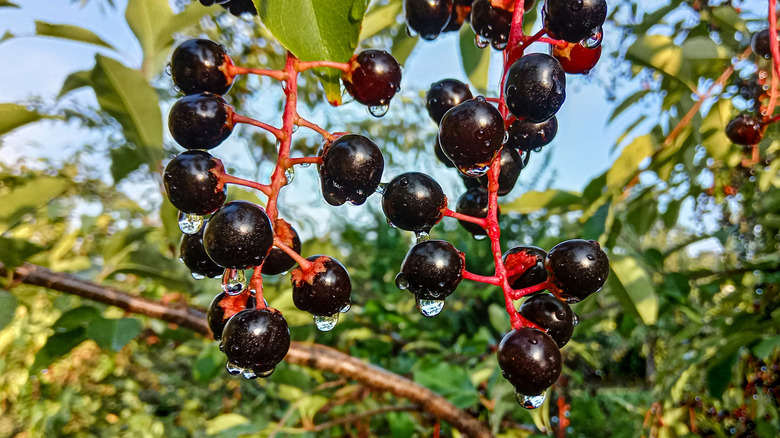
Overall, black cherries are hardy trees tolerant of many conditions. As a result, they can survive in many different yards and gardens. However, if you really want your trees to thrive, there are some soils they do best in. Black cherry trees are completely intolerant of heavy moisture. While they do still need water to grow, overwatering or standing water can be fatal. As a result, when picking the perfect place for your black cherry, you'll want to avoid areas known for flooding. You should also choose well-draining soil deep enough to accommodate healthy root growth.
Black cherry trees also grow well in slightly acidic soil, typically between pH levels of 5.0 and 6.5. While they can grow in alkaline soils, they will grow slower, and may die with the combo of alkaline soil and too much moisture. Along with not tolerating heavy saturation well, black cherry trees also need plenty of sunlight. As far as USDA grow zones go, the black cherry tree does best in zones 3 through 9.
What to know before planting a black cherry tree
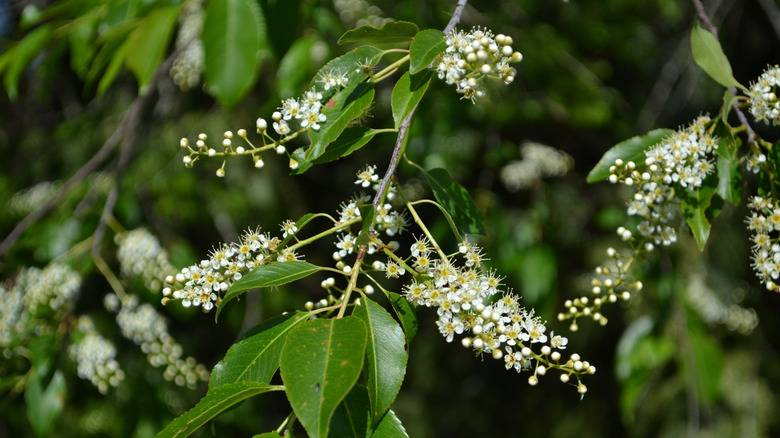
Black cherry trees can be a great addition to your yard, offering both aesthetic and functional beauty. After all, who doesn't want to enjoy the smell of fresh flowers while also watching a variety of birds and pollinators flit from flower to flower? However, before you take the steps to add this tree to your garden, there are two things to keep in mind.
First, it's important to be cautious about planting this tree in your garden if you have children or pets. Some parts of this tree — the fruit and the inner bark, which has a medicinal element — can be eaten. But much of it — particularly the pits and leaves — which contain dangerous levels of hydrocyanic acid. As a result, you should avoid foraging from this tree, as it can be toxic if the wrong part is ingested.
Black cherry trees can also attract tent caterpillars. While these are native and the black cherry is one of their primary food sources, their snacking can lead to defoliation, which can be an issue if it happens several years in a row. They can also travel from black cherry trees to dine on other trees around your yard, if they run out of black cherry leaves. There are mixed reviews about how damaging the impact of tent caterpillars can be on your black cherry. As a result, if you notice these little caterpillars weaving their tell-tale silk nest, you may want to pay extra attention to the health of your tree. Thankfully, as a native species, tent caterpillars have a variety of predators that can help keep their population in check.