

Fruit Trees You Can Grow In Pots If Space Is Tight In Your Yard Or Garden
We may receive a commission on purchases made from links.
Planting a fruit tree is one of the best ways to attract bees to your garden. When they visit, they're likely to pollinate a range of nearby flowers, including those that transform into berries, watermelons, and other treats. Many fruit trees can add visual interest to your landscape, too. For instance, Bing cherry trees (Prunus avium) produce fragrant white flowers in early spring, followed by plump red fruit in the summer. Growing fruit trees in your yard also lets you enjoy produce at peak freshness and freeze part of your crop for later, taking a bite out of your grocery bill. The main challenge many would-be growers face is space. Though full-sized fruit trees need at least 18 feet in all directions to develop properly, having an orchard-sized property isn't a requirement for growing peaches, oranges, and other produce-aisle superstars. If you have a tiny yard or even just a patio, look for dwarf and semi-dwarf trees designed to thrive in containers.
In addition to fitting in small areas, potted trees can be moved from place to place. This is a huge benefit if you decide you'd like your tree to live somewhere else or threatening weather, like hail or high wind, is on the horizon. Plus, quite a few container-planted fruit trees are content indoors all winter in regions that experience frigid temperatures. In other words, it's possible to enjoy homegrown citrus fruits (usually more at home in Florida or California) in Minnesota, Wisconsin, and other states no one would describe as tropical.
Tiny mandarin oranges are comfortable in small spaces

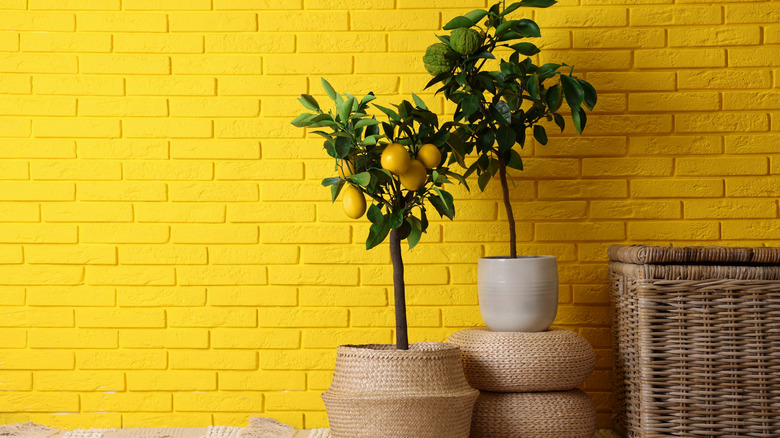
Mandarin oranges (Citrus reticulata Blanco) are an ideal on-the-go snack thanks to their small size and easy-to-peel skin. Their trees are perfect for pots since they're naturally tiny, typically reaching heights of 4 to 6 feet. Planting a mandarin tree in a container lets you grow it far from Florida, California, Arizona, Louisiana, or south Texas, the areas in the U.S. where it can thrive outdoors year-round. Though mandarin trees tend to excel in 15-gallon planters, some tolerate containers as small as 5 gallons.
When potted fruit trees are grown outdoors, they tend to need more water than their in-ground counterparts. Despite this fact, be sure to avoid overwatering, one of the most common mistakes gardeners make. If your orange tree sits in stagnant water, it may develop root rot, which can shrink fruit yields. Use a pot with drainage holes and potting soil that doesn't retain excess water to help prevent this problem. Whether the tree is inside or outside, give it full sunlight every day and 10 oz. of a fertilizer such as Espoma Organic Citrus-tone 5-2-6 each February, May, and August.
If you like mandarins but can't find a potted tree that fits the bill, consider growing kumquats (Fortunella spp.) or calamondins (Citrus x microcarpa). Both fruits' trees are content in containers placed in the sunniest spot available. Meiwa kumquat trees offer sweet-tart fruit with edible skin and no seeds. Calamondins, which are hybrids of kumquats and mandarins, taste much like oranges. Their trees can add pops of color to your home or landscape since fruit often stays on the branches for months.
Many lemons and limes will happily grow in pots
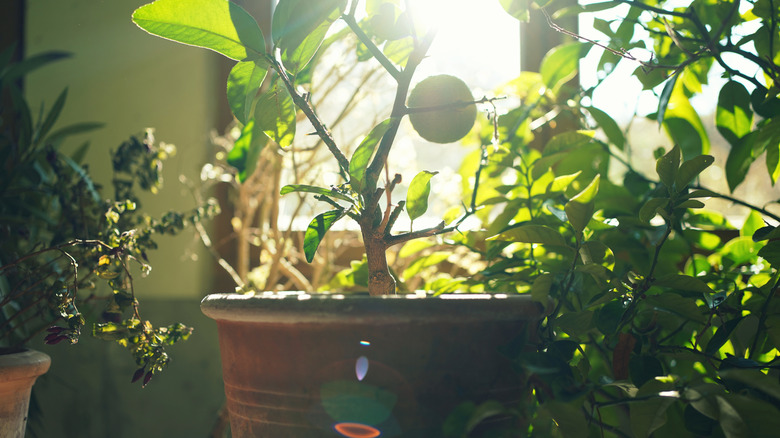
Many gardeners fall head over heels for lemon trees (Citrus x limon) because they rarely grow taller than 20 feet. Jonathan Scott of HGTV's "Property Brothers" says lemon trees are his go-to yard plants for this very reason. What's more, lemon trees produce fruit that smells terrific and has tons of culinary uses. Though these plants are a common sight in California yards, you don't have to live in the Sunshine State to grow them at home. A potted Meyer lemon, which is technically part lemon and part tangerine, can live outside all year in USDA hardiness zones 8 through 11 and every season but winter elsewhere. This cheery plant grows to a height of just 4 to 6 feet when it calls a container home. Mature Meyer lemon trees perform well in 5-gallon pots, but a sapling may be fine in a pot as small as 1 gallon. Like mandarin trees, Meyer lemons dislike overwatering and are perfectly happy in standard potting soil. The fruit is ripe (it takes almost a year) when it looks slightly orange.
If you prefer limes to lemons, try growing a potted key lime tree (Citrus x aurantiifolia). This shrubby plant produces white or purple flowers and green or gold fruit throughout the year. It's also self-fertile, as most other citrus trees are, so it needs no pollination partner. The more direct sunlight this tree gets, the greater your chances of receiving lots of juicy, aromatic fruit. Gardeners in zones 9 through 11 can keep a key lime tree outside indefinitely, but those in cooler climates must bring it indoors before freezing temperatures arrive.
Patio peach trees have beautiful flowers and tasty fruit
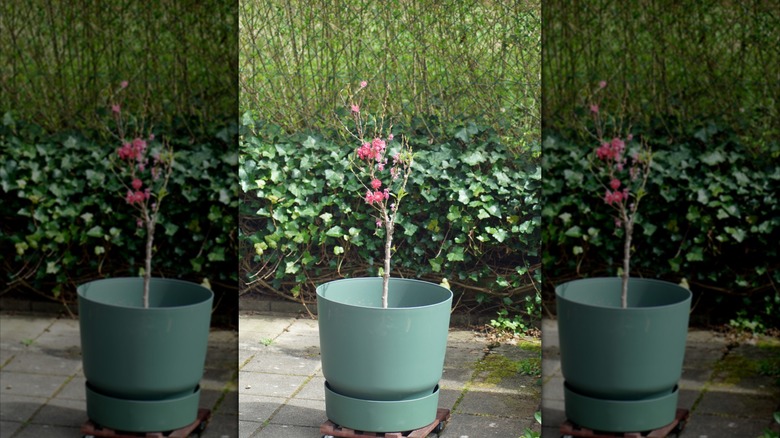
A potted peach tree (Prunus persica) is one of the simplest upgrades for a backyard patio, brightening the space with pink or red flowers and attracting butterflies such as the Eastern Tiger Swallowtail. Since the tree's blossoms are the precursor to fruit, protecting them from frost is essential. This is easiest to do when you have a small, potted tree that you can move as needed. If many of the tree's flowers stay healthy throughout the spring and get visited by pollinators, you're likely to have a bounty of fuzzy fruit before summer's end.
Several types of dwarf peach trees are bred for growing in patio containers. Empress is a good fit for USDA hardiness zones 5 and 6 because it needs to spend 850 hours in chilly temperatures each year. This tree typically reaches a height of 6 feet and offers ripe fruit in the middle of the summer. Southern Sweet is better suited for the warmer climates of zones 7 and higher. Its fruit has a reputation for being especially scrumptious.
If you'd like ripe peaches as soon as possible, consider a Bonanza peach tree for your patio or balcony. In zones 5 through 9, its red-skinned fruits are often ready in late spring. This 6-foot plant produces loads of them as long as it chills for 400 hours during the winter. Want an even shorter tree? Consider Bonfire, which thrives outdoors in zones 5 through 8. Full-grown specimens tend to be 4 to 5 feet tall. Though the fruit Bonfire produces isn't very big, the tree's leaves are a brilliant shade of burgundy.
Dwarf cherry trees are ideal for container gardens
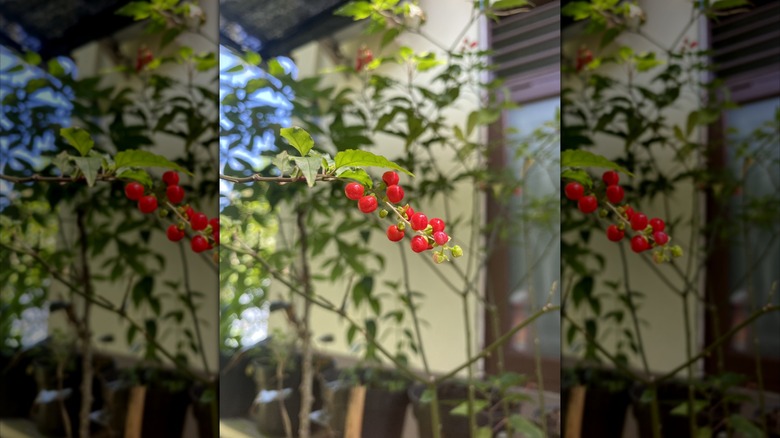
Like peach trees, cherry trees are known for both their beautiful blossoms and their flavorful fruit. A range of dwarf cherry trees are well suited for containers that you can keep in nearly any spot that receives at least 6 hours of direct sun exposure. If space is extremely limited, look for a self-pollinating cultivar so you only need one tree to produce a full cherry harvest. Also avoid ornamental varieties that flower but don't set fruit.
If you plan to grow a single cherry tree, you'll need to choose between sweet and tart varieties. Eager to make pies or jams with your fruit? Consider a tart cherry tree for a patio pot. North Star is a good choice if you want fresh cherries as fast as you can get them. This cultivar often makes fruit as soon as the year after it's planted. Best suited for planting in USDA hardiness zones 4 through 8, North Star typically reaches a height of 10 to 12 feet. Another tart cultivar, Wowza!, shares many of the same features, except it's 5 to 8 feet tall.
Hoping for lots of sweet, juicy fruit you can eat right from your tree? Sweetheart can make your cherry-flavored dreams come true in zones 5 and up. It also offers pretty white flowers and a container-friendly height of 7 to 10 feet. Tehranivee produces deep-red fruit and comes in a mini-dwarf size whose typical height is 8 feet. This cultivar thrives in zones 5 and higher. Or, try Carmine Jewel, a self-pollinating variety whose fruit is both sweet and tart. It is a low-maintenance tree, and excels as far north as zone 3.
Grow avocados in cool climates with some help from pots
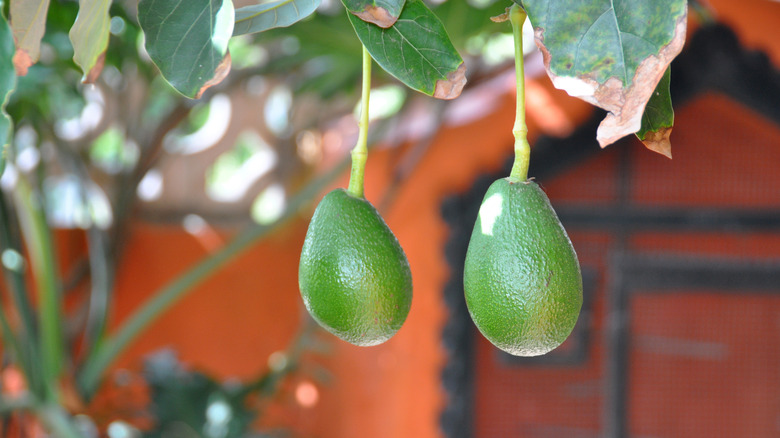
Believe it or not, you can grow avocados (Persea americana) in cool climates if you choose a dwarf variety that appreciates container life. The container that holds 15 to 25 gallons is ideal for these trees and their long taproots, so you may want to invest in a Cosco Shifter folding hand truck or a similar tool. This will make moving your tree indoors much easier if you live in USDA hardiness zone 8 or lower.
The Little Cado (or Wurtz) cultivar is easy to grow in a pot since it reaches a height of around 10 feet. It's also a rare self-pollinating avocado tree, which means you can plant just one and enjoy a bounty of buttery fruit. This variety even resists chill-induced damage as long as the thermometer doesn't drop below the freezing. To be safe, move Little Cado indoors when the air temperature is about 40 degrees Fahrenheit.
No matter which type of avocado tree you choose, keep it outdoors as long as possible, in a spot that receives 8 hours of daily direct sunlight but minimal wind. If you bring it indoors for the winter, placing it near a grow lamp can fulfill its light requirements. Consider planting your avocado tree in potting soil designed for citrus trees, and give it one nutrient boost in the spring and another in the summer. If magnesium is all that's needed, Epsom salt may help your avocado tree thrive. Otherwise, try a citrus-specific mix such as Down to Earth organic 6-3-3 fertilizer. Also be sure to water your tree anytime the soil's top 3 inches feel dry.