

Martha Stewart Loves This Stunning But Hard-To-Grow Flower

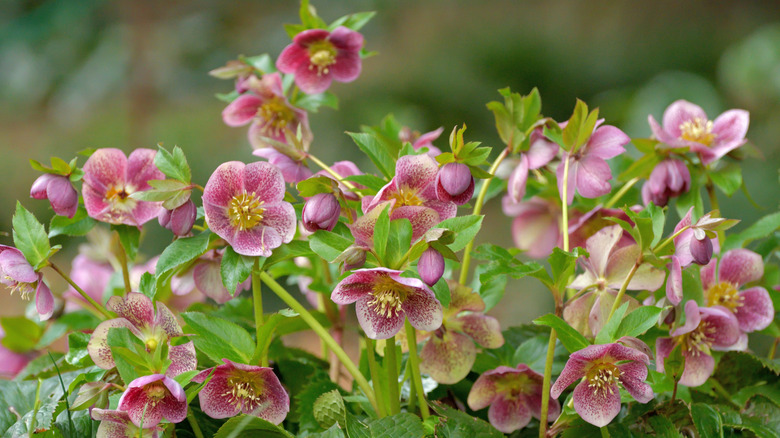
At first glance, hellebores (Helleborus spp.) don't seem terribly fussy. These flowering evergreens thrive in a wide range of USDA hardiness zones — most in zones 4 through 9, plus a handful as far north as zone 3 — and rarely experience insect or pathogen problems. Nevertheless, they have a reputation for being hard to grow, in part because their foliage can suffer in frigid weather. This hasn't deterred green-thumbed celeb Martha Stewart from cultivating them. In fact, hellebores are one of her favorite types of flowers. "Hellebores come in such an artful array of colors, markings, and formations, it's hard not to love these fascinating perennials," she explained on The Martha Blog. Often called Lenten roses, these clumping plants debut their blossoms in late winter or early spring and are a perennial that brightens shaded gardens in the summer. Most of the time, their flowers sport charming shades of pink, red, purple, cream, white, or green. A few types even flaunt black petals.
Hellebores' colors are just part of their appeal. These plants typically achieve heights of 12 to 18 inches, and their flowers resemble cups that are 2 to 3 inches wide. The petals, called sepals, stay attached to the plants throughout the growing season, providing months of visual interest. Some cultivars' flowers are supersized since they have extra sets of sepals. These big, fluffy blossoms are prized in the world of floral arranging. The flowers also nod, infusing your garden with personality. Home gardeners often grow hybrid hellebores that flower about two years after sprouting from seeds. In general, these stunners have lengthy lives if you know how to handle their quirks.
Meeting the demands of your hellebores
You can succeed at growing hellebores if you study their needs and meet them consistently. When planting hellebores, provide rich, well-draining soil with a neutral or mildly alkaline pH level. Establish a regular hydration schedule to deliver the dampness they crave, but keep an eye out for pooling water since it raises the risk of root rot. Mulching can help regulate the moisture level of your hellebores' soil. Tree bark and other organic materials are the best types of mulch for a garden filled with hellebores. Just make sure to avoid mulch mistakes that can ruin your garden – for instance, letting mulch touch hellebores' stalks, which promotes disease.
Choose a planting site you're confident will be your hellebores' forever home, as these plants don't fare well when moved. Since hellebores require partial shade during the hottest parts of the year and full sun during the cold season, consider planting them beneath trees that shed their leaves each fall. On her blog, Martha Stewart suggests placing them "on slopes or in raised beds in order to see their flowers." Sheltering your hellebores from icy winds – with a large tree trunk, for example — can minimize the leaf damage they often experience during wintertime. Give each specimen a generous 18 to 24 inches of space between itself and each of its neighbors so crowding isn't an issue. To encourage optimal flowering, place the plants' crowns near the soil's surface. Keep hellebores away from children and pets since they are toxic if eaten, and wear gloves when caring for these plants because they secrete a substance that can cause skin reactions.