

The Gorgeous Flower That'll Fill Your Hanging Planters With Bell-Shaped Blossoms
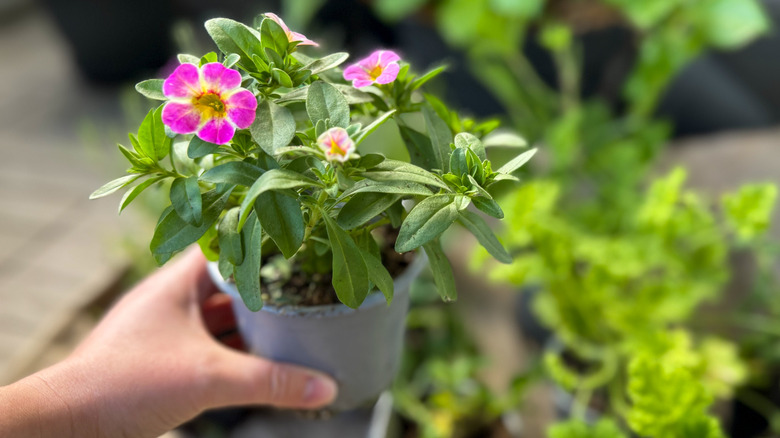
Incorporating hanging plants in your garden has a bevy of benefits. For starters, it maximizes space, adds visual interest, and offers a different perspective. Trailing plants, or spillers, especially, pull the eye from the ground up to elevated beauty. One plant in particular grows long and full, is easy to maintain, and comes in a variety of gorgeous, colorful blooms. Calibrachoas, commonly called million bells or trailing petunias, will bloom to be the 'bell' of the ball in your backyard.
Calibrachoa is a member of the Solanaceae family, also known as nightshade, and flowers from mid-spring to first frost. In fact, calibrachoa is a fuss-free plant for gardening beginners: It's a colorful plant that thrives in a sunny garden. Million bells do best in long hours of direct sun, but can still bloom beautifully in light shade, especially in hotter months. They're resistant to disease, deer, and insects, yet they invite lovely pollinators, such as hummingbirds and butterflies.
The calibrachoa flower resembles tiny petunias, and blooms showy, bell-shaped blossoms that range in bright colors. You'll find vibrant variants such as red, pink, magenta, yellow, bronze, blue, violet, and white, among others. They can mound at the tops of planters up to 6 or 7 inches, and the trailing flowers cascade over the side up to 3 or 4 feet long.
How to grow and maintain your calibrachoa
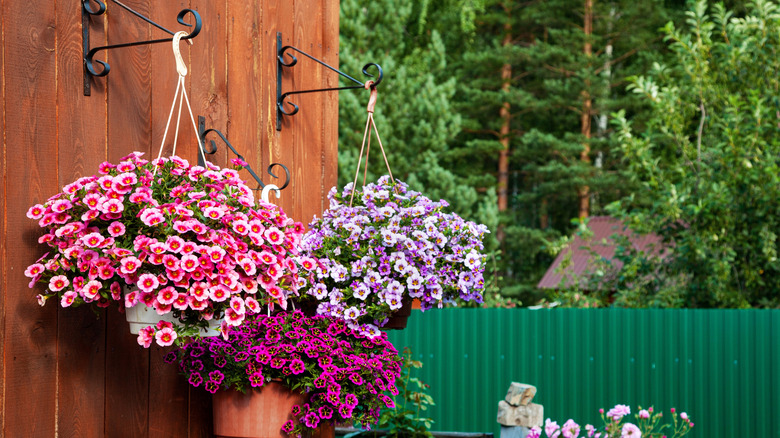
Calibrachoa love hanging baskets, such as from shepherd's hooks, but also do well in window boxes and as part of a hummingbird-friendly container garden. They would also flourish in a stunning plant wall for your backyard. Most folks grow calibrachoa as an annual, but in zones 9 to 11, they are considered to be tender perennials, tolerating some frost.
Plant after the last frost, and maintain the soil at a temperature warmer than 60 degrees Fahrenheit to keep them happy. The soil needs to be well-draining: Calibrachoa doesn't like wet feet, meaning wet roots. While these plants are easy to care for, they are heavy feeders, so fertilize regularly and take good care of them if you want beautiful bloom production.
One big benefit of this beautiful bloomer is that they are self-cleaning and require no deadheading. That means you don't have to prune faded flowers to encourage new growth. Calibrachoa thrives all summer and doesn't wane like its petunia relative. When looking for beautiful calibrachoa companions, pair with other calibrachoa variants or plants such as nemesia, water hyssop, and Celosia.