

One Thing To Keep In Mind Before You Start Planting Flower Seeds
We may receive a commission on purchases made from links.
Picture this: you've spent hours researching the right humidity and soil, and you made sure to pay attention to your USDA zone. Somehow, your seeds still failed to germinate. Unfortunately, this is a common outcome for many new gardeners, and it all boils down to one simple mistake: not keeping light requirements in mind. While you may be familiar with plants needing different levels of light throughout the day, seeds also vary in their need for light. For example, petunias, impatiens, lobelia, and even snapdragons all require light for a successful germination. Meanwhile, periwinkle and pansy seeds need to germinate in the dark.
Because of seed-specific light requirements, one of the most common mistakes beginner gardeners make is growing all their seeds with the same exposure. Errors like scatter-sowing pansies without any coverage or deeply burying snapdragons can hinder their growth through inadequate lighting, leaving your garden bare when it comes time to transplant successful seedlings.
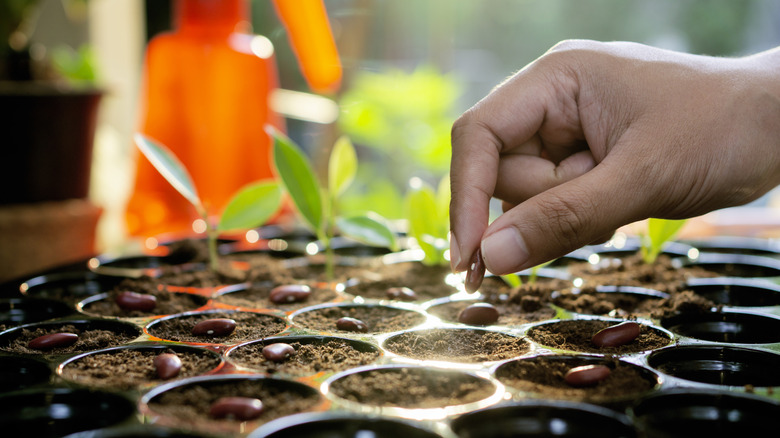
To prevent light from taking a toll on your garden, make sure to learn about the light requirements for your seeds before sowing. For seeds that require light, scatter-sowing them on the surface can give them the exposure they need, especially when paired with a bright spot. For seeds that prefer the dark, opt for deeper burying or even a cover on your seed-starting tray. You should also pay attention to how deep your seeds should be planted for the right lighting.
How to ensure your plants get enough light
Whether you're trying to help certain seeds germinate or grow thriving flowers, getting enough light for your plants is essential. Thankfully, there are plenty of practical ways to meet the lighting needs of your flowers.
If you're like many gardeners and start your seeds indoors, then windows can be one of the best ways to get enough sunlight for your plants — depending on your room's orientation. South-facing windows provide ample full direct light near the window itself, while the rest of the room is filled with indirect light. This is opposite of north facing windows, in which the light nearest to the window is indirect and the rest of the room has low light. For east and west windows, the levels of light fluctuate throughout the day, with east windows sporting bright light in the morning and west doing so in the afternoon.
If you live in an area with low sunlight or want a consistent set up that isn't dependent on the sun, you may also opt to invest in grow lights. Grow lights mimic natural light, helping your plant perform photosynthesis when sunlight isn't readily available. Although sunlight is still the best light source for plants, artificial light sources like the GooingTop LED light are great for supplementing your plant's needs.