

Watering Tips That'll Help Your Grass Seed Thrive In The Heat
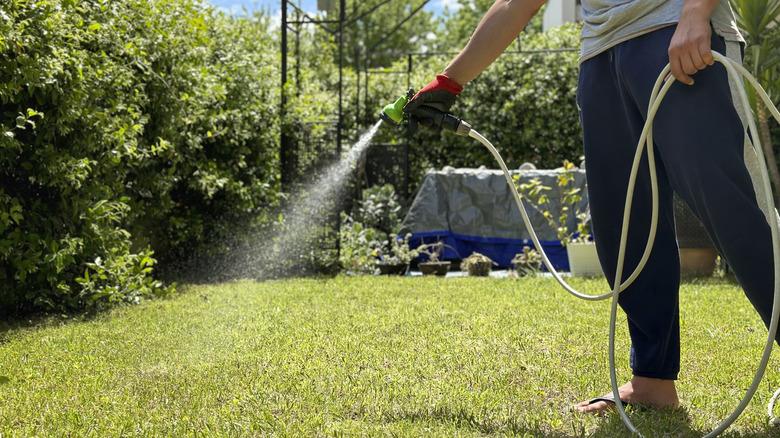
Nurturing newly sown grass seeds is a bit different than caring for an established lawn. For example, you should think twice before watering your lawn every day if your grass is well beyond the seedling stage. Doing so can leave grass roots waterlogged and lead to your lawn's demise. Grass seeds, meanwhile, may need to be watered up to four times a day during hot weather. According to Bryan Clayton, CEO of GreenPal, this can help the seeds stay at the right temperature for germinating, forming roots, and more.
"Keep the watering sessions short and frequent — two or three times a day if it's really hot," Clayton told Outdoor Guide in an exclusive interview. The goal is consistent moisture, which helps the seeds stay cool. Clayton says that "a very thin layer of straw mulch works wonders" when it comes to keeping your lawn's soil damp. If other parts of your yard have mature grass that you mow regularly, they can provide mulch for your grass upstarts. In fact, a light sprinkling of grass clippings can help protect seedlings of many types of plants.
The best time to water your grass seedlings in summer
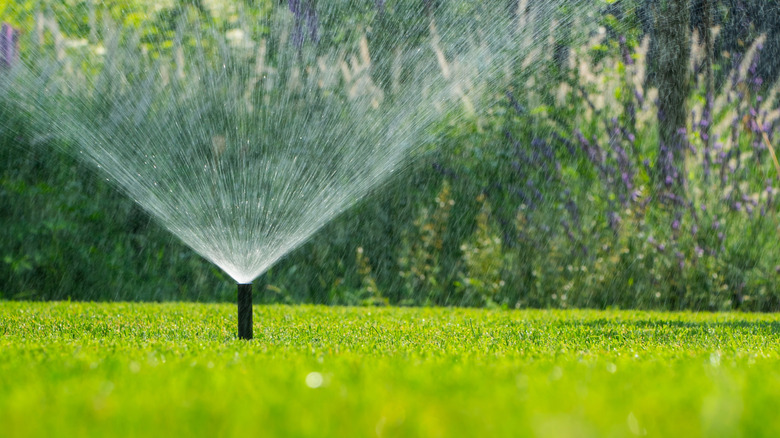
When you water your grass seedlings is almost as important as how often you deliver the water. According to GreenPal CEO Bryan Clayton, being an early bird is useful for keeping grass seed happy. That's because the best time to water your lawn in the summer is before the sun heats up your yard for the day.
"Early morning is best — around sunrise. Avoid evening watering to prevent fungus," Clayton says. He adds that "a simple sprinkler on a timer" can help with this task, especially if you're not accustomed to rising at dawn. In addition to giving grass seed a drink at the ideal time, a sprinkler with a timer can blanket the seeds with a fine mist of water that's unlikely to leave them too soggy.
Another option is an irrigation system that offers seeds round-the-clock access to small quantities of water. "If you're willing to do an irrigation system, it's going to look amazing really quick, but if you're not willing to do that, it's going to be a labor of love and 18 to 24 months," Clayton says, stressing, "It all comes down to budget." In his 25 years as a landscaping pro, he has also learned that brand-new grass is easiest to grow when temperatures aren't sweltering but the ground is still nice and toasty. That's why he recommends waiting until fall to sow grass seed.