

The Simple Gardening Tip That'll Keep Bees Away From Your Hummingbird Feeders
We may receive a commission on purchases made from links.
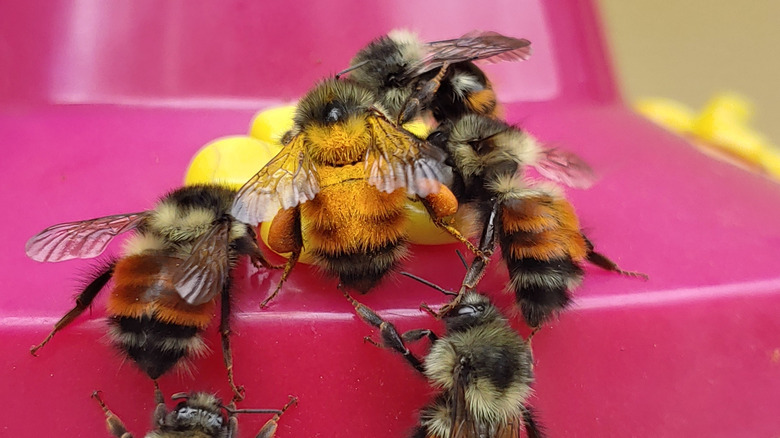
Almost every backyard bird enthusiast has found time to put out a hummingbird feeder in order to attract these frisky fliers. The colorful, nectar-filled feeding stations certainly do draw in plenty of hummingbirds, but they also attract other flying creatures. Prolific pollinators such bees and wasps are quite likely to show up at backyard hummingbird feeders, as well. While bees can be beneficial to your garden, their presence at your hummingbird feeders can be detrimental to your efforts to bring birds to your backyard. This is where pollinator-friendly plants come in — and they should be placed far from your hummingbird feeders.
Given the benefit bees provide to backyards and gardens as pollinators, you don't want to eradicate them with pesticides. In fact, you want to continue to attract bees to your yard and garden. The key is attracting them to areas other than your hummingbird feeder with some plants that they adore.
Starting with your feeder, make sure it isn't leaking and is regularly cleaned of any nectar residue, which is both attractive and easily accessible to bees. You should also assess your choice of feeders. Models such as the Feed Garden Glass Hummingbird Feeder feature bee guards, which make it difficult for bees to access the nectar inside the feeder. Additionally, many of these feeders do not incorporate yellow into the design, which has been shown to be extremely attractive to bees. Moving the feeder frequently can also help, as hummingbirds tend to find the new location much quicker than bees.
Using flowers to attract bees away from hummingbird feeders
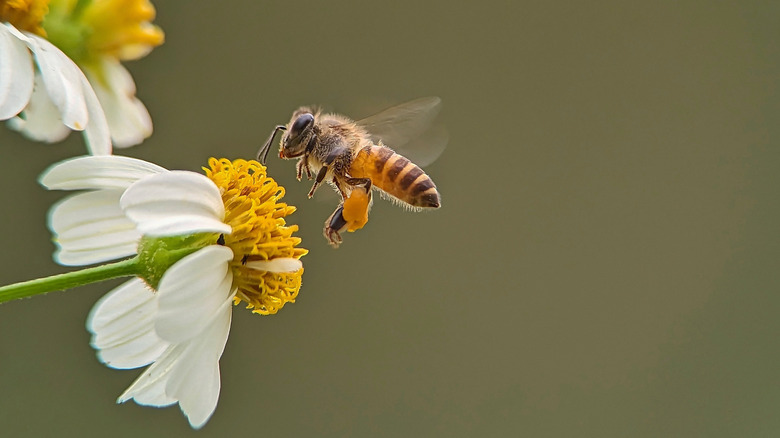
One of the easiest ways to make sure your hummingbird feeder stays bee-free is to attract bees to other areas of your yard. Planting these pollinator-friendly flowers and flowering plants is among the best ways to attract bees to your garden and portions of your backyard that are well away from where you hang your hummingbird feeder. The idea is that if bees are provided with ample opportunities to fill up on natural nectar from flowers, they won't have a need to move to your hummingbird feeder.
Incidentally, many of the flowers that will bring bees to your garden are the same plants that attract hummingbirds to gardens. However, given an ample amount of flowering plants, both bees and hummingbirds are easily able to co-exist. The type of flowers you plant for this purpose will vary depending on your geographic region. While virtually any flower will draw in bees, they definitely prefer plants that are native to the area. As mentioned, they are also particularly attracted to yellow. So, flowers that have yellow petals or pistils, are more likely to attract bees and other pollinators.
It's a good idea to utilize a mix of flowers and plants that bloom at various times to ensure there is a steady supply of food for bees in your yard and garden throughout the season so they stay away from your hummingbird feeder. There are a number of both annuals and perennial flowers which will attract bees, in addition to various fruit and vegetable plants. Annuals such as daisies, begonias, marigold, sunflowers, and zinnias are some of the more commonly used. Bee balm and catmint are among the better perennials for attracting bees.