

Create A Stunning No-Mow Lawn With This Low-Maintenance Grass Alternative
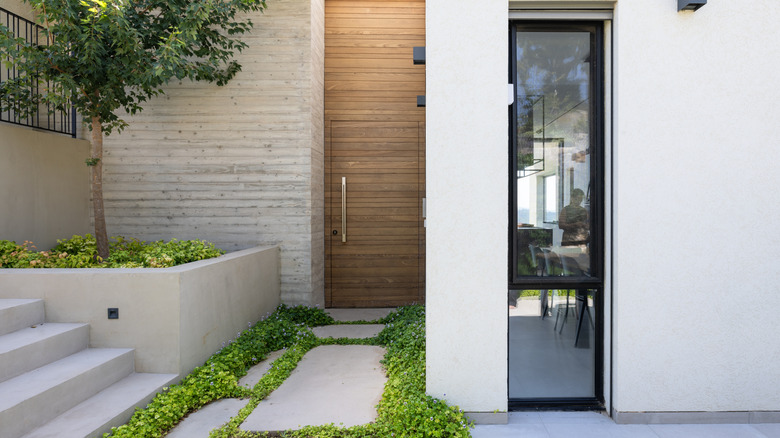
Maintaining a lawn takes a significant amount of work and money. In addition to spending time mowing, you might need to sow grass seed, fertilize the soil, install a sprinkler system, or implement a weed-control strategy. You'll also need to know when it's time to sharpen your lawn mower's blades and how to clean and maintain its air filter. These are all great reasons to consider a no-mow lawn. One of the best grass alternatives is dichondra (Dichondra repens), a lush ground cover that doesn't need much watering. As an added bonus, it stays green in temperatures as low as 25 degrees Fahrenheit.
A cousin of the morning glory, dichondra grows as a perennial in USDA hardiness zones 7 through 11. That means it will return year after year if you plant it in these regions of the United States. It has kidney-shaped leaves and likes to spread out horizontally, features that have earned it the nickname of kidney weed. This adaptable plant is also known as lawn leaf and dichondra pony foot.
Since dichondra grows low to the ground, often reaching a height of 2 inches, it's unlikely to overshadow taller landscaping plants such as hostas and hydrangeas. It prefers full sun but will tolerate partial shade underneath trees and shrubs. Though dichondra isn't particularly vulnerable to diseases and pest damage, it may protest if its soil doesn't drain water efficiently. You can grow dichondra in clay soil, but consider mixing in some compost if you do. It can keep this type of soil from getting waterlogged.
Planting and nurturing a dichondra lawn
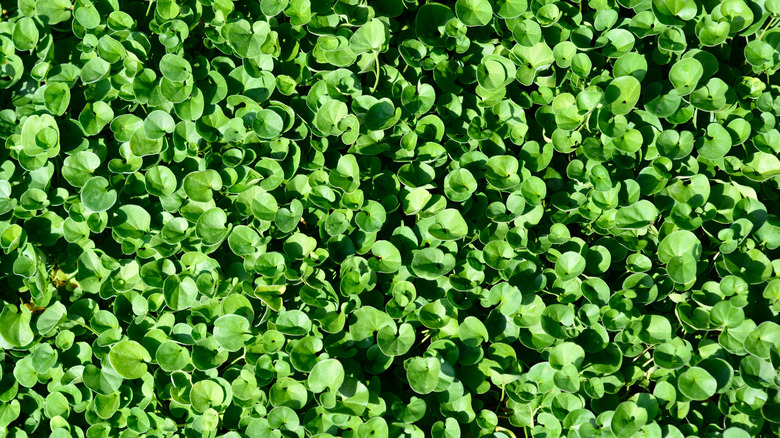
Dichondra is an ideal no-mow grass alternative because it's easy to keep healthy. Careful planting can discourage the few problems it sometimes has, which include leaf spot and root rot. These fungal diseases tend to emerge when the ground is too wet and air isn't circulating properly. Aerating your lawn's soil is a smart first step. One method involves loosening it with a shovel and smoothing it with a rake. Aeration promotes water drainage and nutrient absorption, which may provide extra protection against pathogens. Plus, it encourages fledgling plants to form strong root systems. Monitor dichondra in shady areas for signs of powdery mildew. These include white dust and yellowing leaves.
Be sure to weed your planting site before scattering dichondra seeds there. This prevents other plants from competing for the dichondra's resources. As you weed, remove dirt clods, which can impede your plants' root development and water uptake. After weeding, sow a thin layer of seeds on top of the soil, then cover them with a lightweight, moisture-absorbing material such as peat moss. The best time to do this is when daytime temperatures are near 70 degrees Fahrenheit and nighttime temperatures are 50 degrees Fahrenheit or higher.
If the planting site gets a lot of sun or wind, water the seeds a few times a day until sprouts appear. This typically takes a week or two. Otherwise, water the seeds right after you plant them and repeat when the ground starts looking dry. Once your dichondra plants are established, water them occasionally and apply nitrogen-containing fertilizer monthly for a happy, disease-free lawn.