

The Perfect Grass To Plant In Your Yard To Keep Your Lawn Weed-Free
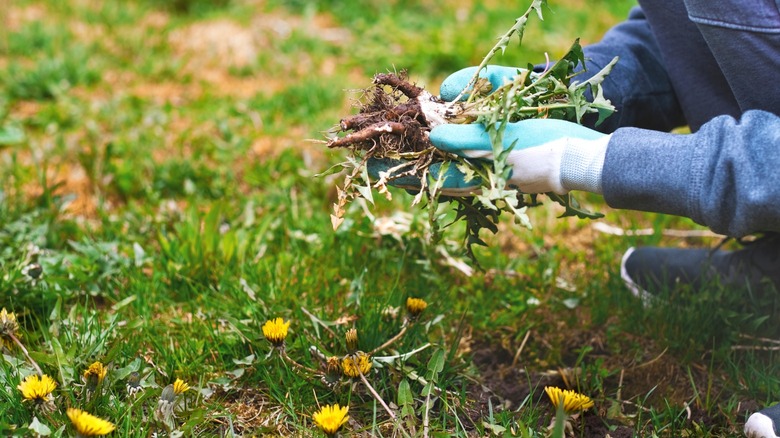
If you struggle to keep your lawn free of weeds, it might be time for a change, especially if you make the critical mistake of using salt to kill weeds. Switching up the type of grass you grow can be the best solution if your ultimate goal is having a lush, vibrant turf. Zoysiagrass, a group of grass species originally native to Asia, might be the answer. It is a wear-resistant grass variety that showcases a beautiful green appearance in warm, sunny conditions. Plus, the low-growing, extremely-dense nature of zoysiagrass helps create a full, weed-free lawn.
Zoysiagrass is a warm-season grass, which means that it grows well in warmer areas. However, that does not mean that states in the northern U.S. cannot grow zoysia species — its cold tolerant, too. However, it might have a shorter window where it will be at its most lush. For example, the grass will perhaps lose its vibrant color earlier in the fall season and gain it back later in the spring in cooler, northern climates. In warmer climates, like areas in the southern U.S., you can enjoy more months of verdant turf.
Establishing and maintaining zoysiagrass in your yard
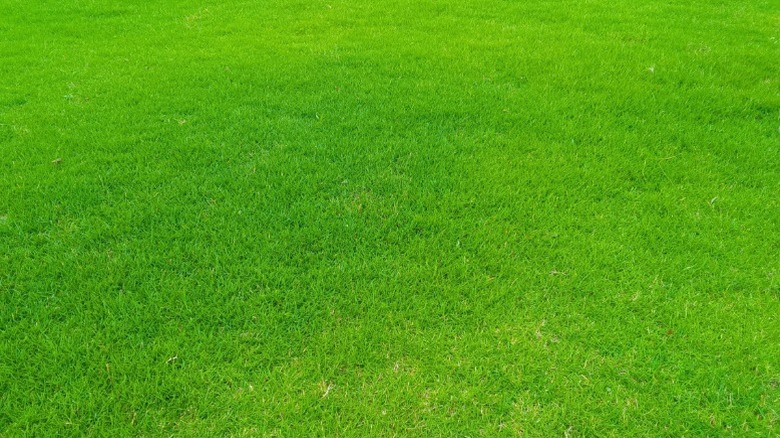
Establishing zoysiagrass in your yard can be a tricky process. It's not a simple process of learning how to successfully sow grass seed on top of soil. You cannot run to a local garden center and buy zoysiagrass seed like you can with cool-season varieties. Even when you can find the seed for sale, it's not easy to germinate. Instead of using seed, the popular method to transform your lawn with zoysiagrass is from plugs or sod. Plugs are small pieces of rooted zoysia and sod is similar to long carpets. To plant a plug, you can make a small hole in the yard with a trowel or bulb planter and plant each plug 8 to 12 inches apart. Eventually, plugs fill in as the zoysiagrass spreads.
Once established, zoysiagrass can thrive with similar care as other grass varieties. It is recommended that a zoysiagrass lawn be mowed every 5 to 7 days, perhaps more often in the summer when growing prolifically. But mowing can be different with this type of grass thanks to the different leaf blade textures that require an extra-sharp mower blade for the best cut. Ragged edges might be a sign it's time to sharpen your mower blades. Unlike other cool-season grass types, zoysiagrass does well with little fertilization, typically in early June. Less water is also required compared to other grasses, like Kentucky bluegrass, but can be necessary in long dry periods in July and August. Overall, it has a good tolerance for drought, heat, and heavy traffic.