

Improve Your Garden's Soil By Growing This Versatile Vegetable
We may receive a commission on purchases made from links.
Ready to take your vegetable gardening game to the next level? Glean some wisdom from farmers who focus on building healthy soil. Many plant radishes — especially the long, white daikon type that's popular in Asian cooking (Raphanus sativus var. longipinnatus) — to improve the quality of the soil in their fields. Daikon radishes can reach lengths of 20 inches, loosening compacted ground as they grow. They also enhance their soil's nutrient profile and encourage garden-supporting microbes to flourish.
Compacted soil is a problem for both gardeners and farmers because it prevents air, water, and roots from moving with ease. When roots struggle to stretch out, they are unlikely to find the nutrients they need. They're also prone to stunting, which can harm the plant's overall health. If roots aren't surrounded by adequate air pockets, they are unable to absorb oxygen. As this deprivation continues, the plant becomes unable to take in water and nutrients. Water trapped near the roots can also hinder oxygen intake and promote rotting. Each of these problems can make your garden's plants perish.
In addition to facilitating aeration and water drainage, daikon radish plants feed microorganisms that contribute to soil health. Their chunky roots secrete carbohydrates that these microscopic helpers devour, which in turn helps them to multiply. These incredible plants also add nitrogen to the soil in your garden. When used as cover crops — that is, plants grown to boost soil health rather than bring in money — daikon radishes grab and hold nitrogen that would escape otherwise. A product such as the MySoil test kit can tell you if your garden's nitrogen level needs fixing.
Reaping the benefits of daikon radishes in your garden
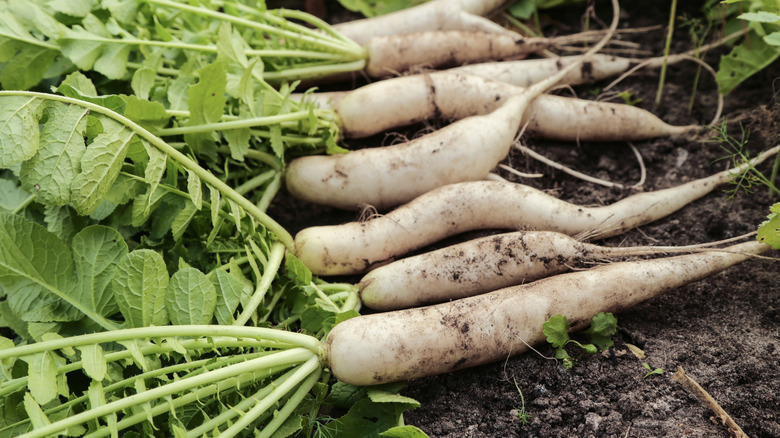
You can grow sweet daikon radishes to diversify your vegetable intake, make your soil happier, or both. If you let some of your daikons stay in the ground during an icy-cold winter, they'll make nitrogen available to new plants in the springtime. That's because they break down incredibly fast when temperatures drop below 20 degrees Fahrenheit. If you live somewhere that doesn't experience a deep freeze each year, decomposition — and its benefits — may take a little longer. Don't let this deter you from growing daikons at home. These rapid growers will thrive in USDA hardiness zones 2 through 11, a range that covers the hottest and coldest parts of the United States. Since they adore cool temperatures, they are ideal for growing in the fall in many places. If you harvest daikon radishes for culinary use, they can last for months in the fridge.
Soil enrichment isn't the only perk daikons will deliver to your garden. These radishes may help control pests such as nematodes by releasing glucosinolate, a substance these destructive invaders can't stand. The tops of daikon plants are also excellent at banishing weeds that are eager to extract nutrients from your soil. Daikon leaves are typically 2 to 3 feet long, which helps them cover most of the soil around them. This keeps weeds from getting the sunlight needed to survive, much like wood chips and other mulches do. In general, the best mulch for gardens with edible plants decomposes easily and doesn't risk contaminating the soil. Organic materials, including plants that cover the ground like daikons, often fit the bill.