

Brown Spots On Your Lawn Will Be A Thing Of The Past With This Simple Trick
We may receive a commission on purchases made from links.
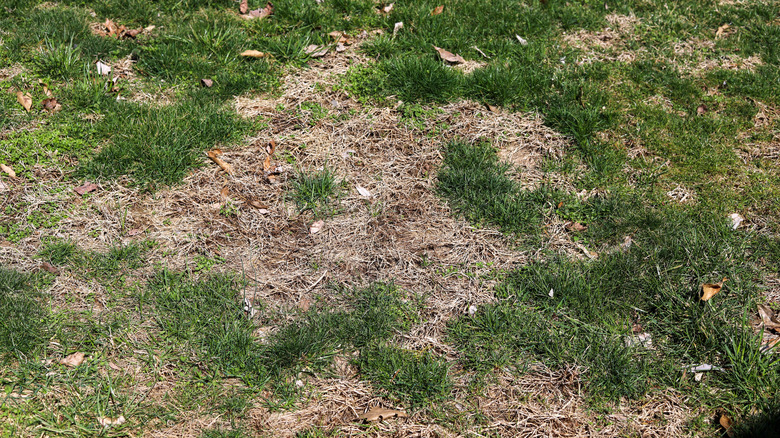
Brown spots are the bane of those who love looking at a lush green yard. While there are numerous causes for these brown spots and several potential reasons your grass is growing patchy, the end result is the same -– dead or dying splotches scattered throughout your lawn. Often times, even after the cause is identified and addressed, the brown spot lingers. This is typically due to a buildup of compacted thatch, which can prevent healthy grass from regaining a foothold in that area. Luckily, if you wash dishes, you likely already have most of what you need to solve this problem.
Despite a popular lawn care myth stating otherwise, thatch is not just old grass clippings. It's actually a densely matted layer comprised of clippings along with roots, stems, and runners. Although seeing such a compacted patch is an obvious sign it's time to dethatch your lawn, once it reaches this stage it's unlikely you will be able to get away with just a thatching rake. Instead, you'll first need to revive the soil beneath this patch of decaying matter. That's where the dish soap comes in.
Deeply matted thatch not only prevents sunlight from reaching the soil, it also keeps water from penetrating. The thatch matt does this by absorbing the majority of the water before it can make its way to the soil beneath. Dish soap effectively thins the water, allowing it to more quickly reach and penetrate the soil. This is a result of the dish soap reducing the water's surface tension so that it spreads and penetrates more easily.
How to use dish soap to help you dethatch your yard
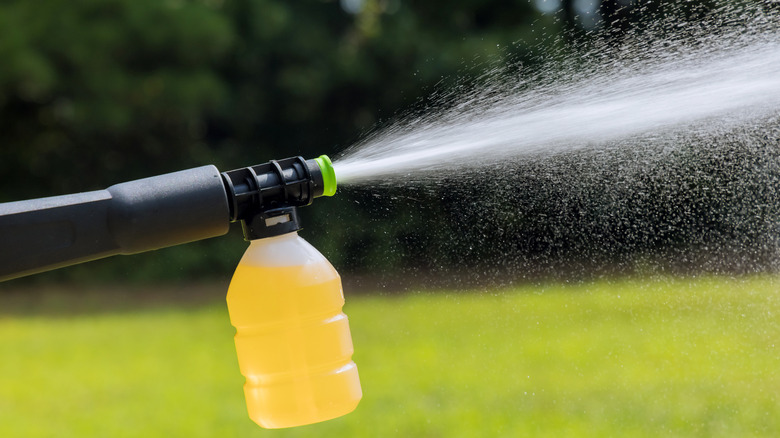
This simple trick to help combat thick thatch is relatively simple. If your goal is to get water to the soil in order to facilitate new growth, all you need is liquid dish soap, a hose end spray, a garden hose, and a water spicket. While any liquid dish soap will reduce the surface tension of the water and achieve the goal, it's important to not use an anti-bacterial dish soap. This is because the anti-bacterial qualities will destroy essential microbes that are needed for a healthy lawn.
Once you've gathered your materials, pour some liquid dish soap into the sprayer reservoir, set the dilution to 2-3 ounces per gallon, attach the hose, and thoroughly spray the affected area. The idea is to get enough water beneath the thatch to begin reinvigorating the soil. However, don't overdue it, as standing water will lead to more compacting of the thatch and invite fungus that will attack the living grass. After applying, go back over the area with a freshwater rinse to remove any lingering soap, as soap residue can harm healthy grass.
Various lawn care experts recommend adding additional ingredients, including beer, soda, ammonia, mouthwash, and molasses to the soapy water mix. While the recipes and selected ingredients vary, they tend to have similar principles behind them. Beer and soda are added to provide sugar for the good insects and bacteria that are needed for a healthy lawn — ditto for the molasses. Mouthwash is added to kill off scavengers such as grubs, while the ammonia is meant to encourage growth.