

How To Safely DIY A Cute Wooden Birdhouse For Your Backyard
We may receive a commission on purchases made from links.
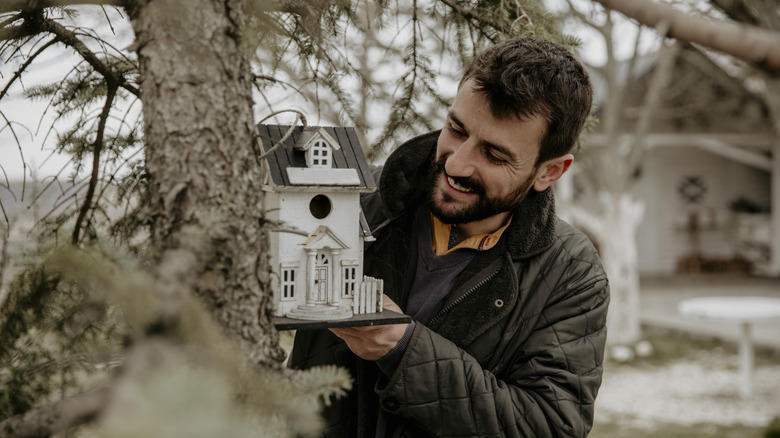
Backyard bird lovers know that the sound of soft peeps and chirps from a nest full of baby wrens or bluebirds brings a special kind of joy to a garden. Adding nest boxes is a simple hack to get birds to flock to your yard, and you don't even have to be an expert woodworker to DIY a cute and functional birdhouse. Many kits are available on the market, like Pontuss' DIY Birdhouse Kit with Premium Cedar Logs for $35.99, or you can put together your own from scratch with help from simple plans like the ones from Oklahoma State University Extension. Whatever route you take, be sure to choose materials and design elements that will keep both parent and baby birds safe and cozy through the nesting season.
While repurposing household staples in your garden is fun, wood is the ideal material for birdhouses. Other materials like metal or plastic can get too hot or cold for nesting birds. Be careful not to use treated, stained or painted wood, which can be full of toxins that will harm your nesters. Untreated cedar, cypress, redwood, and oak are all excellent choices that will resist pests and rot, making a birdhouse that can last for years. Your wood pieces should be at least ¾ inch thick to provide adequate insulation. When assembling your box, aim for durability by using wood glue to seam the edges together, and then connect the pieces with rust-resistant brass screws or galvanized nails.
Design for the birds you want
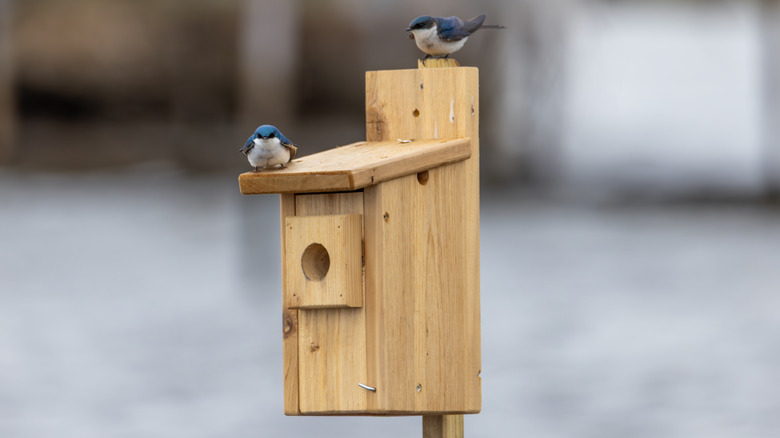
Your bird house design should appeal to the particular bird species you want to attract to your yard and garden, while having the look and feel of the natural tree cavities they like to use. This means creating an opening that is properly-sized for your tree swallows or chickadees, while discouraging larger predators from entering. Openings larger than 1 ½ inches will allow starlings to get inside. Your local Audubon Society can offer advice on the right-sized openings for birds in your area. For example, Mass Audubon publishes a helpful birdhouse and nesting chart that provides specifications for each type of bird. Consider installing an entry hole cover, as well, to ensure rodents don't gnaw a larger hole into the wooden opening you've created.
Inside your box, you won't need a perch, which can attract predatory birds. The National Wildlife Federation suggests scoring the insides of your nest box underneath the opening to give traction to fledglings when they are ready to climb out of the nest. Birds will bring in their own nesting materials to fill the cavity, so you don't need to add any yourself. While you don't want to paint the interior of a birdhouse, you can up the cuteness factor of the outside by painting it with a light-colored, latex paint that can help preserve the wood and keep the box cool.
Don't forget drainage, ventilation, and access for your birdhouse
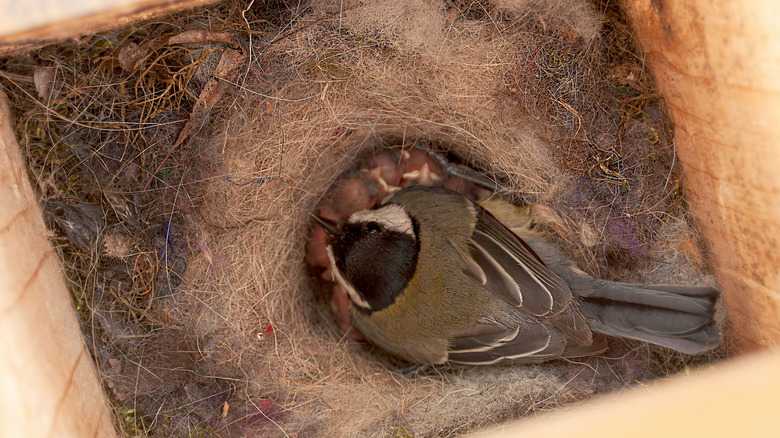
Whether building from a kit or from scratch, be sure your design includes drainage, air holes, and a way to access the inside. To keep water from accumulating in your box, make sure the roof is sloped and extends over the entrance hole, and drill several small drainage holes in the bottom of the house. Ventilation is critical to keep the box cool over the warm summer months. To keep the air moving, drill small, ⅛ to ¼ inch diameter ventilation holes on each side of the birdhouse, near the roofline.
Cleaning your birdhouse each year is important to remove pests and soiled nesting materials, and it can also be fun to see what the nest looks like after the family has vacated. Be sure to add a removable top or hinged roof to your birdhouse to allow easy access. After the babies have fledged each year, you'll want to be able to open up your nest box fully to remove all the old materials. You can follow this with a good scrubbing with simple boiling water. You might want to take your nest box down for the winter and store it inside until next nesting season in order to preserve your DIY masterpiece.