

Why Lavender Is A Clever Solution For Filling Bare Spots On Your Lawn
We may receive a commission on purchases made from links.
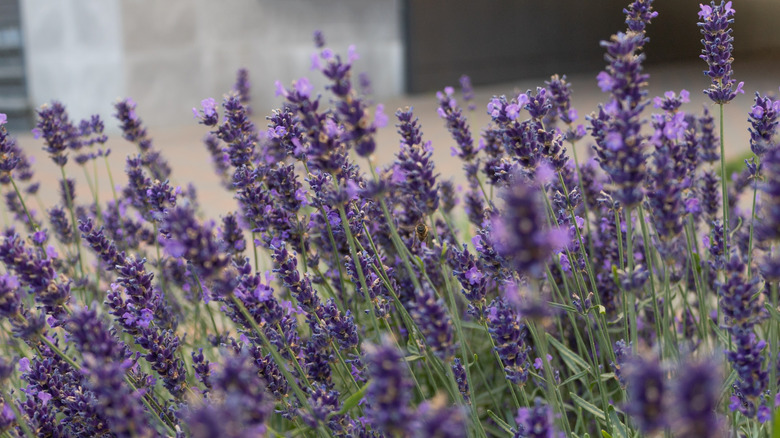
If your grass is growing in patchy and resulting in unsightly bare spots, your first inclination is most likely to try and fill it in by overseeding the area with fresh grass seed. While this sometimes works, there are other times when grass just stubbornly refuses to grow in portions of your yard. In such a situation, lavender is a clever solution for filling bare spots on your lawn.
Although lavender is not a practical replacement for a full lawn, it can be used to creatively fill voids. Whether these bare areas are alongside sidewalks and driveways or scattered about your lawn, patches of lavender can add color, depth, and texture to your yard. In addition to attracting hummingbirds and other pollinators, lavender is among the best plants to repel pests. Having some well-placed lavender plants can keep mosquitoes away from your patio and other outdoor living spaces.
Additionally, lavender is relatively easy to grow. It does particularly well in sunny spots in your yard and requires very little maintenance. Just about every portion of the United States is capable of growing at least one variety of lavender, given that various varieties can be cultivated in USDA hardiness zones 5 through 11.
How to grow lavender in bare spots
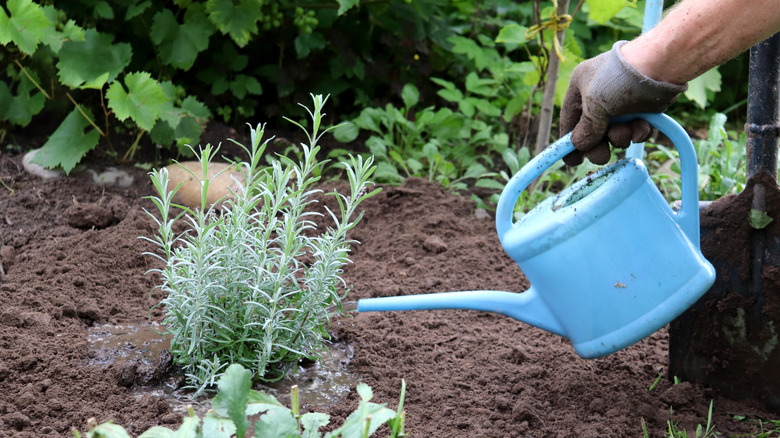
Growing lavender is relatively simple. The area in which you want to plant a lavender bush should receive at least 6 hours of sun each day and be cleared of any thatch or weeds before planting. Once this is done, dig a hole that is about twice the size of your young plant's root ball. Place the plant in the hole with the base of the plant level with the surface of the soil. Fill the hole and slightly tamp the soil around the plant. Then, give your plant a shot of water, being careful not to overdo it. Throughout its life, you want to give a minimal amount of water, as lavender does not do well in soggy soil.
If you prefer to start your lavender from seeds, a few extra steps are needed. Start with a pack of Sweet Yards Lavender Wildflower Seeds or a similar product. A few months before you anticipate planting, begin cold stratification. Start by placing a damp paper towel on a plate and covering it with lavender seeds. Seal the seed covered plate and paper towel in a large ziplock storage bag and place in the refrigerator. After a month, remove the plate from the fridge. Leave it sealed in the bag and place it in an area of your house that receives direct sunlight for another two weeks.
After allowing the seeds to germinate in the sunlit area for 10 to 14 days, you can sow the seeds in seed trays filled with a potting mix. Be sure to only cover the seeds with a light layer of soil so they receive plenty of light. Once they have sprouted and outgrown their tray, transfer them into a larger pot until it is time to plant them outside.