

Successfully Move Your Vegetable Seedlings Outside With This Simple Method
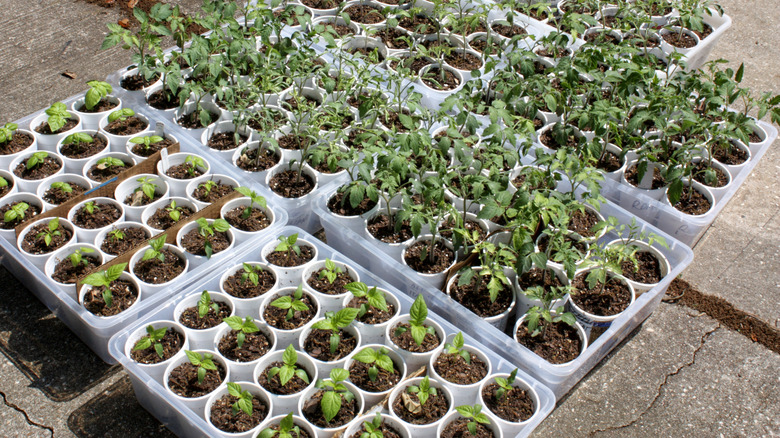
Many gardeners who are eager to harvest vegetables as soon as possible start seeds indoors in the winter and then transplant the resulting seedlings outdoors in the spring. If you've taken the time to nurture seedlings indoors, make sure to avoid a gardening mistake beginners often make: planting them outside without hardening them off. Hardening off seedlings involves acclimating them to the great outdoors. It's done bit by bit so the tender young plants don't get overwhelmed by wind, rain, temperature drops, or intense sunlight. Seedlings that experience too much shock may suffer severe injuries or even die.
Generally speaking, hardening off seedlings takes a week or two. It's important to build this process into your seed-starting timeline so you relocate your plants when they're most likely to thrive outdoors. According to Penn State Extension, slowly adjusting to the world outside encourages a seedling "to accumulate carbohydrates, to trigger more root development, to reduce the amount of freeze-prone water in the plant, and to actually thicken its cell walls." As these changes occur, the plant tissue gets tougher, hence the term "hardening off."
Most seedlings are ready for a taste of outdoor living when they have several leaves that resemble those of a grown-up plant. At this point, they can visit a shaded area with some wind protection and an air temperature of at least 45 degrees Fahrenheit. If you have a front porch, it's a good spot to consider.
How to harden off vegetable seedlings
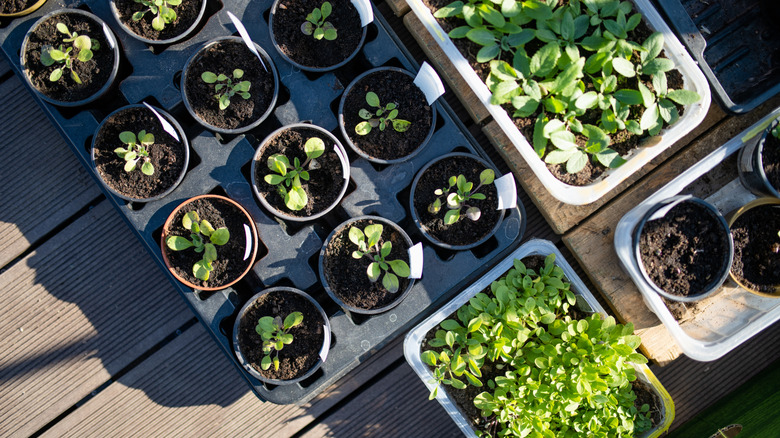
Once you've found a secluded spot for your seedlings to harden off, place them there for about an hour. As long as the weather isn't too harsh, bring them outside for an additional hour each day that follows. After a few days, start introducing them to small amounts of direct sunlight and wind as well. Your seedlings are ready for the garden when they're comfortable in a full day of the sunlight situation they prefer, and once both the air and the soil will provide a warm enough welcome. For many plants, this is around the time frost becomes unlikely where you live. If you reside in the United States, your USDA hardiness zone indicates when to plant seeds and seedlings outside. You can also take the soil's temperature, which should be in the neighborhood of 70 degrees Fahrenheit when you install seedlings in the garden.
There are a few types of vegetables — mainly brassicas such as cabbage, broccoli, and kale – that can be planted outside before frost is completely out of the picture. In much of the U.S., these plants are ready to harden off and transplant in April, a little before other types of veggies. No matter what type of seedlings you're hardening off, don't start the process on an especially bright or blustery day. Also give your seedlings a drink so they don't get dehydrated during the taxing experience of adjusting to the elements, and place them at a height that's hard for hungry animals to reach.