

Prevent Weeds In Your Flower Bed By Adding This Pretty Pink Ground Cover

We may receive a commission on purchases made from links.
Garden weeds can be a minor nuisance or a major nightmare, depending on your situation. Keeping them under control from the get-go is key. Putting newspaper under mulch is one easy way to deter weeds. It works by keeping these invaders from accessing the sunlight they need to grow. Installing ground cover plants instead of mulch is another option. Moss phlox (Phlox subulata) will smother weeds by forming a thick layer of pink flowers and green foliage. You can also find varieties with blue, purple, or red flowers.
Moss phlox is easy to grow in much of North America because it's native to the central and eastern United States, plus a large swath of Canada. This creeping wildflower reaches a maximum height of 6 inches, so it won't grow over most of your other flowers, and it can handle all sorts of environmental challenges, from salty soil to air pollution. It doesn't even mind drought-like conditions from time to time, which gives it a leg up when competing with moisture-craving weeds. Moss phlox is especially useful because you can grow it on slopes as well as in flat flower beds. When its sweet-scented flowers bloom in the spring, it's likely to draw bees, hummingbirds, and other hungry pollinators. Since moss phlox is a perennial, it will return to your garden year after year. This can save you time and let you simply enjoy your garden.
How to grow moss phlox as a ground cover
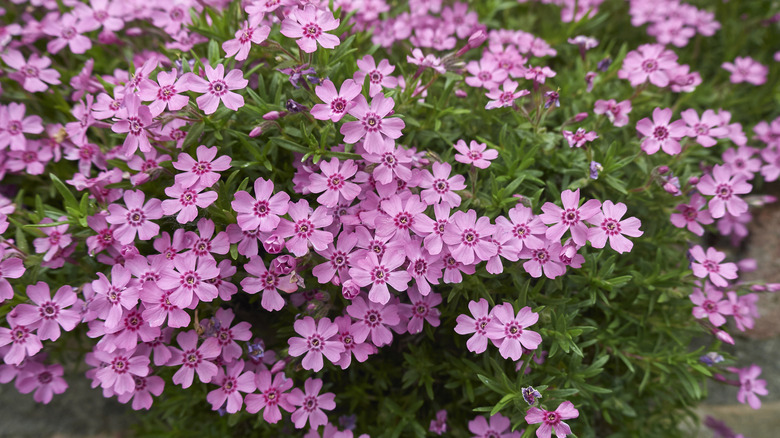
Moss phlox is low maintenance, but there are a few things to keep in mind when caring for it. First and foremost, plant moss phlox in a growing zone where it's likely to thrive. In the U.S., this is USDA hardiness zones 3a through 9b. Second, put it somewhere it can spread out a bit. Expect it to expand to a width of 2 to 3 feet. Third, consider installing it in spots that could use year-round weed control. As an evergreen shrub, moss phlox can fight weeds in the winter as well as the summer. Finally, make sure the planting site has well-draining soil and full or dappled sunlight.
To help your moss phlox deter weeds, try to keep pests from moving in. They can wreak havoc on the plant's foliage, making sunlight more likely to reach sprouting weeds. Moss phlox isn't targeted by most garden pests, but spider mites can be an issue in dry habitats that experience high temperatures. They often build small webs between the plant's leaves. If you suspect that spider mites are present, apply an animal-safe spray such as Garden Safe ready-to-use insecticidal soap.
Seeing signs of a different pest problem in your yard? If it's affecting your moss phlox, it's probably nematodes. These roundworms ravage leaves when the ground is wet and the air is humid. Adding more organic matter — compost, for example — can help. This can fortify your plants while inviting nematode predators to your garden. In general, centipedes, oyster mushrooms, and other nematode enemies will help your plants rather than introducing more problems.