

Choose The Best Mulch For Your Garden With These Tips
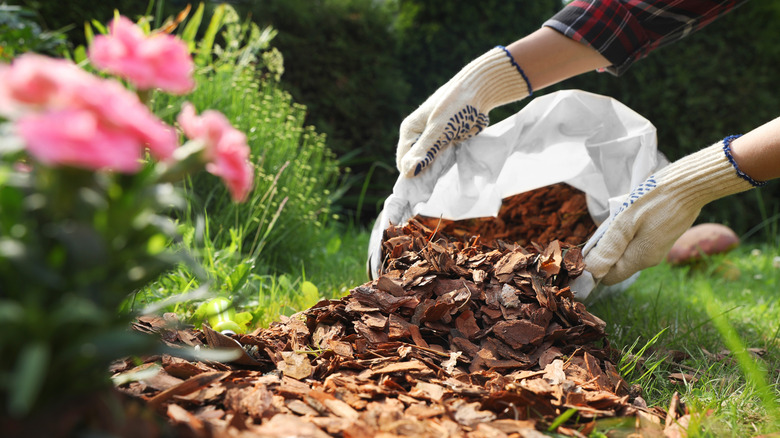
Mulch is a good friend to gardens. It helps soil hold moisture, keeps plant roots cool on hot days, and discourages weeds from sprouting. Many types of mulch add beneficial substances to the earth as they decompose. Plus, mulch can prevent soil from blowing away and muddy water from hitting foliage, which can transfer disease-causing bacteria to plants. Some mulches are better than others for certain situations, so it's important to factor in the needs of your plants and soil when making a selection. Deanna Talerico, the creator of Homestead and Chill, uses several types of mulch in her garden. Her main considerations are "where it will be used and what is most readily available," she told Outdoor Guide in an exclusive interview.
In general, Talerico gravitates toward organic mulches that enhance the garden soil's structure and nutrient content. These include wood chips, bark mulch, straw, and compost. She's also a fan of gravel for spots that require a material that doesn't break down. Talerico steers clear of dyed mulch since it "may be toxic and looks unnatural." If you share these concerns, you might also want to avoid rubber mulch made from shredded tires, as it can pollute your soil. It may smell unpleasant or catch on fire as well.
No matter which type of mulch you choose, make sure to avoid mulching mistakes that can ruin your garden. A common one is depositing mulch on the bark near the bottoms of trees. This can lock in too much moisture, promoting fungal diseases. It can also deprive tree roots of air, encouraging them to crawl out of the ground in an attempt to breathe freely.
Mulch for raised garden beds and edible plants
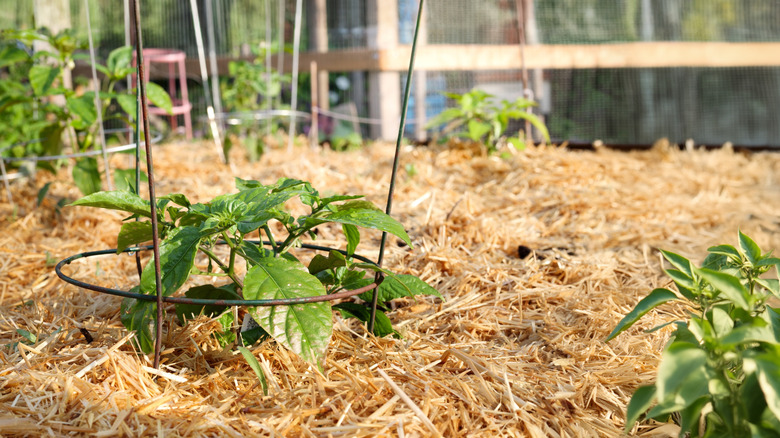
Homestead and Chill's Deanna Talerico often chooses compost for mulching raised garden beds and the soil surrounding edible plants. "Compost offers great insulation and moisture retention for soil but also provides valuable nutrients that are immediately available to feed the plants," she says. Talerico top dresses raised beds with "a couple inches of well-aged compost once or twice per year." She also uses a DIY compost bin on her homestead, but you can buy bulk or bagged compost if you'd prefer a ready-made solution. If you want to make your own, review which kinds of things you should never compost before getting started. In most cases, this list includes diseased plant matter, which can spread pathogens, and dairy products, which tend to go rancid.
Straw is another good mulch for vegetable gardens and raised beds. "It's usually fairly cheap and easy to get, and does a good job at maintaining soil moisture and suppressing weeds," Talerico says. She notes that there are some downsides to keep in mind, too: "Insects like to hide in it, it can easily blow around in the wind, and depending on the quality of straw, it may contain weed seeds or herbicides." Try adding leftover straw to your compost pile once you're done mulching your garden. Straw raises the temperature of the pile, helping it decompose more quickly. You can even build a composting "container" from blocky bales of straw.
Mulch for walkways and garden borders
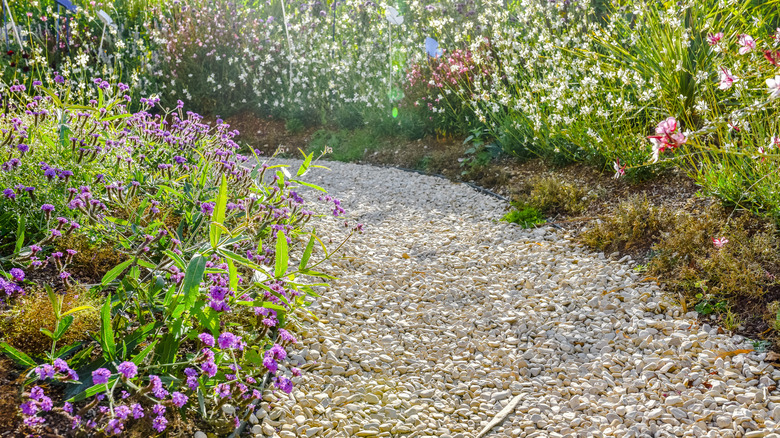
Constructing walkways between raised beds? Envisioning a path through a dreamy cottage garden? Gravel is the mulch to choose for these projects, according to Homestead and Chill's Deanna Talerico. That's because it doesn't decay. "It's tidy, durable, doesn't harbor pests, and is virtually maintenance free," Talerico says, adding that some maintenance may be required if it's installed incorrectly. When installing gravel mulch, make sure it's "several inches deep on top of a durable barrier such as commercial-grade weed fabric or a compacted DG [decomposed granite] base to prevent sinking or mixing with the soil below."
Want a biodegradable mulch for a path or border? Consider tree byproducts, says Talerico. "Wood chips or bark mulch is perfect for in-ground or border planter beds such as around shrubs, perennials, and trees, and can also work well for pathways. However, wood chips and bark do degrade with time, so they'll need to be refreshed with a topping of new mulch every year or two." Talerico appreciates how wood mulch enhances soil with both nutrients and organic matter but cautions that it's a desirable hiding place for snails and slugs. Also remember that mulch isn't a good match for certain types of plants, such as bearded irises (Iris x germanica) and other flowers that like their soil to dry out between waterings.