

Add Extra Color To Your Shady Garden Beds With This Ground Cover
We may receive a commission on purchases made from links.
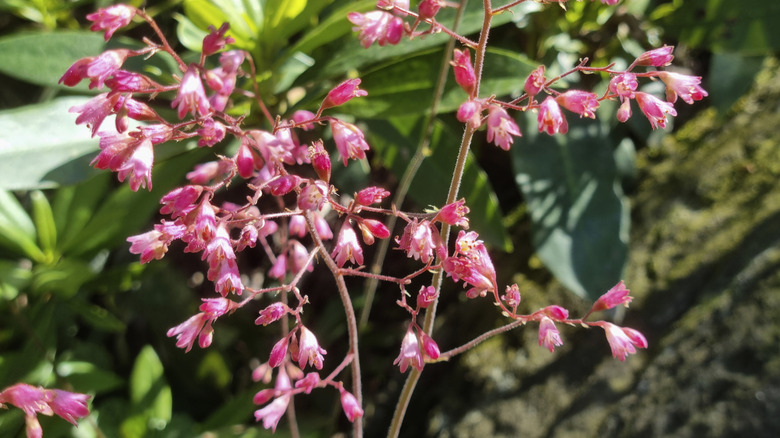
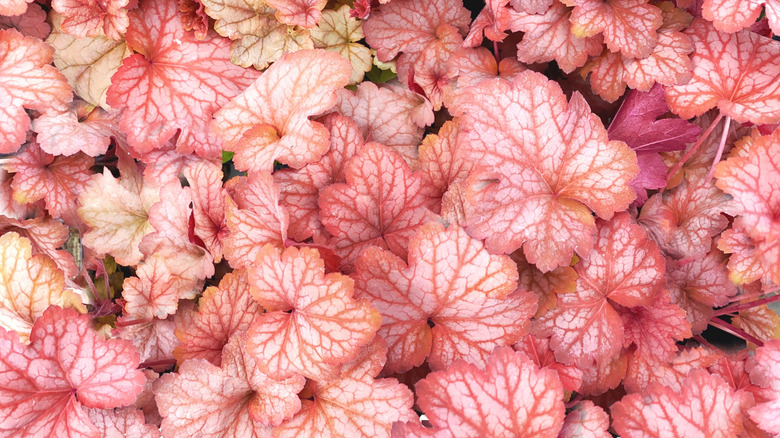
Whether you are creating a no-mow lawn or using ground cover plants to prevent weeds in your garden beds, if you are looking to add extra color in a shady area, you should consider coral bells. There are more than 50 varieties of coral bells (heuchera) suitable for planting in climate zones 3 to 9, which includes all but a few small areas within the Lower 48. Each of these varieties produce small, bell-shaped blooms, hence the name. However, the color of the flowers, as well as the foliage, varies somewhat dramatically between varieties. Additionally, some variations are evergreen, while others are semi-evergreen. With such an array of options, it is almost guaranteed there is a coral bell that will fit right into your shady garden bed.
Beyond aesthetics, coral bells offer plenty of positive benefits for gardeners. Coral bells attract pollinators such as bees and hummingbirds, as well as providing habitat for insects that are beneficial to gardens. There is also little worry about coral bells surviving, as they require relatively little care and are drought-tolerant, making them a perfect addition for a low-maintenance backyard. Additionally, they do well in both raised beds and in-ground gardens, as well as containers, and can be used as companion plants or for mass plantings.
Growing coral bells in your shady garden beds
Coral bells are easy to grow and just as easy to care for once they sprout. Sow seeds, such as the Seedville Mixed Coral Bell seeds in a well-drained patch of soil, preferably with an acidic or neutral pH level. It is important the area drains well, as excessive standing water can cause the crown of a mature plant to prematurely rot. Seeds are best planted in spring or fall.
Once the plants have become established, they are relatively easy to maintain. Because they have shallow roots, it is a good idea to keep the soil moist, although they are able to adapt to dry conditions. Adding a light layer of compost each spring can help ensure the coral bells have the nutrients they need throughout the year. Pruning can be done at various times of year, depending on the desired outcome. Spring pruning will keep the plant's growth at bay and prevent it from overcrowding others. Pruning after the blooms fall will increase the amount of foliage the plant produces. Fall is the time to trim any dead or dying leaves and stems.
Propagating and transplanting coral bells is pretty simple as well. If you want to propagate, it is a matter of digging up the offsets surrounding the parent plant. Use a spade or trowel to make sure you dig up the entire root ball, then replant where desired to where the root crown is covered with thin layer of soil. Given coral bells have a short lifespan, dividing is necessary at least every few years. To transplant or repot mature coral bells, simply dig up the root ball and replant in the new location.