

Keep An Out For This Potentially Poisonous Shrub While Visiting California
We may receive a commission on purchases made from links.
California is known for its towering trees, particularly massive redwoods. While visiting The Golden State, you may also notice a shrub that appears more like a tree. The cherry laurel routinely grows 20 feet tall and can max out at around 40 feet high. However, it's not the impressive dimensions that make the cherry laurel worth noting for those roaming around California. Rather, it is the fact this flowering shrub is toxic.
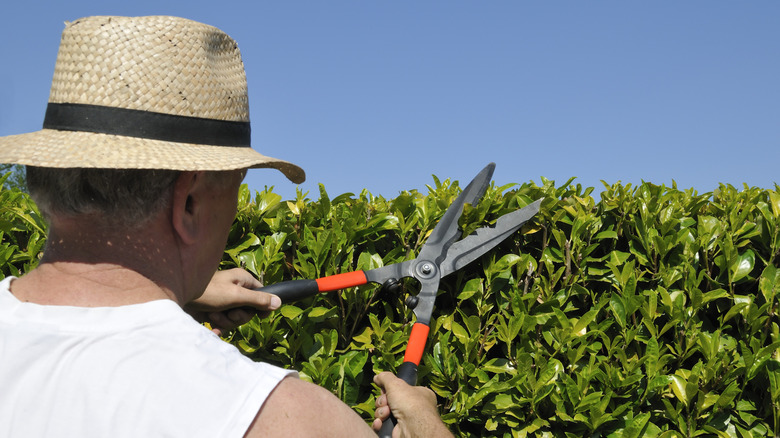
Cherry laurel is not native to California. The plant, which is also known as Carolina cherry laurel, has a natural range that begins in North Carolina and winds its way through the Southeastern United States to Texas. Cherry laurel has long been a popular landscaping element, as it grows quickly, can be pruned to the desired shape, and provides excellent screening and privacy. This is likely why it was brought to California. It also makes cherry laurel a sneaky danger for gardeners who may incorporate it into their landscaping without realizing the potentially poisonous qualities of the plant.
For those who don't have experience with this plant, being able to correctly identify it is important should you come across it on your excursions. When not pruned and growing to its natural shape, cherry laurel has an overall oval profile. They are evergreens with pointed, elongated oval leaves. The white or off-white blooms will eventually give way to small berries, which ripen to a blackish coloration. Given that cherry laurel is similar in appearance to several other shrubs, most notably the edible bay laurel, using plant identification apps may be problematic. Instead, utilize books such as the National Audubon Society Trees of North America to verify your observations and always err on the side of caution if you are unsure.
Cherry laurel poisoning symptoms and solutions
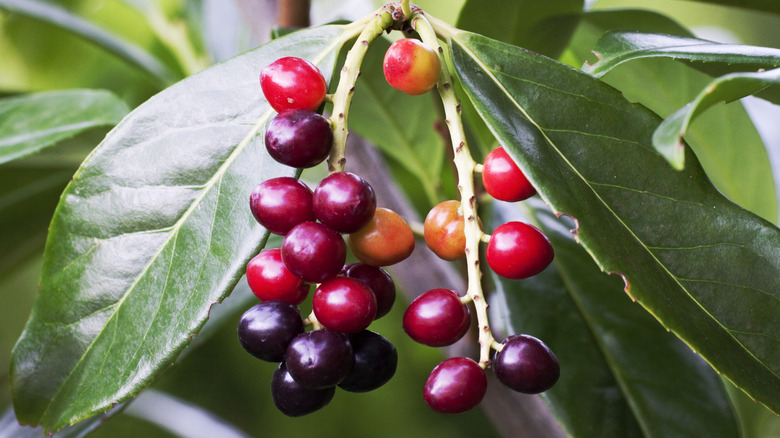
The stems, leaves, and berries of a cherry laurel plant all contain toxins that are dangerous to people and pets. Although some suggest the plant is safe when dried out or thoroughly cooked, it is best to err on the side of caution and avoid intentionally eating them. Accidental ingestion, though, can occur. In adults, this typically results from mistaken identity, as the similar-looking bay laurel is safe to consume and actually a popular spice and garnish. Children and pets are also prone to eat the berries (which have a bitter taste and are a sign the berries are not safe to eat) or chew on the leaves, which are said to taste somewhat like almonds. Cherry laurel poisoning can also occur by inhaling smoke from wood or leaves.
If a person or pet does ingest cherry laurel, there is a serious risk of cyanide poisoning. The symptoms are very similar to other types of poisoning. These symptoms can include upset stomach, nausea, vomiting, headache, dizziness, scratchy throat, difficulty breathing, and falling unconscious. If you suspect yourself or someone else has been poisoned from cherry laurel ingestion, it is important to seek medical help immediately. Pets often display symptoms like weakness, uncontrolled shaking, hyperventilating, nausea, or diarrhea. If you observe any of these in your pet, you should get them to a vet immediately.
Treatment for both people and pets suffering from cherry laurel poisoning involves removing the poison from the stomach via pumping or vomiting. The doctor will then introduce charcoal into the stomach. Vets will do the same for pets. The idea is the activated charcoal will absorb any remaining toxins. More serious cases may include irrigating the stomach. Hydration is also important for recovery, so an IV may be administered as well.