

Think Twice Before Planting This Potentially Invasive Ornamental Grass
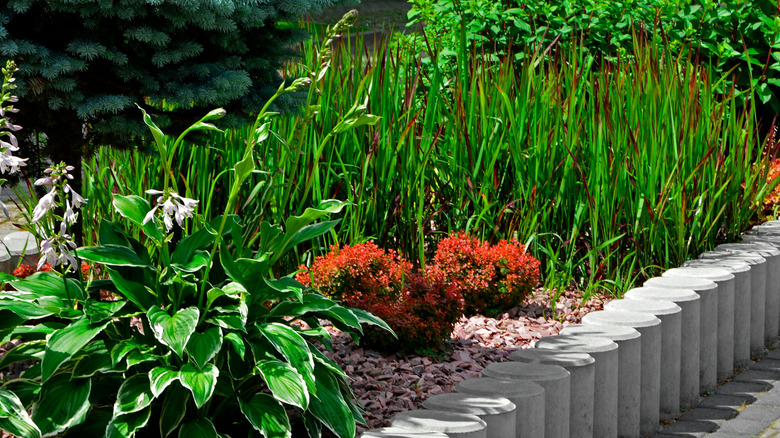
Japanese blood grass (Imperata cylindrica), with its red-tipped blades, can seem like a low-maintenance landscaper's dream. With its compact size and dramatic appearance, it's easy to see why gardeners would be drawn to this ornamental grass. But behind its beauty lies a growing problem. One of the most prominent varieties, the 'Red Baron' cultivar, in spite of being widely sold as being non-invasive, has many professionals warning against it.
This is not a theoretical threat. A number of states already are listing ornamental varieties as invasive, escaping their contained gardens and spreading into nearby natural habitats. In some areas of the country, Japanese blood grass has naturalized and is competing with natives. That's a big red flag, especially in regions where landowners are actively trying to restore native systems. Yet another underplayed worry is that even sterile strains can revert. There have been instances where Japanese blood grass reverts to its parent invasive form. When that happens, gardeners may unknowingly cultivate a problematic plant that spreads rapidly and overtakes everything it encounters, much like the Symphytum officinale, the tree of heaven, or burning bush.
Even the color — is its most attractive feature — can shift. Japanese blood grass becomes invasive when it changes from red to green. Meanwhile, the deep red turns by late summer to a straw color. It's not a twelve-month showstopper like folks hope for. It usually results in disappointment once the initial ooh-aah effect has passed.
Japanese blood grass can be incredibly hard to control
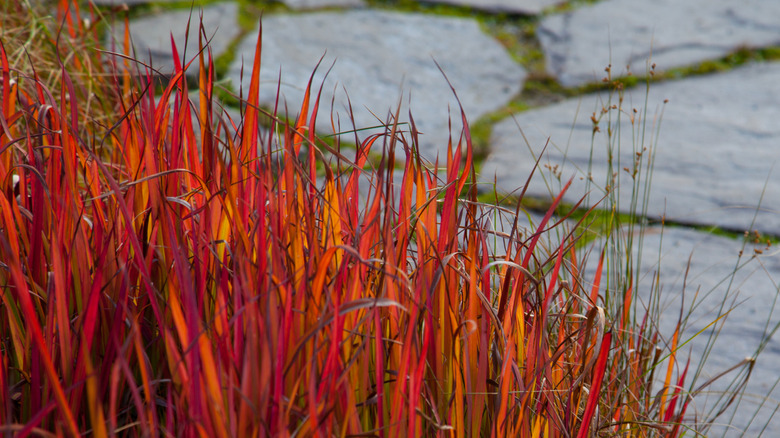
Japanese blood grass does not play fair once it has a foothold. What might begin as a small clump can insidiously spread via underground rhizomes, creating a web of roots that are notoriously hard to remove. The root system is dense, fibrous, and extremely persistent. Digging it out is often not enough. One plant can quickly spread and create thick mats, outcompeting other plants and overwhelming garden beds. When homeowners try to get rid of it, they too frequently find it returns the following year. Even a tiny piece of root left in the soil can grow back.
This toughness is part of what makes Japanese blood grass such a pest. In some places, it has pushed its way into forests, roadsides, and even agricultural fields, reducing biodiversity and complicating management. It also doesn't respect property lines. If it gets into a neighbor's lawn, they may not appreciate the unwanted guest.
The problem is compounded in warm, humid climates where Japanese blood grass thrives. It's tolerant to drought, resistant to pests, and tolerates a variety of soils. That sounds like a dream come true for lazy landscapers, but it's a nightmare for ecosystems struggling to find balance. Herbicides are no guaranteed solution, either. Some chemical treatments work temporarily, but Japanese blood grass will return unless you stay on it. That means follow-up applications, ongoing vigilance, and typically, damage to nearby plants.