

Plant This Grass Alternative For A Beautiful, Low-Maintenance Lawn
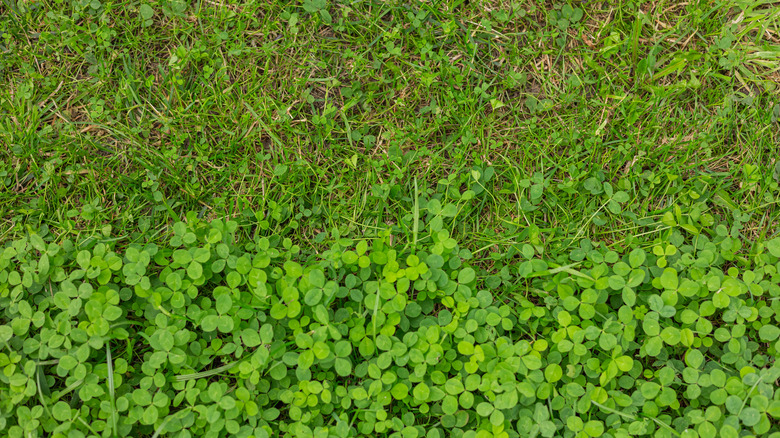
Sticking to a lawn mowing schedule can be challenging if you're extremely busy, recovering from an injury, or frequently out of town. Plus, mowing your grass at the wrong time may be secretly ruining your lawn. Hiring a lawn care service is one way to keep grass under control, but the costs can add up quickly. Creating a no-mow lawn with a grass alternative is another option. Installing Dutch clover (Trifolium repens) is a popular way to make mowing a thing of the past. Mowing is optional because the plant reaches a height of just 4 to 6 inches. Since it needs no fertilizer and only minimal watering to stay lush and green, it can also shrink other parts of your yardwork regimen while saving you money.
Dutch clover's benefit list keeps going. This ground cover grows and spreads rapidly when planted in the spring, accepting the clay-laden soil and partially shady areas that many other plants won't tolerate. Because Dutch clover is a perennial, it will return to your yard each spring. Once established, it suppresses weed growth and enriches the soil with nitrogen, fostering a healthy growing environment for a host of plants. It thrives in USDA hardiness zones 3 through 10, which cover most of the United States. It even has a knack for loosening compacted earth. This means that less frequent lawn aeration may be in your future. Dutch clover also attracts pollinators and helpful insects that eat aphids and other pests. Sometimes called white clover, Dutch clover is known for its small white blossoms and three-part leaves. It may occasionally produce a four-part leaf to make you feel lucky.
Caveats to consider before growing a Dutch clover lawn
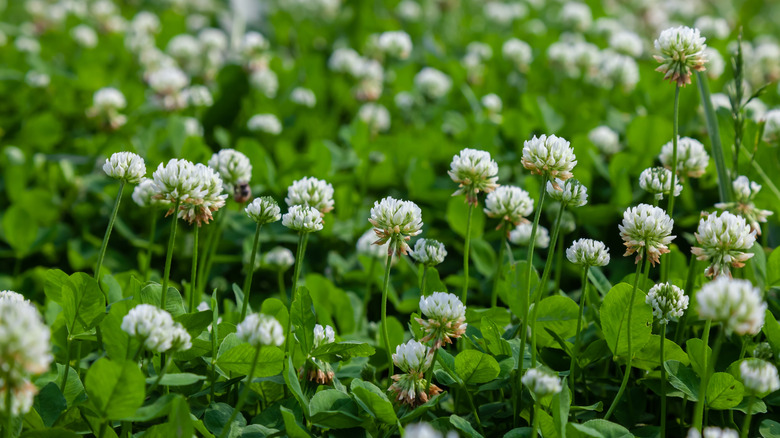
Despite its many benefits, Dutch clover is considered a weed by some homeowners. If you'd like to replace your grass with it, check local rules and regulations before sowing any seeds. Some homeowner's associations (HOAs) prohibit residents from using Dutch clover in this way. Also keep in mind that Dutch clover spreads. This means it can creep into a neighbor's yard without warning, potentially causing friction. It might also invade your vegetable garden or flower beds. If you commit to planting Dutch clover, you should also commit to monitoring its expansion and pulling out patches that are growing where they don't belong.
Dutch clover is probably a mismatch if someone in your household can't be around bees. Its flowers will attract all kinds of bees to your lawn and garden, especially honeybees. This is great for the environment but hazardous for people who are allergic to bee stings. If you're not allergic but prefer to lower the risk of stings, choose the 'Pipolina' cultivar of Dutch clover, which is often called micro clover. It makes fewer flowers than regular Dutch clover, so it doesn't draw as many bees.
Finally, though Dutch clover stays green longer than grass and can handle more heat, it doesn't withstand heavy-duty foot traffic like grass does. That said, Dutch clover tends to handle trampling better than other types. If the people doing the trampling are kids, they're also likely to get more stains on their clothes. That's because clover transfers its green pigment to other surfaces quite easily.