

Say Goodbye To Wasps Without Chemicals: DIY A Wasp Trap With Items You Already Have
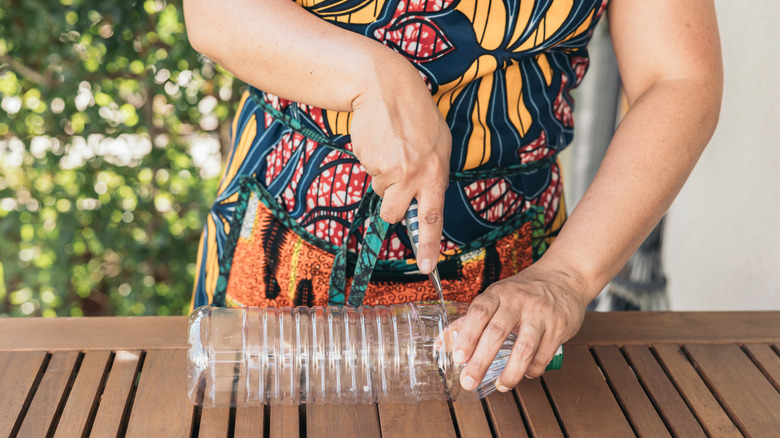
When you're having an outdoor gathering, few things can disrupt the proceedings quite like a contingent of pesky wasps. There are some types of wasps that can be dangerous, especially when they feel a territorial connection to your patio. Commercial traps are available to fight off these flying creepy crawlies but can pose risks to pets and wildlife. Luckily, you can build your own chemical-free wasp trap at home, using a few basic household ingredients you probably already have on hand.
With some sugar, apple cider vinegar, water, a few drops of dish soap, and an old container, you can create an easy trap that could help reduce the number of wasps nesting in your yard. Wasps tend to be attracted to sugar – and a 2016 study published in the Journal of Chemical Ecology found that the acetic acid in vinegar can also act as a lure for various paper wasps and yellow jackets. What about the dish soap? Dish soap is a useful ingredient in homemade bug lures: It breaks the surface tension of the solution, which makes bugs more likely to sink into the liquid, versus crawling out.
Of course, there's more to effective pest control than a singular trap. While this concoction can help to kill off foragers, it won't do anything to address a well-established infestation. Additionally, these traps can inadvertently capture beneficial insects, so placement and monitoring are very important factors. Still, with a few added precautions, and some realistic expectations, this budget-friendly project may offer a convenient way to reduce wasp encounters and make your outdoor space more livable.
How to create DIY wasp traps with sugar and vinegar
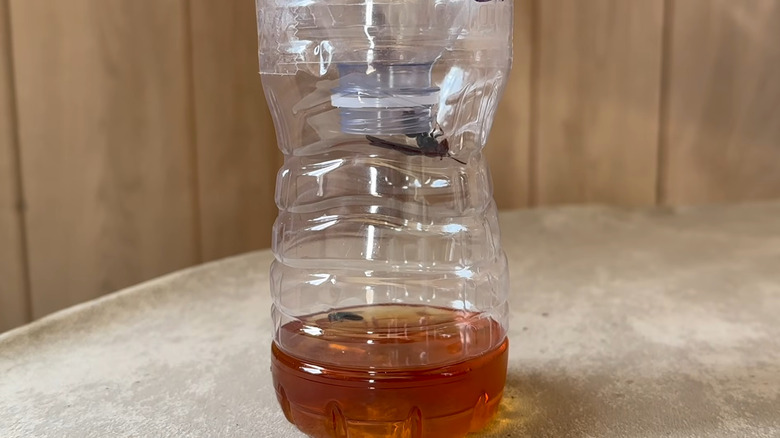
The method for this DIY concoction is remarkably straightforward: Combine half a cup each of sugar, water, and apple cider vinegar, and throw in a few drops of dish soap in an old receptacle. You can double, or even triple, the recipe in a large bucket before dividing it into multiple containers and stashing them around different parts of your yard. Open-top tubs like an old yogurt or ice cream container are okay, but you can improve on the trap by using a plastic soda bottle. Cut off the top third of the bottle, invert it into the bottom section, and you'll be able to easily funnel the liquid inside. This will also make it more difficult for the wasps to escape, since the narrow hole will be harder for them to find once they get in.
The next step is to place the traps. Instead of setting them directly beside your patio seating area, consider leaving a few around the perimeter of your yard. This could help draw foraging wasps away from high-traffic areas of your home. With any luck, that may give you an opportunity to host a successful barbecue, without needing to fight off an invasion of bugs. Hanging the traps high up, like from the underside of a toolshed's roof, can help make sure kids and pets can't get to them.
As these traps are primarily a preventative measure, it can also be smart to stick them where wasps have been known to nest before. If you capture queens, this might help to curb an infestation before it begins. For an existing infestation, you can still employ these traps, but they'll only catch stragglers and worker wasps. For large nests or wasps nesting in wall cavities, your best bet will still be to contact a pest company.