

Think Twice Before Letting AI Decide Your Hiking Route
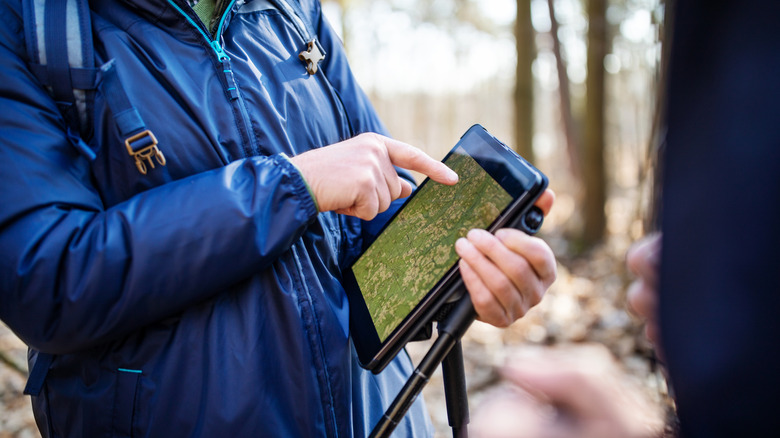
For anyone looking to take to the trails, knowing how to properly plan a hiking route is an essential skill. After all, not all trails — or hikers — are the same, and improper planning leads to a number of hiking mistakes you should avoid at all costs. Seemingly, that list now includes not relying completely on AI to decide your hiking route. This week, three hikers were rescued from a challenging canyon on California's Mount Shasta. According to an article on abc7.com, the novice hikers told the local sheriff's office that a lot of the information they gathered before the hike — including not enough supplies — was AI generated, which the office called a "critical misstep." While AI seems like an efficient and safe way to plan your hike, you may find yourself in a complicated situation, even in need of rescue, particularly if you're new to hiking.
This may seem like an exaggerated concern. It is not. According to an August 1, 2026 article in the The New York Times, a group of young hikers in British Columbia, Canada found themselves in need of rescue after planning their hike using Google Maps, dramatically underestimating the time needed for the hike. Ironically, that event unfolded even as hiking safety organizations in B.C. had spent over a year warning of the risks of planning hikes using AI. Meanwhile, in July of this year, two young hikers required rescue in the French Pyrenees after a ChatGPT-generated map left them lost and exhausted.
While there are apps that can help keep you safe while exploring outdoors, no excursion should be planned relying exclusively on Large Language Models (LLM), AI, or similar technology. To compound matters, there is no one reason flawed routes are generated by AI, making serious issues all the more difficult to avoid.
AI doesn't replace experience and expertise

When it comes to planning a hiking route, there are a couple of things that could be considered Golden Rules. One is to know — and be realistic about — your capabilities: Tackling a trail beyond your skill level is an easy way to find yourself in bind. Even for advanced hikers, the level of difficulty they can handle varies as they age, get in or out of shape, or deal with injuries. In each of the rescues mentioned above, the hikers were described as inexperienced. When you consider that LLMs don't really know your capabilities or limitations (though detailed prompts help), it's easy to see how an AI-generated route can go wrong.
Further complicating things is the fact that AI often makes inaccurate estimates, according to safety experts and rescue personnel. Whether planning a hike or a vacation, it is not uncommon for AI to under- or overestimate the time and supplies required. AI also doesn't always predict the most efficient or realistic route. Almost anyone who has used an in-car navigation system while driving a familiar route can likely attest to this fact, which proves the adage that it's always best to know where you're going.
Such experiences should underscore the fact that, while AI can be a handy reference, it does not replace real, human experience and expertise. So, regardless of what an AI-driven chatbot or app suggests for a hiking route, it is absolutely necessary to verify all information for accuracy — including how it fits within your personal skill set. Such verification can include your own experience, as well as the expertise of other hikers (in person or online) familiar with the route in question and, preferably, your abilities. You can also reach out to ranger stations and other authorities for up-to-date information.
AI doesn't always know what's happening in real time, or even in reality
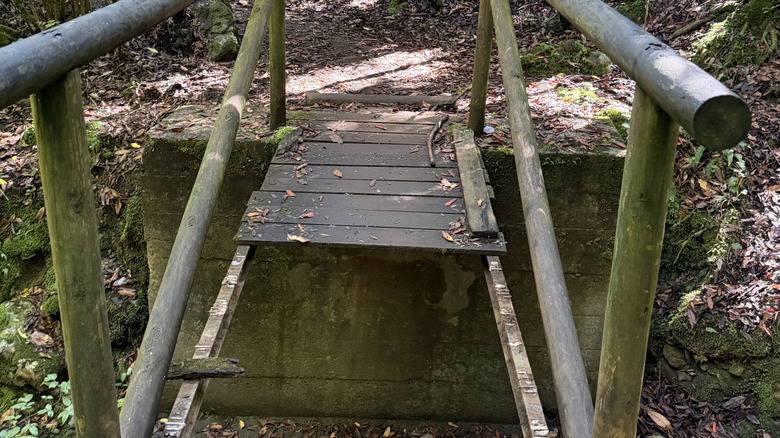
Another important issue when letting AI plan your hike is that apps and chatbot platforms aren't always aware of real-time conditions. As any experienced hiker knows, prevailing weather and the seasons must be taken into consideration when preparing for a hike. These factors not only affect the equipment you need and what you should wear on a hike, they can also influence the navigability of a trail. For instance, narrow, easily navigated high-altitude trails can become perilous when strong winds affect your stability. Additionally, rain can make creeks impassable and make some trails dangerously slick.
Beyond weather, there are obstructions and conditions which AI may not realize or recognize. Bridges may be washed out or closed for repair, trails may be clogged with fallen trees or rocks. If AI sends you down such a path, you could be forced to retrace your steps, potentially extending your hiking time and distance beyond what you originally planned. It's one way the technology has changed for the worse: Unlike a generated route, many trail apps and websites offer on-the-ground, constantly updated user commentary providing a heads-up for everything from fallen trees and icy trails to angry wasps.
AI not being aware of current conditions is one thing. AI creating geographic features that don't exist or eliminating those that do is quite another. This issue, known as hallucinated geography or geo-hallucinations, is becoming increasingly common in many AI-driven apps. This further underscores the necessity to verify all information you receive, by referencing official maps and connecting with people who have recent knowledge of the area. And regardless of how you plan your hike, be prepared, stay calm, and take proper emergency steps if you do get lost.