

What To Do If You're Bitten By A Brown Recluse Spider
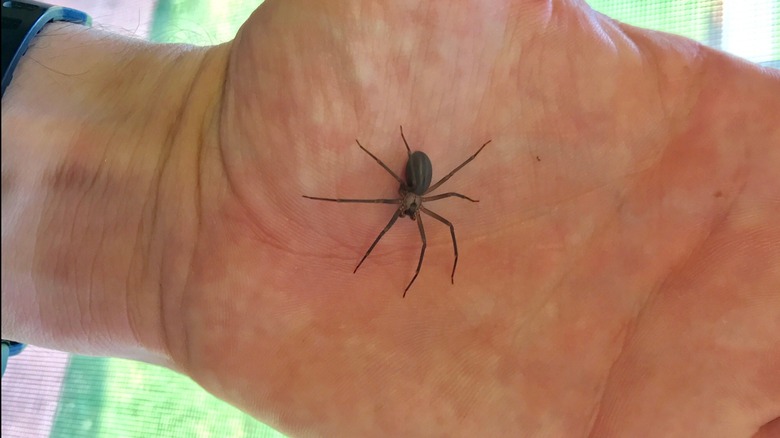
If you think you've been bitten by a brown recluse spider, you may be tempted to panic. After all, we've all heard horror stories about these dangerous spiders and the large, lesion-like wounds they inflict. While an inflamed bite may be anxiety-inducing, it's worth noting that brown recluse (AKA fiddle back) spider bites are actually rare, since the arachnids themselves are generally not aggressive and prefer escaping to attacking. They're also not widespread: Brown recluse species are found in just 16 states. This suggests that — according to studies like one reported in the Western Journal of Medicine and a 2026 study in the Journal of Medical Entomology — self-reported bites are often misidentified infections, other spiders, or skin conditions. What's more, only about 10 percent of bites lead to serious medical issues.
But if you find that you've been bitten by one, you can administer basic first aid to mitigate the fallout and avoid serious symptoms, such as localized tissue damage and fevers. However, if you notice increasing pain, a wound that continues growing, spreading redness, fever, chills, body aches, or other significant symptoms, you'll likely need to seek medical attention. Antibiotics aren't automatically required for a spider bite, but a doctor may prescribe them if the wound becomes infected.
Also be sure not to handle the spider responsible for the bite. Take a photo of it instead to show your doctor in case you experience body-wide symptoms that require medical attention. With higher-risk victims — children, the elderly, and the immunocompromised — seek a doctor immediately.
How to treat a bite from a brown recluse spider
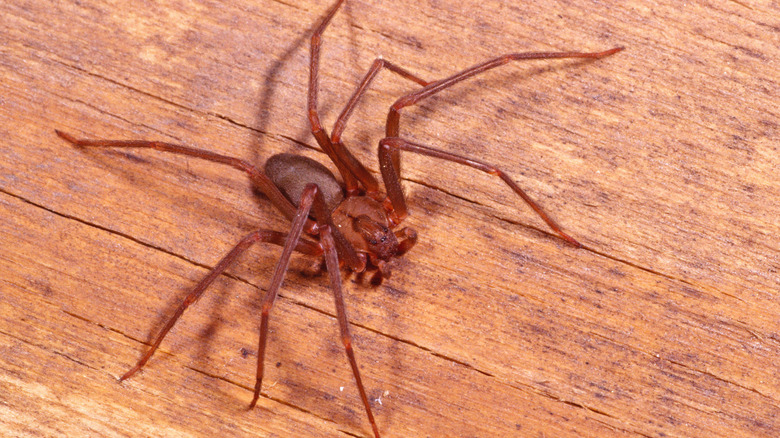
One of the frustrating things about a suspected brown recluse bite is that the most concerning symptoms may not appear for days. According to the Missouri Poison Center, the initial bite may cause little more than a mild sting going unnoticed, followed by redness, swelling, and tenderness, like any insect bite. In this situation, gently clean the affected area with soap and water, then apply a cool, damp cloth or ice pack to help reduce pain and swelling. If the bite is on an arm or leg, elevating the affected area can also help.
If you find that you're dealing with a more serious case where the tissue in the center of the wound is starting to die, creating a dark area, then it's a spider bite that needs immediate medical treatment. Also be sure to ignore online comments advising you to suck out the venom or apply harsh chemicals. These measures won't neutralize the venom in the bite and may cause additional injury or infection. If it itches, consider a topical antihistamine. A prescription for antibiotics should help to fight any secondary infection that does occur. Although this all sounds scary, don't let the fear of a rare brown recluse bite overshadow your love of the outdoors.