

Why Do Some Bees Die After Stinging You?
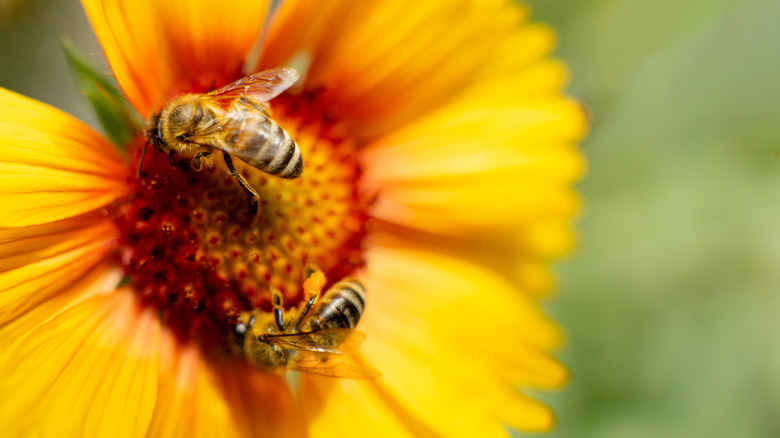
Bees are considered beneficial insects — as efficient pollinators, they rank among the insects you shouldn't kill in your garden. Despite their role as garden helper, many of them also have the ability to inflict a painful sting. But some don't survive the ordeal. So if you get stung, not only are you left with burning, irritating welt, you also lose one of your pollinators. But, why do some bees die after stinging you? Turns out, it is a matter of anatomy.
For starters, bees only have stingers for defensive purposes, and not all bees can sting. Male bees, typically referred to as drones, are not equipped with stingers. Additionally, not every type of bee can sting, even if they have a stinger. There are actually more than 600 species of bees that are part of the stingless bee tribe. In fact, stingless bees were the predominant honey-making bees in all of North America before the sting-capable European honey bees arrived with colonists in the 1600s.
It is these European honey bees that famously die once they sting, making the ultimate sacrifice in the defense of their colony. The other bees that lose their life when they sting are Africanized honey bees — a variety of the same species — which were introduced in North America in the 1990s. The females of these types of honey bees suffer death after a single sting for the simple fact their stinger is designed to remain in their victim.
Bee stings can be fatal for bees
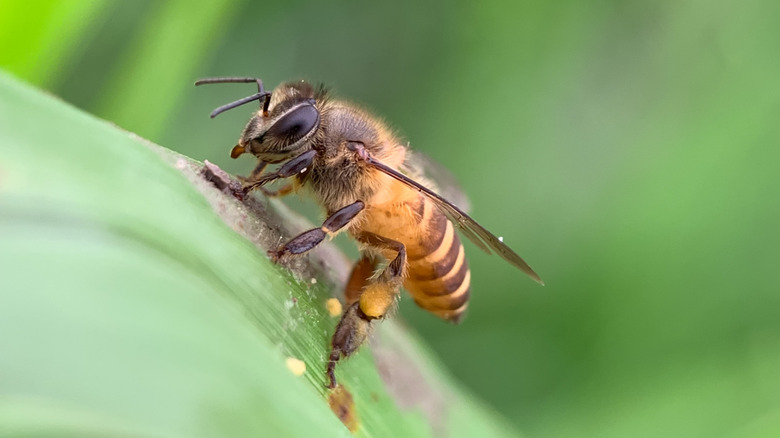
The stingers on both European and Africanized honey bees feature barbed tips, designed to prevent them from being removed once inserted into flesh of a perceived threat. This is bad news for both the bee and its victim. As the bee pulls away, the stinger literally rips from the bee's body, taking with it part of the bee's abdomen and internal organs. Essentially, the injuries are too traumatic and the bee dies shortly after. While this might seem counterproductive, the caste of bee known as worker bees (all the females except the queen) are infertile. Since they can't reproduce, the sacrifice that so-called guard bees make to protect the colony and its queen is their legacy.
Although that is the end of the bee, it is not the end of the sting. The barbed stinger is wired to keep working its way deeper into the victim once the bee pulls away, injecting more venom as it does. This process can last for several minutes. That's why, if you are attacked by a bee, it is important to remove the stinger as quickly as possible.
However, not all bees die while stinging. In fact, some of the most dangerous types of bees, including carpenter bees and bumblebees, not only survive but can sting several times. This is because they have a smooth stinger which is easily removed and reinserted. Ironically, while several species of bees can sting rapidly and repeatedly, the most dangerous bee in the world is actually of the one-and-done variety. That is the aforementioned Africanized honey bee, aka the killer bee. These creatures are easily agitated and may attack en masse — sometimes to the tune of thousands of bees — leaving their victim with a multitude of very active stingers.