

What Are Those Tiny Red Bugs On Concrete Called?
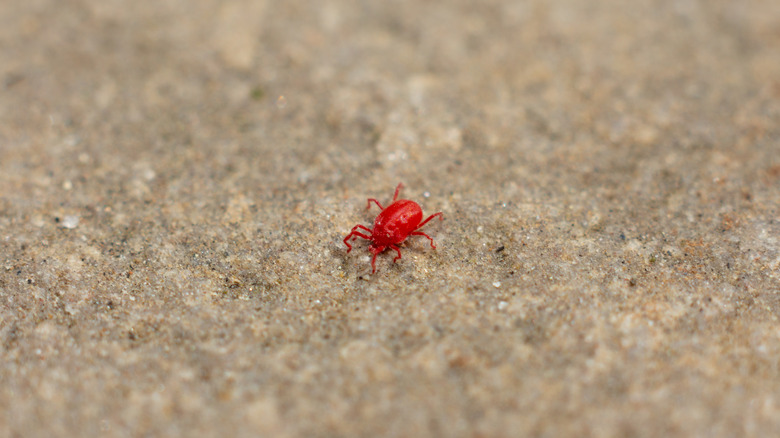
Looking out across your concrete driveway, porch, or patio and seeing a mass of near-microscopic red bugs crawling about can be unsettling. Catching these crimson vermin plastered to your home's foundation isn't exactly a confidence booster, either. These tiny bugs, known as concrete mites (Balaustium spp.), are also sometimes called sidewalk or red velvet mites. You might be concerned about the impact they have on your home, yard, and pets, but don't worry — although the moniker sounds somewhat menacing, they are actually harmless.
Understandably, seeing hordes of small red bugs everywhere may lead you to believe your yard has a pest problem. But in fact, some suggest concrete mites are actually helpful, much like soil mites in your garden. Among other things, they munch on the smaller mites that do cause problems. However, if you are among those who would rather not see them around your house even if they are beneficial, you can take solace in the fact they usually don't hang around very long. Their active cycle lasts from spring through fall, especially late spring and early summer. If you wish to expedite their exit, spraying them with a strong stream of water is usually all that's necessary. You can also vacuum up any mites you find on the side of your house or inside a shed or greenhouse.
What you need to know about concrete mites
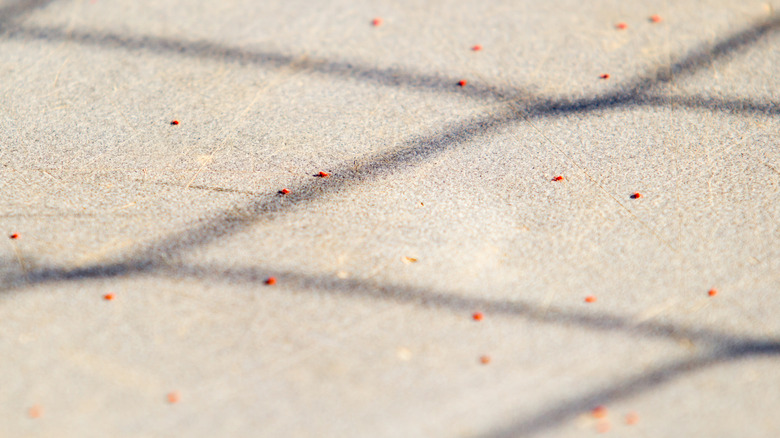
First off, these minuscule arachnids pose no threats to people or pets. The fear that they bite is likely because they can be easily confused with chiggers, some species of which do enjoy chomping on humans and other mammals. However, concrete mites — which are usually less than 2 millimeters long — are not known to bite and do not spread any diseases. Additionally, they will not feed on your home's foundation, your driveway or your patio. About the biggest detriment when it comes to concrete mites is the reddish-orange stain they leave on skin, clothing, or concrete when they're crushed. Watching where you sit is helpful here.
At this point you may be wondering why concrete mites are crawling across your slab if they don't feed on people, pets, or concrete. Simply put, they're trying to keep warm. Concrete mites live, breed, and lay eggs in soil and leaf debris. That is also where they hunt for insects and insect eggs, which is their preferred food. So you'll mostly witness them clustering on the patio on warm, sunny days. However, if you wish not to see them at all, clear leaf debris and consider an alternative to mulching fallen leaves into your yard. Avoiding excess moisture in leafy or weedy areas will also help make the yard less tempting for breeding.
While concrete mites primarily eat small arachnids, insects and insect eggs, they will also feed on pollen in their larval and adult stages. This is another reason that draws them to your concrete. They are particularly prominent in spring, which is when newly-hatched mites emerge. It's also when pollen covers almost any surface, including driveways and patios. That combination means these mites can score both warmth and nourishment in the same location.