

A High-Tech Trend Is Ruining Fishing For Everyone & Far Too Many Anglers Have Taken The Bait

I have fished for over half a century now. Over 10 years of that time was spent as a fishing guide. I've also covered the sport as a writer and photographer for over three decades. During that time, I have certainly seen a number of fads and trends. However, the evolution of forward-facing sonar (FFS) and how fishermen are utilizing it is unlike anything else that has come along. In many ways, I feel this high-tech trend is ruining fishing. Even so, the number of anglers using it has grown exponentially in recent years.
Introduced by Garmin to non-commercial fishers in 2015, FFS provides real-time, moving underwater images of fish and structure, along with depth, direction, and other information via a computer console that can be set up anywhere on the boat. While the simple images may seem blurry and unintelligible at first glance, an experienced angler can identify species, size, direction, and more about every fish on the screen.
Various forms of electronics have been utilized by recreational fishermen longer than I've been alive. The earliest depth finders emerged in the years immediately following World War II. They continued to evolve through the years to include various fish finders, GPS navigation devices, and a slew of other contraptions. So, what makes forward-facing sonar so different?
For starters, many of the previous generations of electronics were made to simply show the physical conditions, such as depth of water, underwater structure, or navigational routes. While there have been other types of sonars that detected fish, from early paper graphing units to modern side-scan models, none of these devices showed you what you were approaching, nor did they possess precise detail and real-time imaging feeds. FFS does all of this and more. Unfortunately, anglers have begun using those capabilities in such ways as to completely alter the sport to their advantage.
FFS goes against the essence of angling
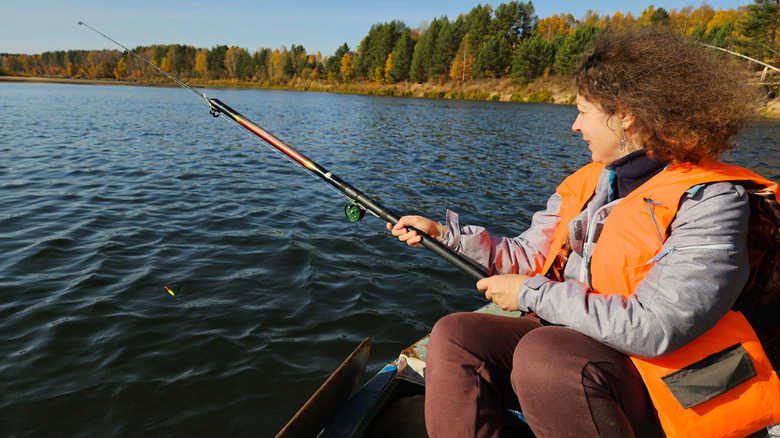
I will readily admit that advances in technology are inevitable, and fish finding technology is invaluable in commercial fishing. Even basic elements such as rods, reels, and lures have made quantum leaps in technological improvements over the past few decades. So of course, the electronics have as well. In fact, some argue that even GPS units make fishing too easy. That's because anglers with no knowledge of an area can now load a card into their GPS unit and navigate safely to various fishing hot spots in any body of water.
However, easily accessing a traditionally productive spot is much different than watching what's going on in the water beneath the boat in real time. That is at the very core of what makes forward-facing sonar the antithesis of the very essence of sport angling, which is built around learning the water, the water body's structure, and fish behaviors, in addition to essential skills such as casting. This has long been true for both fly fishing and conventional tackle angling.
With FFS, anglers no longer need to rely on intuition or experience when it comes to fish behavior. They can literally see on the screen how the fish is reacting to their lures and baits. That really takes much of the guesswork out of knowing how to choose the best baits for a specific situation. Before FFS, the lingering question was, did you select the right lure or are there just no fish in the area? Now, you know the answer to that question immediately and if the fish you see are not responding well to your bait, you know it's time to change. To top things off, some manufacturers and retailers of traditional tackle are witnessing a massive drop in sales, claiming that anglers employing FFS buy only the basics since, essentially, they know what's needed before even casting or dropping a line.
Trophy catches don't mean as much
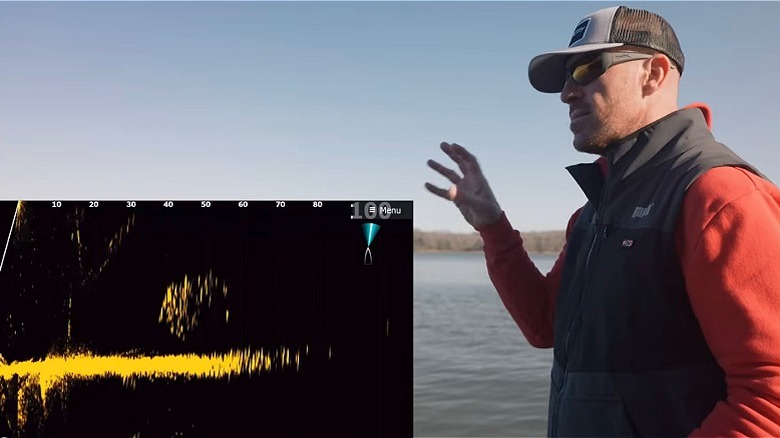
Taking it a step further, trophy catches don't matter as much anymore, either — at least not if they were caught using forward-facing sonar. Whether it was a personal best or world-record, trophy catches have always been a significant angling achievement because they represented the combined result of skill, effort, and, most importantly, time.
Before the advent of FFS, fishermen typically had to make countless casts, hoping those casts were directed in the vicinity of a trophy-sized fish. As they made empty casts, they were left to wonder why they weren't getting bites and if any big fish were even around. Forward-facing sonar eliminates that part of the equation. Now, it only takes a moment to scan an area or piece of structure to determine if the right fish is there. If no quality fish are around, anglers can save that time and those casts. They can instead move from spot to spot, scanning the area to see if a trophy fish is home before even bothering to take a rod out of the holder.
Once the perfect fish is located, FFS allows them to then watch how it is reacting to their lure or bait. If that fish moves off, they can follow. Indeed, many a big fish has been caught with forward-facing sonar simply because an angler followed it long enough and made enough casts at it that the fish finally struck. Many have also been caught because anglers can see the precise moment a fish eats the bait, so they don't have to be as adept at feeling a take before setting the hook. In a bygone era, this would have been considered a strange fishing method. But in an age dominated by electronics, artificial intelligence, drones, and video games, it is rapidly becoming the norm.
Tournaments are in a quandary
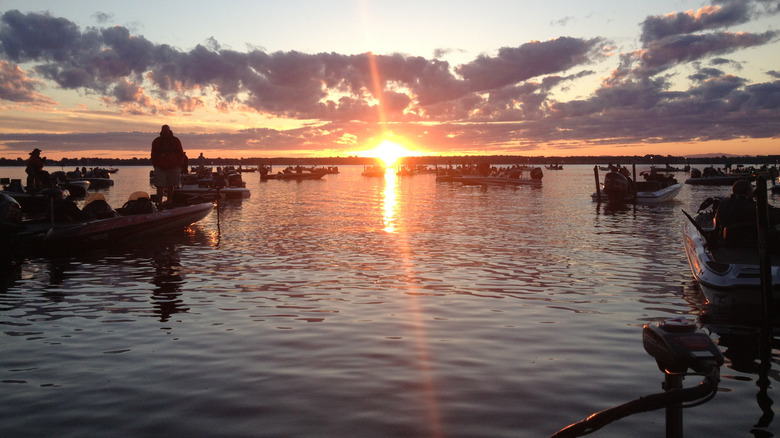
While everyday amateur anglers are just competing against themselves, tournament anglers are competing against each other, often for lots of money. Forward-facing sonar has placed these tournaments in a real quandary. Tournament winners are supposed to be those who demonstrate the greatest degree of skill and excel at applying knowledge to the prevailing conditions on tournament day. These advanced electronics can certainly skew the competition towards those who have them.
When it comes to tournament anglers, being able to not just locate fish, but the size of fish that are needed to win the event is priceless. Anglers can skip areas that are only holding small fish, essentially culling their catch before they even cast. While utilizing FFS efficiently is a skill in itself, it tends to supersede numerous traditional angling skills, functioning more or less as a shortcut. Additionally, in some smaller tournaments, not every angler has the financial means to outfit themselves with forward-facing sonar. So, it's not even a matter of who is more electronically adept, but who can afford the device.
With those issues being very front and center, some tournaments have chosen to ban the use of forward-facing sonar. However, given the amount of sponsorship money, a significant amount of which comes from the makers of these devices, as well as the vast number of fishermen using them, others have had to look for alternative solutions. Even the largest of tournaments have been grappling with the issue. Some major tournament series have gone to a hybrid format, with FFS being allowed in some events and not in others. This only goes to show how deeply rooted and divisive FFS has become.