

How To Prevent Aphids From Destroying Your Roses
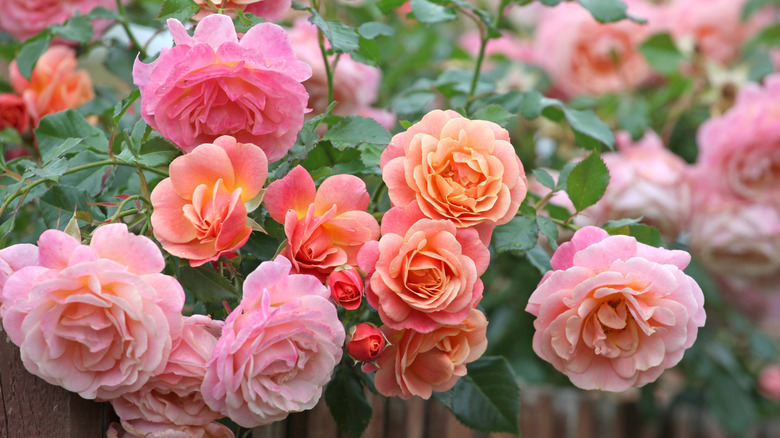
For home gardeners, there are few things more upsetting than spotting an infestation of aphids on your rose bushes. These sap-sucking creepy crawlies may appear harmless to the untrained eye, but they can rapidly multiply and tear through a garden when left unchecked. If you don't intervene as soon as aphids appear, you'll find they can stunt the growth of your roses, leaving behind curled leaves, sticky buds, and ample opportunity for mold to wipe out whatever remains. Chemical sprays offer a quick fix, but tend to be toxic for roses and beneficial pollinators, so it's best to test a repertoire of more natural remedies before resorting to commercial insecticides.
If you're looking to get out in front of the problem and prevent aphids from taking over, you can begin by encouraging natural predators of the pests, such as lacewings or ladybugs. Ensuring ladybugs stick around to guard your roses from aphids is a fairly easy process. Simply get ahold of some larvae or adults from online retailers or a local supplier, and release them in your garden following heavy watering. They'll settle in best if you release them at dusk. You'll want to provide them with a food source and shelter initially, so they'll set up homes in your garden.
To increase the presence of ladybugs for the long term, make sure you've got plenty of nectar-rich herbs for them to snack on. Dill, sunflowers, cilantro, and marigolds (a plant that also naturally repels pests) are among their favorites. Add wood or leaf mulch for them to hole up in and lay more eggs. If aphids do show up, localize your ladybug population by employing a fine-mesh insect net over the afflicted area. Before long, the ladybugs will begin hunting down their natural prey, freeing your rose bushes of the tiny scourge.
Basic maintenance goes a long way
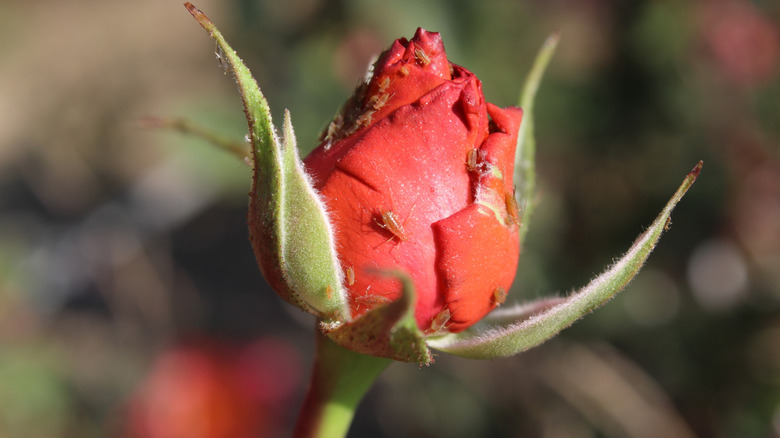
Much like a swarm of good-luck ladybugs, basic garden maintenance is a simple aphid prevention method. In many cases, catching these invasive pests early is the main deciding factor between them being a manageable nuisance and a garden-destroying problem you'll be fighting all season long. Small tasks like removing dead leaves, snipping damaged stems, and spreading out overcrowded growth can make conditions less ideal for aphids to infest. This also allows you to focus your efforts on small sections of your rose garden, offering easy opportunities to spot early aphid activity. That way, if you do feel the need to resort to chemical pesticides, you can centralize them with surgical accuracy, rather than spraying an entire bush or flower bed.
When watering roses, be sure to hit the stems and leaves with a sharp blast of cool water occasionally. This can knock aphids off of your plants before they have time to spread their population, effectively ending an infestation before it begins. The best method for watering roses usually involves using this technique in the morning, when aphids are most active. This also allows excess water to evaporate as the midday sun beats down, reducing the risk of inhibiting fungal mold.
Aphids and other garden pests love to target roses just as they begin to bloom in the spring and early summer months. Therefore, focus your prevention efforts at max capacity during that time. With any luck, you might be able to banish aphids from your garden and circumvent this common headache through diligent garden maintenance all the way through autumn.
Using essential oils and other natural deterrents
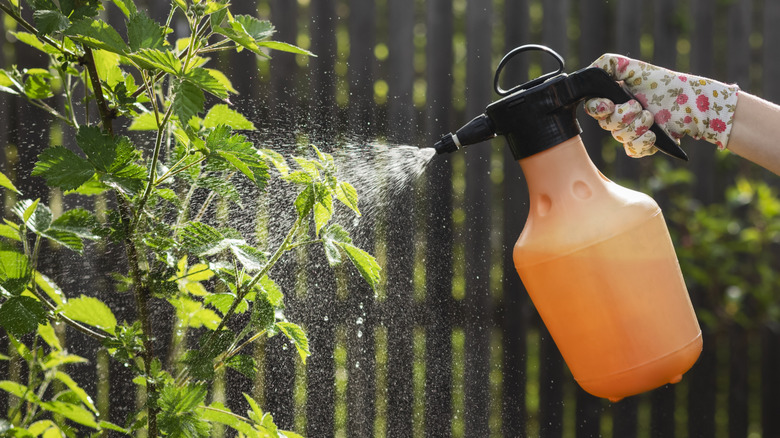
If all else fails, and you find yourself battling a horde of aphids on your roses, it might be worth employing some essential oils and natural mixtures before resorting to common chemical pesticides. While some natural remedies — like neem oil or simple dish soap and water — have more scientific backing than others, some gardeners have found that essential oils with strong fragrant scents work wonders for repelling aphids, especially when applied regularly while watering. Peppermint, rosemary, clove, and cedarwood are commonly used for such a purpose, so it's worth experimenting to see if any of these scents work well on your rose bushes. To apply the essential oils, heavily dilute them in a mixture of water and a neutral dish soap. Then test-spray on a few plants in the early morning, and circle back if you start to see results.
Companion planting with roses is another strategy that has worked for some gardeners. This option involves planting strong-smelling plants such as garlic, chives, or mint, which can deter aphids by masking the scent of roses or other alluring flowers. Other plants, like yarrow, attract ladybugs which, of course, are happy to deal with your aphid problem.
It's important to remember that no single solution works perfectly for every garden, so your results may vary when employing soapy water, essential oils, and other natural pest control methods. Often times, the best way to combat an aphid infestation involves mixing and matching a combination of strategies, and remaining consistent throughout the growing season.