

Why Your Kayak Keeps Tipping Over (And How To Prevent It)
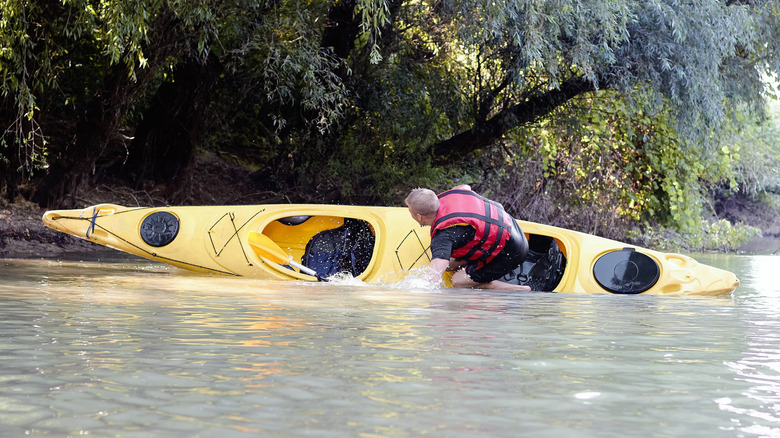
Despite surging popularity, awareness, and participation in kayaking, there is still a wide-spread perception that kayaks are prone to tip or flip over. That isn't as true as it once was. While some models are inherently less stable, kayaks are designed to remain upright. Additionally, a big part of the reason the sport has grown so rapidly is the wide variety of kayaks available. In other words, the opportunity exists to choose models that offer even more stability.
Though they are not meant to tip over, even the most stable models can in certain situations. Basically, kayaks can tip or flip over when they become unbalanced or encounter conditions which they cannot handle. Knowing how to avoid each of these situations – and take corrective action if they are encountered – is a key part of learning how to kayak safely is different types of water.
Kayaks can become unbalanced for a variety of reasons. One common cause is the weight load of equipment and supplies being either too high or poorly distributed. Another is body position. If your body leans too far up or out, it changes the center of gravity of the kayak. This can happen while paddling or entering and exiting the kayak. This is actually one of the hidden dangers of kayaking. In addition to the weight and how you move in your kayak, poor paddling techniques and weather conditions, such as wind, waves, and current, can cause a kayak to become unstable and potentially tip over.
Keep your kayak from tipping over

Knowing what makes a kayak tip over will help you understand what steps to take to prevent it from happening. For starters, choose the right kayak for your skill level and type of water you are paddling. In general, wider kayaks are more stable. However, they are also slower. The key is finding the right balance for your needs and abilities. Additionally, sit-on-top (SOT) kayaks are typically more stable than sit-in models.
Next, as you load your essential kayak gear, make sure it is evenly distributed. Keep emergency equipment within reach, but otherwise, choose stability over convenience when it comes to the placement of your gear. Consider your own body weight, and that of your partner if in a tandem kayak, as well. Remember that weight doesn't just need to be balanced front-to-back and side-to-side: The height of the weight load above the waterline also negatively affects a kayak's stability. So, it is important to keep weight distribution as low as possible. Again, that applies to your own body weight as well, which is why you should never try to stand in your kayak.
On the water, be mindful of your movements, as every move shifts the weight distribution in your kayak. All movements should be low, balanced, and centered. If you lean a body part too far over the side of your kayak, it can become unstable. Additionally, sudden movements or being too rigid can cause a kayak to become, or at least feel, unstable. So can movement outside the boat like waves, wind, and current. While you can't control the weather, you can check it and opt out during rough conditions. If you go get caught in wind or waves, point your kayak into the weather to maintain stability.