

The Rookie Rock Climbing Mistake You're Probably Making
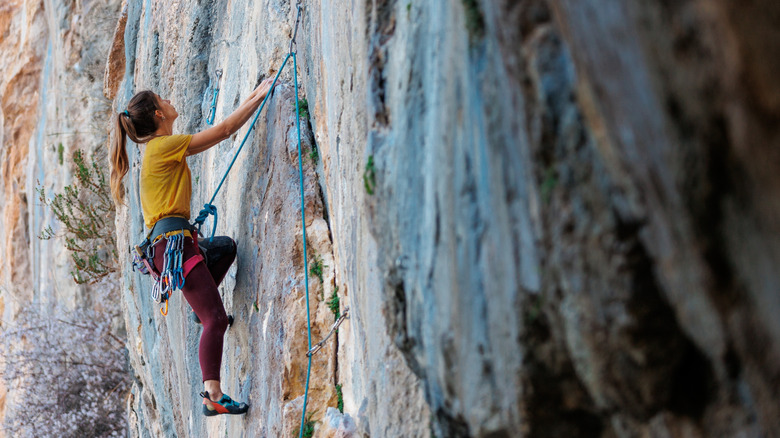
One of the most common rookie climbing mistake is trying to maintain "good" posture. Rock climbing goes against everything the posture police have taught you. There is no one, specific posture with climbing, only movements and positions that flow from one hold to the next. Many beginners bring what they know from other sports or gym activities: An athletic stance, staying on their feet, moving quickly, and keeping their bodies safe and supported. As a result, beginners end up keeping their backs straight, their cores engaged, arms and knees bent. That's not all bad to do, but it ends up looking like C3PO from "Star Wars," and it's not the most effective way to scale a rock face.
A better way to think about climbing posture is to imagine it as a series of dance movements. Body positioning should allow movement to flow naturally, constantly shifting balance points, sometimes with big moves, other times just subtle, micro-movements. The key is to avoid being stiff or gripped, or to let your hips move out of square to the wall. Essentially, you shouldn't look like you're climbing a ladder. Once beginners let go of that default posture, they unlock endless ways to move their bodies into different positions, allowing them to get from one hold to another smoothly. Moves like stemming, mantling, back-stepping, and lay-backs, side pulls, and underclinging all require some degree of dynamic posturing. REI has a great introduction video on climbing moves if you want to see all the different ways to ascend a rock wall.
Ways to break through rookie climbing posture
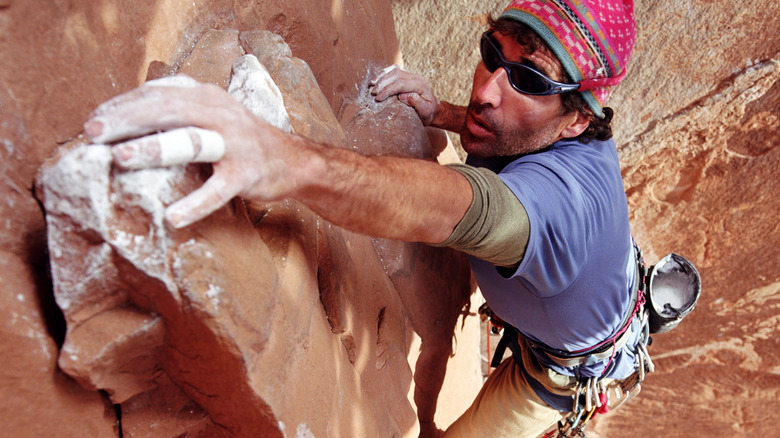
Breaking beginner posture habits requires some flexibility and making the most of small adjustments and movements to unlock the next hold. Think about bending, pivoting, twisting, and extending at every joint in your body. Sometimes, just a slight adjustment in the direction of your hips will open the next move in a sequence. Beginners often stiffen up on walls because they focus on handholds and forget about their feet. Keep looking all around and moving until you find a good rest spot to shake out your hands and feet. Relaxing between movements also prevents climbing from getting pumped, which is not synonymous with being psyched. It's climber-speak for the aftereffect of white-knuckling, stiff climbing, and over-gripping. You'll know if you've gotten pumped when your muscles are burning, shaky, and aren't as good at holding a position. Balance in climbing is found by flowing in and out of tension and relaxation, and of constriction and extension.
Another reason a beginner might be a little stiff is simply lack of experience. If you're out sport climbing with a group, watch someone experienced lead it. Seeing their sequence of moves, visualizing yourself doing the same, and even mimicking it on the ground can help initiate mind-to-muscle memory. Without practice or watching someone else, beginners may muscle their way to a spot and get stuck because they got pumped or they've gotten themselves into an unfriendly position where they can't reach the next move. Finally, focus on breathing. The mental challenge of climbing, along with the physical demands, can make both beginners and experienced climbers forget to breathe, leading to stiff, constricted movements. Relax: Fluid breathing helps make fluid movements.