

Do Coyotes Attack Humans? What You Need To Know
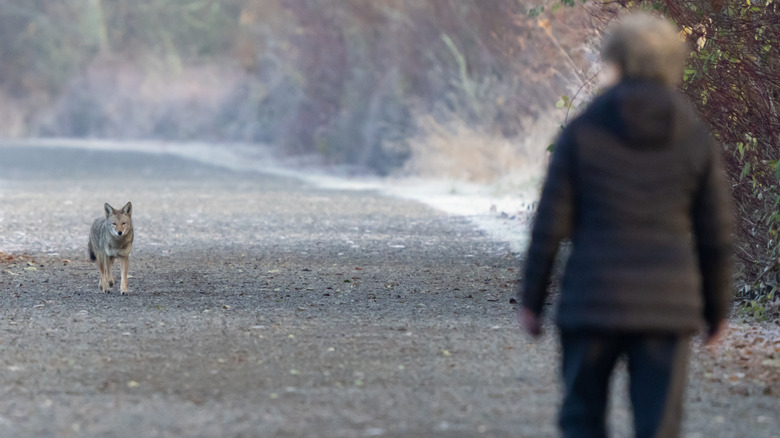
Coyotes are predators found throughout the continental United States, all of Mexico, and the majority of Canada. With that in mind, you may be wondering if you should worry if you run into a coyote on a hike or see one in your backyard. After all, they are opportunistic hunters that often take advantage of unsuspecting or vulnerable prey, including a variety of mammals. So, do coyotes attack humans? The answer is, sometimes.
Given that coyotes are fast — capable of running up to 40 miles per hour — and equipped with sharp claws and a mouthful of teeth, it is natural to assume they present a danger to people. In some respect they do. They are certainly capable of attacking. However, they are also skittish animals, easily scared away by humans and other large creatures. Hence the reason so-called coyote hazing (using noise as a deterrent) is an effective defense against these wild canines. It is also why their diet consists mainly of smaller mammals such as mice, rats, rabbits, and frogs.
It's important to point out that most recorded attacks on humans are minor, and the coyotes are generally fended off, causing them to run away. In North America, there are only two known fatal attacks in modern history.
However, that in no way means people shouldn't be cautious around coyotes. In fact, while still relatively low, the number of coyote attacks has actually been increasing over the past few decades in some suburban areas. So, anyone spending time outside should be aware of their risk and how to reduce it. This goes not only for those exploring remote areas, but also those spending time in backyards, parks, golf courses, and other suburban outdoor areas.
Where, when, and why most coyote attacks occur
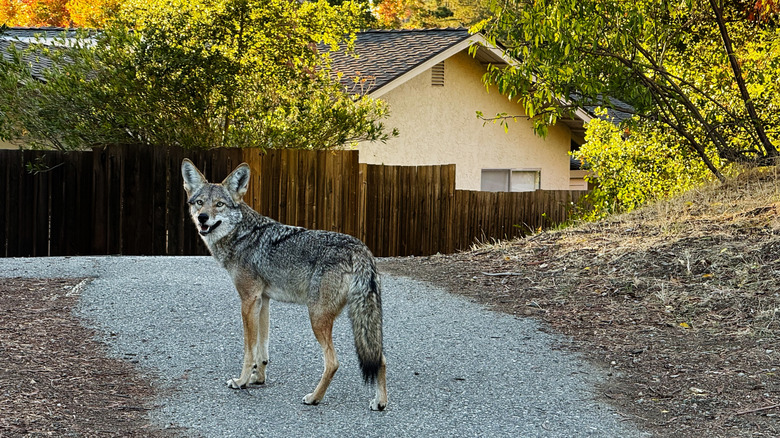
One might assume most coyote attacks happen in rugged, wild places. However, although some attacks do happen far afield, most take place in suburban areas, according to the Urban Coyote Research Project. While attacks have been recorded in over a dozen states, the vast majority come from the American Southwest, particularly California. There are attacks throughout the year, but most seem to happen during breeding season, from January through April. They also tend to occur more frequently during lowlight periods. However, there have been instances of mid-day attacks as well.
The reasons coyotes attack are varied. While nearly a quarter of reported attacks in the study are listed as unknown, a large number of attacks (37%) are classified as predatory in nature, most often involving small children. Coyotes also sometimes attack humans attempting to protect pets or when coyotes themselves feel threatened. There have been a few cases in which the coyote was rabid (7%) or simply investigating (22%) — such as biting a person in a sleeping bag. In general, yelling or making other noise and waving your arms sends the canids running.
Why attacks in suburban areas are on the rise is equally complex. For one, suburbs are infringing on coyote habitat. Rather than pack up and leave, coyotes tend to stay and adapt. Some people suspect coyotes in suburban and urban areas have become less afraid of humans and more aggressive since they have no natural predators in these environments. They are also being drawn in closer due to available food sources such as table scraps, garbage, and small pets. You can deter coyotes from your yard by picking up pet food, installing fences, and making and sealing trash containers. When camping, protect your campsite at night by adding lights and properly storing food and trash.