

The Essential Items You Need For Your Kayak Adventure

We may receive a commission on purchases made from links.
Whether you are new to kayaking or are an experienced paddler, there are essential items you need for your next adventure in order to enhance your safety, performance, and enjoyment. Although the list varies slightly based on the type of water you are paddling, some items are must-haves for every trip. These things run the gamut from floatation to communication devices, and even comfort.
Whenever you take to the water for a kayak adventure, you obviously need the right kayak and paddle (and, preferably, a spare). Aside from these items, the most important thing to bring is a life jacket — for yourself and any additional paddler if you're riding tandem. For one thing, every state requires jackets on board any paddle craft. Additionally, while kayaking it, is quite possible you unexpectedly end up in the water. When and if that happens, a life jacket is the best way to keep from drowning on rivers and lakes, as well as coastal waters. In fact, you should always wear your life jacket, even if the state you're paddling in only requires it to be on board.
It's not just enough to have vests on board: It is also important you choose the right life jacket for kids and adults. it should fit snugly, but be comfortable and allow for a full range of movement. It also needs to be USCG approved and in good condition. For this reason, lightweight, non-restricted versions like the Onyx MoveVent dynamic paddle vest are popular among paddlers. In recent years, inflatable vests have been growing in popularity, but they require regular maintenance to ensure they are working properly. Inflatable vests are also not appropriate for whitewater kayaking, where they could get damaged and rendered useless during the high-impact activity.
Essential emergency gear for kayaking
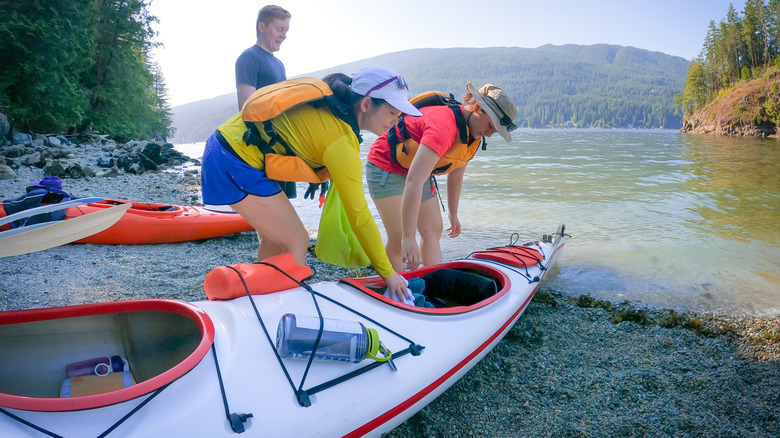
Before hopping into a kayak, there is essential emergency gear you should have with you. In addition to a life jacket, kayakers are required by the U.S. Coast Guard to carry a sound-making device, like an airhorn or whistle. Most commonly, kayakers utilize a safety whistle tethered to their life vest.
Kayakers are also required to carry visual distress signals for nighttime use. This can consist of three flares or an S.O.S. distress light. Even if you are not planning to be out after dark, carry these items in case something goes wrong. Finally, kayakers are required to display an all-around white light at night and during times of restricted visibility, such as fog. This is so others can see you and to avoid collisions. Unlike larger boats, kayakers are not required to exhibit red and green navigation lights. While also not required, it's a good idea to have a portable light to help you navigate during lowlight conditions and at night. For hands-free use, a headlamp is ideal.
Other recommended emergency gear items when kayaking include a first aid kit, paddle float, rope, and bilge pump (if you are not in a self-bailing kayak), along with a multitool and repair kit. These items are best stored in a dry bag or waterproof storage box. It is also a good idea to carry a kayak anchor in case you need to hold yourself in position, particularly when fishing or swimming from the craft.
Essential kayak gear for navigation, communication and comfort
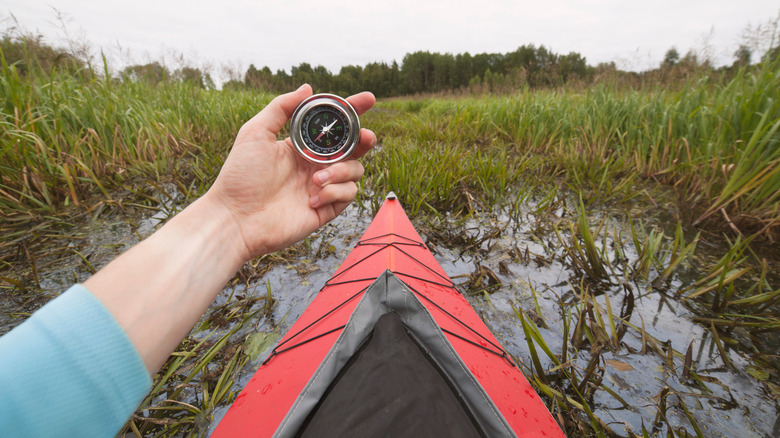
On every kayak trip, you need gear to help find your way, stay in touch with others, and remain comfortable. For navigation, at the very least take a reliable, waterproof compass. One that floats is even better. A waterproof map or chart of the area is handy, or use a handheld GPS navigation device, such as the Garmin eTrex 22x. Even if you rely on cell phone apps, you'll want these items as backups.
Your phone is, of course, vital beyond its apps, as it's your primary communications tool. For safety, keep it in a waterproof pouch or box. Depending on where and how you're paddling, you may want other options. With multiple kayaks, two-way VHF radios are helpful. This lets you easily communicate with others in the group, even during spotty cell service. They're also useful if you need to call for assistance from the Coast Guard or other emergency response. If you are paddling in remote areas, consider a satellite communicator as well, especially on multi-day trips.
To ensure a successful kayak adventure, comfort should be considered essential. Many items contribute not only to comfort, but to safety. Wear a hat and sunglasses, and have a dry bag packed with things such as dry clothes, sunscreen, and bug spray. If you are paddling for an extended period of time, consider paddling gloves. And of course, regardless of the expected length of your trip, bring plenty of water and high-calorie snacks. Not only will they be invaluable in emergencies, you'll appreciate them if there are delays getting into or out of the water, or if a cove or beach looks particularly inviting and worth a visit.