

How To Waterproof A Tent With An Easy DIY Solution
We may receive a commission on purchases made from links.
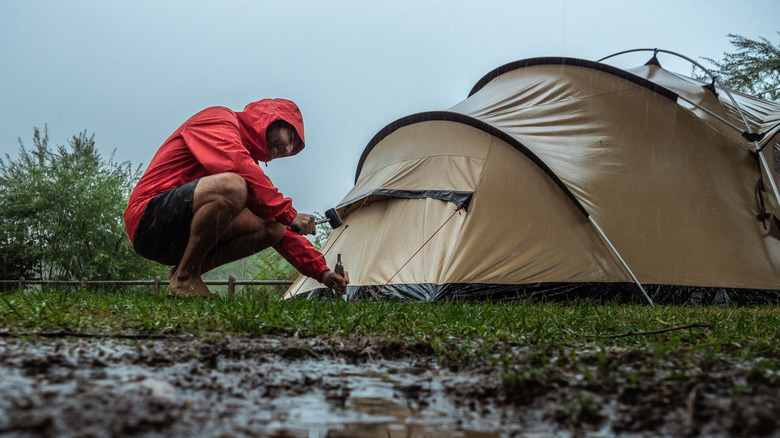
Dysfunctional gear, like a leaky tent, is a surefire way to ruin a camping trip, so it's wise to make sure yours is waterproof. Waterproofing a tent is relatively simple: buy the right DIY sealants and coatings for your tent's fabrics, clean and dry your tent, pitch it, and apply the treatments to your tent's seams, walls, flooring, and rainfly. If you don't want to use a chemical coating, there are natural waterproofing options, like beeswax, to try. Seams are common weak spots when it comes to leaks, and even taped seams wear out over time. Walls, flooring and rainflies usually come with a urethane coating on the inner side of the fabrics and a durable water repellent treatment on the exterior. These treatments also break down with time and use, especially if the tent has seen a lot of UV exposure and moisture. It's also worth noting that some tents aren't pre-treated by the manufacturer, so always check before camping. Even a brand-new tent can leak if you haven't prepared it.
To start, make sure your tent is clean and dry. Use a mild soap and warm water, along with a soft microfiber towel to remove oil, sap, dirt, and debris. Note any punctures or delaminating seam tape. If your tent is relatively clean, you can spot-treat stains with a rag and rubbing alcohol. Next, apply new seam sealer, something like Gear Aid Seam Grip +SIL silicone sealant. Just paint a thin coat over the seam with a small sponge or brush. Follow the sealant's instructions (make sure it's the right one for your tent) and allow drying time before testing or storing the tent. The process is easier when you have the tent pitched. To touch up rainfly seams, pitch it inside-out so seams are accessible.
Applying a urethane coating and DWR treatment
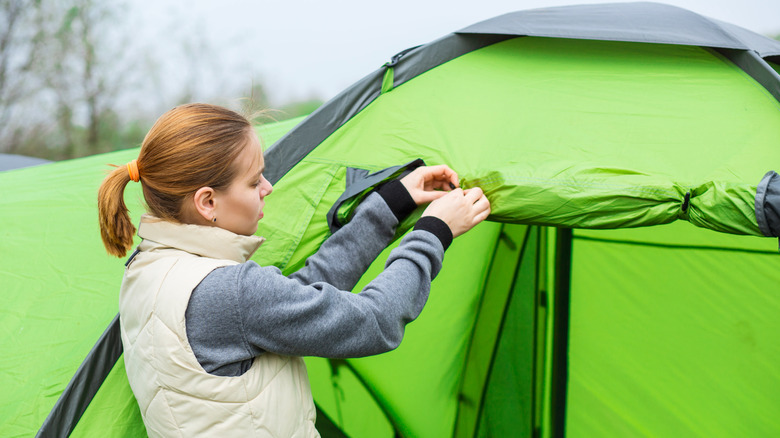
Next, shore up the urethane coating on the inside of your rainfly, walls, and floor. Look for signs your tent needs a refresh, such as a chemical odor, flaking coating, or the fabric sticking to itself. Similar to the seams, match the right sealant to the fabric. Gear Aid's Seam Grip tent fabric sealant may be a good option for nylon and polyurethane-treated tents. If the existing coating is flaking off, first remove deteriorated coating with rubbing alcohol and a slightly abrasive sponge. Follow all instructions; you may want to have a second bottle of sealant on hand to cover everything.
Finally, the outside of the tent and rainfly should get a glow-up, too. Most tents begin to lose their DWR (durable water repellent) after a few years, but some might need to be retreated more frequently. If water isn't beading off the tent, a DWR coating like Nikwax tent and gear Solarproof waterproofing spray will encourage droplets to bead and roll off the fabric.
The good news is, you don't have to do all three treatments at once: Most times you can spot treat as needed. It just depends on UV and moisture exposure, fabric, and construction quality. Proper maintenance, storage, and gentle tent sites will also help extend tent longevity and waterproofness.
If you find your tent is leaking while camping, a quick DIY fix is to seek or add coverage. Natural canopies — like brush, an overhang, or tree branches — can provide some protection. You can also use one of the must-have summer camping items — an emergency tarp, space blanket, or rain jacket — to add a barrier between a wet floor and your sleeping bag. Finally, never forget the power of a heavy-duty trash bag to keep your gear dry, should rain be in the forecast for your next camping adventure.