

A Popular Climbing Plant That'll Fill Your Garden With Color And Sweet Fragrance
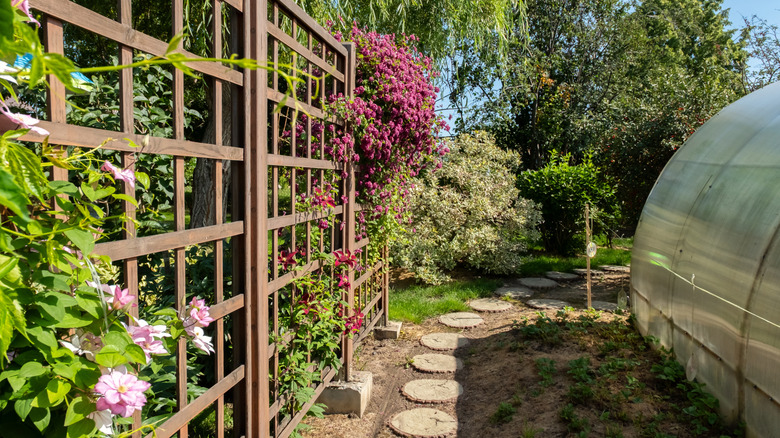
Climbing plants can be a great addition if you have fences or walls that could use a pop of color. There are plenty of fragrant plants to choose from, including many that can fill your garden with a heavenly scent. One popular climbing plant that adds both bright color and sweet fragrance is the Carolina jessamine (Gelsemium sempervirens). Also known as false jasmine or Carolina yellow jessamine, this fast-growing flower is the state flower of South Carolina and is ideal for trellises, arbors, fences, and pergolas. It's noninvasive and easy to keep under control. It also works well as a brightly colored ground cover, especially on steep banks and hillsides.
It's very easy to grow, thriving in USDA Zones 6 through 10, making it a great companion to other fuss-free plants that beginners can add to their gardens. If you have children or pets, it is important to note that the leaves, flowers, and roots of the Carolina jessamine are all toxic, so plant it in an area where they won't come into contact with it. If you're looking to attract more pollinators, Carolina jessamine is perfect. It provides nectar for butterflies, native bees, and other pollinators with its fragrant yellow blooms. Note that the nectar is reported to be toxic to honeybees, and while they naturally avoid it on their own, it's not a recommended plant for those keeping beehives.
How to grow Carolina jessamine
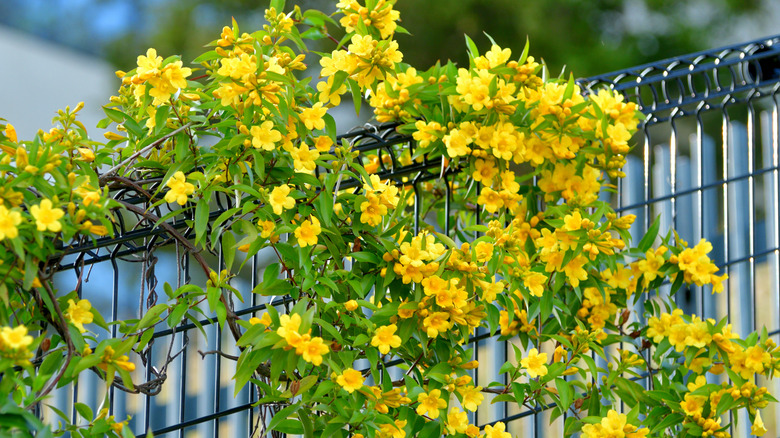
Carolina jessamine thrives in full or partial sun. When placed in full sun, you will notice it stays compact and bushier. In shadier spots, the vines can climb up to 20 feet as they reach for sunlight. It is easy to train Carolina jessamine to grow up a fence or a trellis by using zip ties to keep the plants in check and help them grow where you want them to. These colorful flowering plants tolerate a range of soils but grow best in slightly acidic, well-draining conditions away from standing water. If you're planting them directly in the ground, remove any debris like rocks or roots, and any weeds before planting, and break up and aerate compact sandy or clay soils by blending in organic matter.
During the flower's first growing season, make sure to help it establish a nice, strong root system by watering it on a regular basis. One way you will be alerted that it's too dry is if it starts dropping leaves. Fortunately, it rebounds quickly when watered. Once established, Carolina jessamine can handle short dry spells, but these aren't the preferred conditions in which the plant thrives. If you choose to plant Carolina jessamine in containers, fertilize it in early spring, then again in the middle of summer. For in-ground plants, one fertilizer application in early spring is sufficient.