

The One Rock Climbing Mistake That Almost Guarantees An Injury
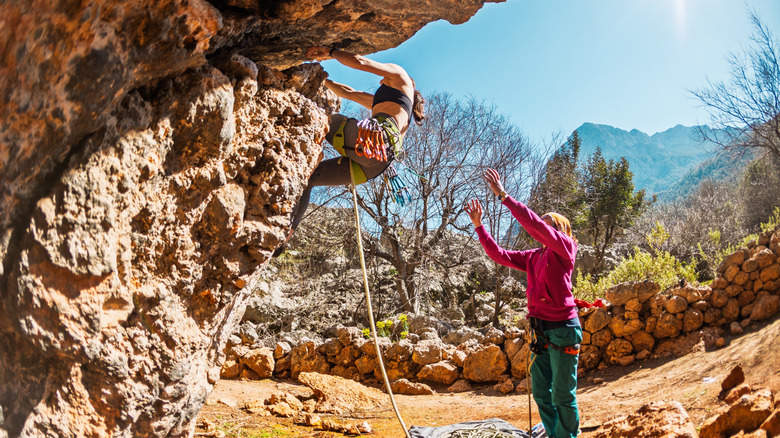
If you are into thrill-seeking outdoor adventures, odds are you may be interested in rock climbing. However, this is a sport that, whether practiced indoors or outdoors, is considered dangerous. After all, there are inherent risks in elevating yourself off the ground and relying on your grip and maybe a rope to maintain your position. This is especially true over hard surfaces, like rocks. Any mistakes made by the climber only serve to heighten this risk. That said, whether you are just getting started in the sport or already have some climbs under your belt, there is one rock climbing mistake that almost guarantees you'll end up with an injury. Interestingly, it has more to do with falling than climbing — or, more specifically, how you land. In this sport, landing on your feet isn't necessarily a good thing.
Very often, when less experienced climbers fall, they land with their legs relatively straight underneath them. This is particularly true when bouldering. The problem with this position — even on a rope, and even just a few feet off the ground — is that the force you receive upon impact is being completely absorbed by your body. This puts tremendous strain on bones, joints, tendons, ligaments, and muscles. It's one of the main reasons knee injuries are so common among climbers. This common climbing mistake also contributes to countless back and hip injuries. The solution? You should, as the old Paul Simon song goes, learn how to fall.
Falling properly can save you from injury
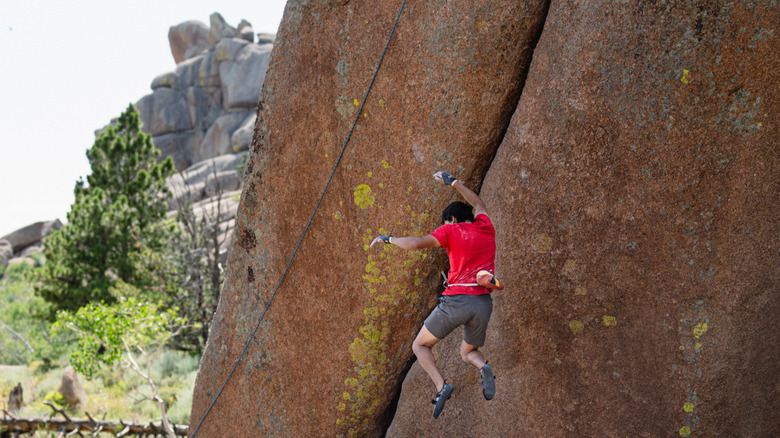
Before setting up your next adventure in the mountains, it's a good idea to head to a climbing gym to practice proper falling. The idea is to make the falling technique become second nature, so you don't have to think about it as you're suddenly dropping. Like anything, this takes constant practice, and a climbing gym with a padded floor is the perfect place to do so. Essentially, you're learning not just how to fall, but how to not be afraid to fall. Getting comfortable with falling can help prevent panic-related errors.
When it comes to falling properly, don't try to catch yourself with your hands, which can lead to broken wrists and fingers, as well as awkward landings. So, if you're landing on your feet already, you're on the right track. From there you just need to learn how to avoid locking your legs and to move your body in a way that lessens the impact.
Proper falling begins with staying relaxed and trying to get your body in position to land on your feet as you begin to fall. As your feet make contact, your knees should be slightly bent, chin tucked, and arms inside your body. This allows your legs to flex as you impact the ground and positions you for the next step: Rolling on your back or side to prevent the bulk of the impact force from being absorbed by your body. Then tuck and roll: You're not only protecting your knees, you're protecting your spine, head, and arms from injury. The key to knowing which way to roll is being aware of what is on the ground below before you fall. Before and during controlled falls, take a look around and figure out where any outcrops or other obstacles might be that are best avoided.