

Say Goodbye To Ticks By Getting Rid Of This Invasive Plant In Your Garden
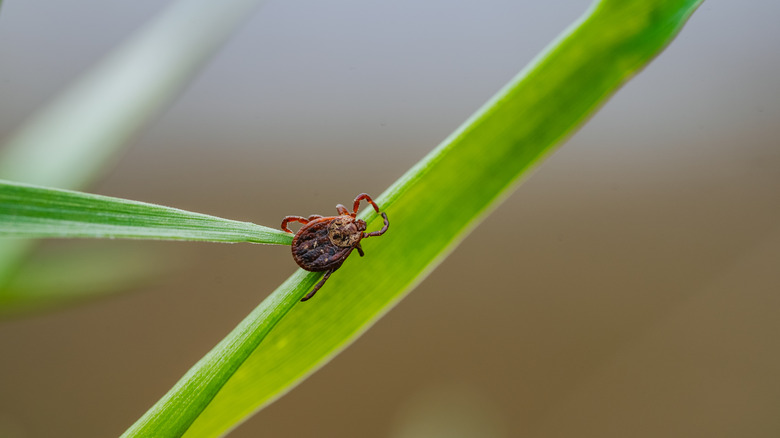
If you just can't seem to escape ticks in your garden, it may be there are plants providing the shade and moisture they need to survive. But the culprit might not just be tall grasses or nearby woods. Across large swaths of the United States, common buckthorn (Ramnus cathartica) and glossy buckthorn (Frangula alnus x Rhamnus frangula) are highly invasive shrubs that have been quietly transforming suburban yards, roadways, and forest boundaries into explosive breeding grounds for ticks and other pests. These rapidly growing bushes are both shade and drought-tolerant, making them extremely difficult to get rid of. As a result, they've been cropping up all over the country, especially in the Northeast, Midwest, and Great Lakes region.
Researchers aren't quite certain why buckthorn is so attractive to species like the blacklegged tick in New England, but they have some theories. Notably, the shade and moisture provided by buckthorn thickets create the perfect conditions for the creepy-crawlies to survive longer and reproduce more successfully. Beyond that, scientists are working to uncover exactly how removing these shrubs can impact tick populations, in the hopes that planting native species can restore a more natural balance.
It's not just the ticks: The aggressive shrubbery also competes with native flora for light, water, and nutrients. Particularly thick bushes are also inviting to tick-hosting mice and other infesting mammals. In any case, buckthorn is extremely aggressive, surprisingly dense, and produces berries that are mildly toxic to humans, so there's not any real reason to keep the bushes around. With a bit of elbow grease and some good luck, you'll be well on your way to avoiding tick bites in your own yard.
Remove buckthorn to make your yard less hospitable to ticks
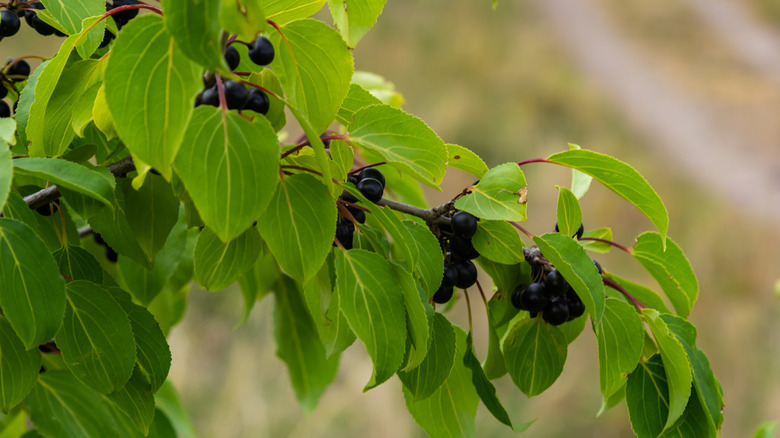
If common buckthorn or glossy buckthorn have taken the reins in your garden, removing it is imperative. The first step is to pull out as much of the root systems as possible. This can be quite an arduous process, and doing so might leave you crawling with ticks. Be sure to wear protective gear and thoroughly check yourself as soon as you're ready to go back inside. Ticks carry a myriad of diseases, so the last thing you want is to leave a bite unattended. If your buckthorn shrubs are especially large, it may be necessary to cut stems down to the ground with a saw or pair of hedge clippers before pulling at the roots. Just be careful when doing this, because it can actually encourage new buckthorn plants to take root in the disturbed soil.
With larger plants, treat any remaining stumps with a topical herbicide in late summer or fall to prevent resprouting. Avoid doing this in May or June during new growth, as the treatment is less effective. You can skip chemicals and use products such as the Buckthorn Baggie, which smothers the roots by restricting access to water, sunlight, and nutrients. Either way, wait a few days to see if more buckthorn begins cropping up, and attack any shoots as you see them. Finally, carefully dispose of plant waste and avoid mixing any of the scraps into your own mulch or compost. All of this should help reduce the number of ticks in your yard. You can further deter these pests by planting a few strong-scented herbs to repel ticks from the garden.