

This 'Must Visit' Fishing Location In Texas Has Some Of The Best Trout, Redfish, And More
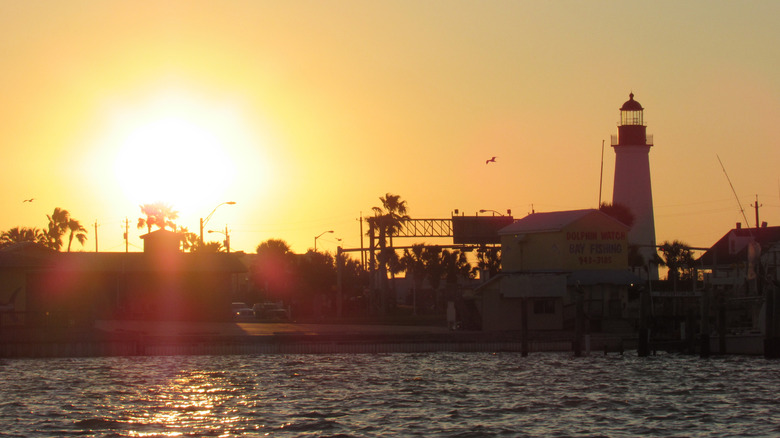
At the southern tip of the state, bordered by the Gulf to the east and Mexico to the south, the Lower Laguna Madre (LLM) area is one of the most unique places in Texas. A confluence of natural beauty, history, modern development, and rich cultural heritage make the tip of Texas one of the true must visit locales in the state. This is especially true for anglers who are able to pursue a myriad of inshore game fish including redfish, speckled trout, snook, and tarpon from the communities at the southern end of this shallow, clear bay system.
South Padre Island, which is a few miles above the mouth of the Rio Grande River, and its sister city on the mainland, Port Isabel, make perfect launching points for anglers looking to explore the Lower Laguna. I moved to the area in the mid-90s and ended up making it my home for nearly 30 years. Those years were spent working as a fishing guide and outdoor writer, so the bulk of my days were spent fishing those waters.
The Lower Laguna Madre is unlike most other Texas bays in a few different ways. It is one of only a handful of hypersaline bays in the world, meaning its waters are saltier than ocean water. Additionally, its average depth is shallower and the bottom is largely blanketed with seagrass, resulting in clearer water conditions. There are also a number of gamefish swimming in these waters that are not as commonly caught elsewhere in the Lone Star State. The towns bracketing the south end of the Lower Laguna are also quite different from one another. Port Isabel is steeped in history dating back to Spanish Colonial times, while South Padre didn't become developed until the mid-1950s and is best known as a Spring Break destination.
Trout and redfish opportunities abound in the Lower Laguna Madre
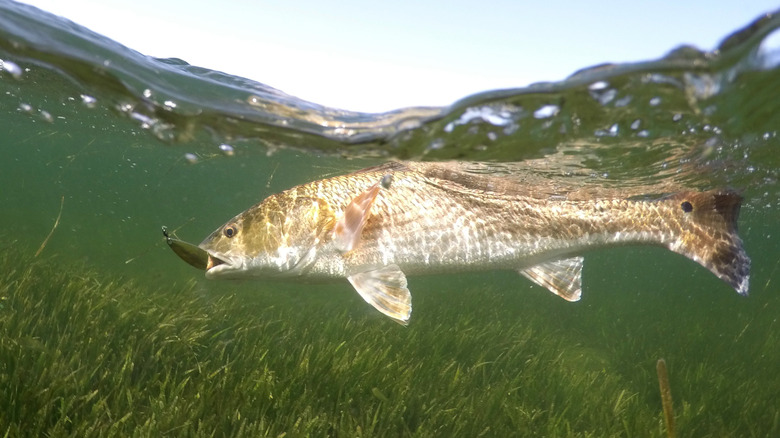
Redfish (red drum) and speckled trout (spotted seatrout) are king and queen of inshore fishing along the Texas Coast. The LLM offers outstanding opportunities for both. It is considered among the top sight-casting destinations for redfish among both fly fishermen and conventional tackle anglers. Speckled trout are caught in good numbers as well. But it's the trophy class of fish caught in the Lower Laguna, including the state record, that sets this bay apart.
Redfish are caught year around. However, where they are found varies with the seasons. In early summer, reds will be concentrated on the shallow flats on both sides of the bay. As the water continues to warm, they're found more regularly on the east-side sand flats. In late summer, they begin forming large schools, referred to locally as herds, and moving south towards the Brazos Santiago Pass and the beachfront waters of the Gulf. So, late summer through fall, the best redfish action will usually be on the southern end of the bay and in the pass. This is also when big, mature 'bull' redfish are caught with regularity in the pass. Winter through spring, good numbers of fish will be found on the west-side flats and back lakes.
Speckled trout are also taken year-round. The best fishing for big, trophy trout usually takes place along the west side of the bay. The best time of day to fish will vary. In the winter, late morning through mid-afternoon is best, while in summer the opposite is true — early and late is better. The big fish will stay relatively shallow all year, but the slot-size fish (the ones you return to the water) will move to deeper grass flats and channels during summer. In spring, they will concentrate around the spoil islands in front of Port Isabel.
Snook, tarpon, and more angling opportunities
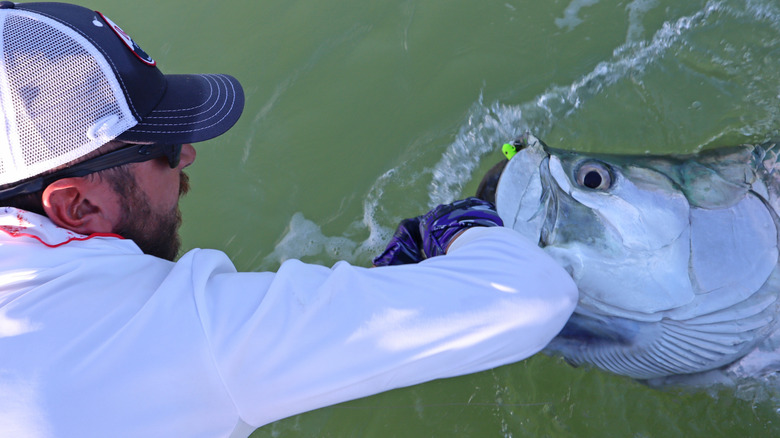
While speckled trout and redfish are the year-round headliners, there are other species which draw anglers to the Lower Laguna. One is tarpon. Juvenile tarpon can be caught in the area throughout the year, but bigger fish migrate into Mexican waters for the winter. Migrating tarpon can be found along much of the Texas coast in summer, but the waters off South Padre are where they are first spotted, as well as the last place they are seen each year. Many fish also migrate no further, meaning SPI has a longer window of opportunity for the big fish. Additionally, they tend to be found closer to shore here than elsewhere in Texas, with anglers routinely catching them from the beach and jetties.
Snook are another species unique to the Lower Laguna on the Texas coastline. Although an occasional fish is caught further up the coast, the LLM has a tremendous year-round fishery for them. In the summer and fall, snook will be caught in the lower portion of the bay as well as in the Brazos Santiago Pass. During winter and spring, the best place to find them is in the Port of Brownsville and Brownsville Ship Channel. Mangrove snapper, another subtropical fish well established in the Lower Laguna area, mirrors the movements of snook as far as where they are found each season.
Whichever species you are targeting, there are both DIY and guided fishing options available. For DIYers, beyond the beachfront, jetties, and a handful of walk-in wade fishing spots, there are also boat ramps and kayak launches in both Port Isabel and South Padre Island. However, fishing the Lower Laguna does require the right type of boat, which is to say one that can run in very shallow, salty water.