

The Daring Rescue Every Beginner Skier Needs To Learn From
Ski accidents can happen in an instant, even to experienced skiers, and even if you have the right gear for skiing. Most people think of avalanches, collisions, crashes, or tree-well immersions when they picture the biggest risks on the slopes. But a swift rescue by skiers Carson Schmidt and Eric Masuda following a February 2026 storm at Palisades Tahoe reminds powder hounds of an overlooked hazard: Falling into deep snow and skiing alone.
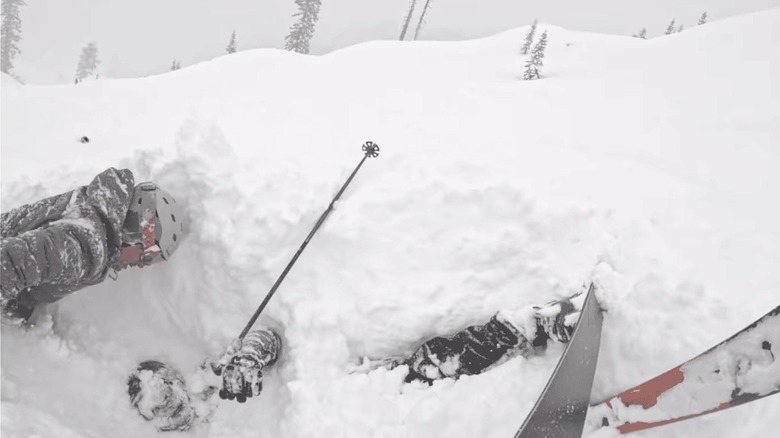
During a historic snowstorm that dropped a total of 9.5 feet at Palisades Tahoe Ski Resort in Olympic Valley, California, the two skiers noticed, through near white-out conditions, the tips of a pair of skis poking out of the fresh powder in an open snowfield. Acting immediately, Carson and Eric began digging where the trapped skier's face would likely be. They frantically pushed snow away from the site to prevent further burial, cleared the skier's airway, and confirmed that he was okay and breathing.
The victim had fallen headfirst while enjoying the fresh powder field, and became buried and immobilized by the deep snow. This can happen because fresh snow can act like quicksand: The more a person tries to stand up and get out, the further down they sink. Struggling also compacts the snow, further locking the victim in place. He was nearly upside down, unable to move under approximately 3 feet of snow for an estimated three minutes. Thanks to the rescuers' swift and textbook burial response, the skier survived.
How to avoid snow immersion suffocation and what to do if you get buried
In a low-snow season like the 2025-26 winter in the American West, it's a good reminder to beginners that the "powder panic" of missing out on a deep, fresh snow can overshadow taking proper caution to avoid deep-snow immersion suffocation (SIS). The best way to prevent SIS is to ski with a partner and stick to groomed trails, avoiding deep powder, no matter how tempting. Maintain visual and vocal contact with your partner and ski in short pitches, especially if visibility is low (though it's not apparent in Schmidt's Instagram video, he and Masuda reported near-whiteout storm conditions and super low visibility). Regularly regroup to keep a close eye on each other. That way, if anything happens, you can quickly respond to any issues or injuries that come up.
Beginners should also know what to do if they get caught in an avalanche or fall in deep snow. Call out for help and remain calm. Roll, "swim," or grab anything solid to keep your head above the snow and your feet below you, but don't frantically struggle. Struggling can compact the snow, making you sink deeper and further immobilizing you. If your head is immersed, try to make space around your face and keep your airway clear. Conserve your air and trust that help is on the way. If you can reach your cell phone, call for help.
Another important lesson from this rescue is not to place the pole straps around your wrists when skiing in deep snow or where there is a risk of an avalanche. Poles pull your arms away from your body and act as anchors. Should you get buried in snow, poles looped around your wrists will make it much harder to maneuver through the snow, clear your airway, or "swim" out of the snow.