

Kayaking's Controversial 120 Rule: Why It Matters
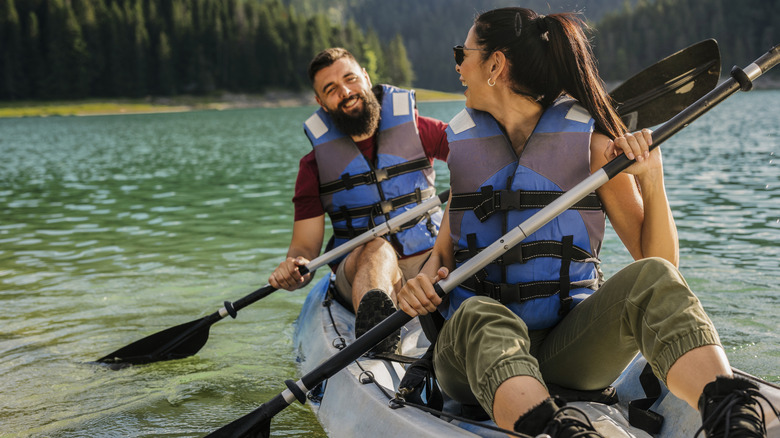
Kayaking is among the sports that has be on the rise over past decade, with ever-increasing numbers of people joining the paddling community, enjoying everything from from the physical activity to serene surroundings. Regardless of your reasons for kayaking or your experience level in the sport, there are a few simple rules to keep in mind on your next kayaking adventure. One of them is kayaking's 120 rule for cold water paddling. Or, is it? This long-standing rule, designed as a simple formula to help keep kayakers safe, has become a bit controversial. More and more experts say following this rule to the letter will not only fail to keep you safe, it can also leave you woefully unprepared for disaster.
Basically, the rule of 120 was created to help kayakers know how to safely dress when spending a day on the water. Unlike hiking, where you decide what to wear on a winter hike based on the air temperature, wind, and precipitation, kayaking has an additional element to consider — water. The 120 rule, or Rule of 120, sought to take the guesswork out of the decision with a basic mathematical formula combining air and water temperature. According to the rule, if you add water temperature to air temperature and it equals 120 degrees Fahrenheit or higher, you can do without your cold weather gear.
While that can indeed be true in some instances, many expert kayakers have begun pointing out a flaw in this equation. If there is a great disparity between the air and water temperature, such as an 80-degree air temp combined with a 40-degree water reading, you will still need your cold weather gear to survive if you happened to end up in the water.
Following the 120 rule can leave you unprepared
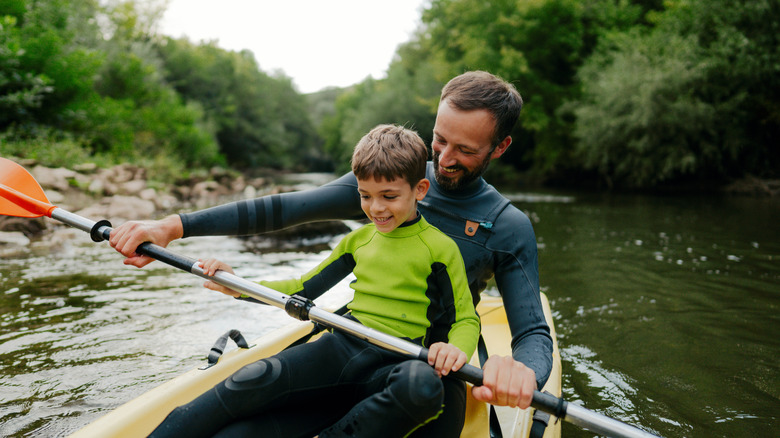
The opponents warning of flaws in the Rule of 120 say it can give paddlers a false sense of security and lead to not being properly prepared for the condition that matters most: cold water. In the above scenario, if you are dressing for the 80-degree air temperature, you will likely be in shorts and T-shirt or other lightweight clothing. However, should you end up in the water, which happens even to expert paddlers, it takes just a matter of moments before you're rendered debilitated in water that cold. In fact, it's possible for hypothermia to kick in even in waters as warm as 50 degrees F, given enough time. Even if you are wearing a life jacket and know what to do if you capsize, you can easily succumb to the cold water if help isn't close at hand.
The simple solution may seem to be to not go paddling during the coldest months. However, even though spring and summer are known as paddling season, spring can put kayakers at the most risk of cold-water immersion. This is because air temperatures are rising much faster than water temperatures, leading to a false sense of security, whether following the 120 rule or not. This is one of the hidden dangers of kayaking.
To ensure you are properly prepared, focus on the cold water temperatures. Basically, that means dress as if you are going in the water. In addition to always wearing a life jacket, wear proper immersion gear, such as a wet or dry suit, based on the water temperature. Experts stress this means you must be wearing the thermal protection, not just have it onboard, as you can end up, unexpectedly, in the water in an instant.