

Why You Should Reconsider Pruning Your Plants After Heavy Rain
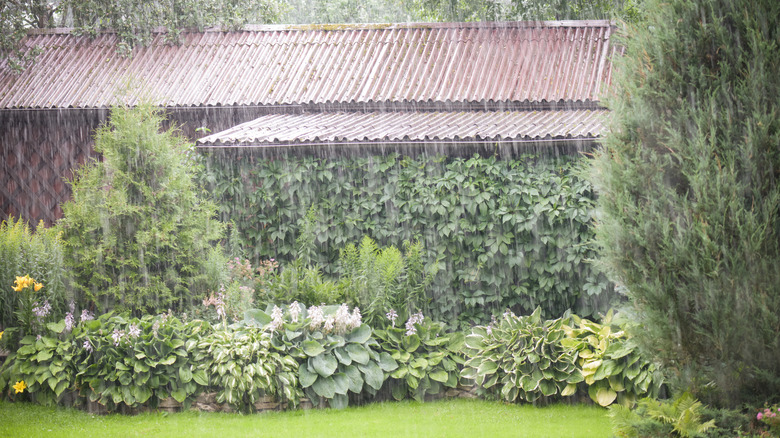
There are a number of essential garden tasks you shouldn't do following heavy rains, including pruning your plants. Pruning in especially wet conditions is like kicking a plant when it's down: Plants are most vulnerable to infection immediately after being pruned, and many plant pathogens need moist air or splashing water to spread. While most plants need plenty of water, there is a risk from too much rain. Your plants may be stressed or in shock from erosion, waterlogged roots, and nutrient leeching. So it's best to hold off on pruning just before or soon after a heavy rain. That way, you avoid the double whammy of exposing vulnerable inner plant tissue to pathogens while the plant is under high-water duress.
While pruning is essential for keeping perennials healthy, each cut is an open wound initiating an immune system response to start making a protective callus. Usually, a plant begins the healing process within just a few minutes, with a chemical barrier (that's the oozing moisture or resin you might have seen). In about two days, it is already forming a harder physical barrier. But pooled moisture and high humidity around the wound slows down healing, extending the window of opportunity for the bad guys to capitalize on your vulnerable plants. Common garden pathogens like fire blight and anthracnose can destroy plants and ruin fruiting crops require moisture to spread. By waiting to prune when conditions are dry, you set your plants up for a quicker recovery without the presence pathogens on the move.
There is one exception to these guidelines. If plants have been damaged or destroyed by a storm — broken branches, damaged stems and shoots — remove them as soon as it's safe. This not only helps with healing, but prevents additional risks of falling or blowing debris.
How to avoid problems caused by pruning after heavy rain
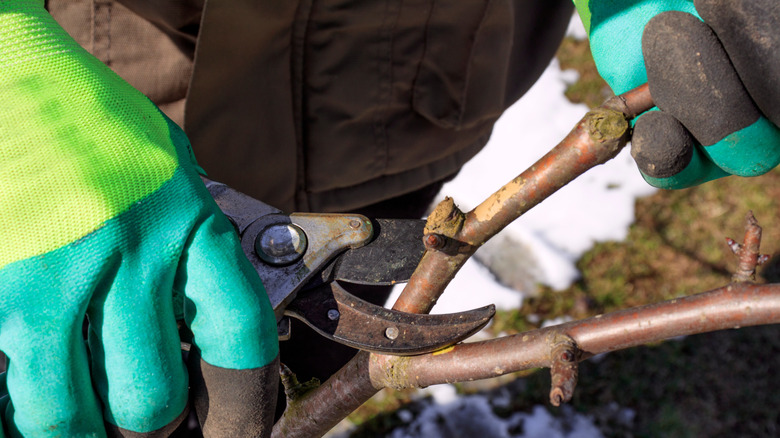
Since many plant pathogens require water in order to spread, it's easy to accidentally become a super spreader by pruning in a soaked garden. Pruning while everything's dripping makes it difficult to keep tools dry and sanitized between plants, meaning you could be sharing pathogens from a sick plant with other, healthy ones. Give your garden at least 48 hours after a rainstorm to dry out before pruning. If you can, wait for clear forecasts so plants have ample time to callus in dry conditions. Time your pruning according to each type of plant: Some perennials are best pruned in the fall, like peonies. Others plants are best left for late winter and early spring, like roses and many fruit trees.
Like plant pathogens, snails and slugs are also more active post-rain and will take advantage of exposed pith and ground tissue, should you make the mistake of pruning after a heavy rain. Wet, pruned debris on the ground can be like laying out the perfect habitat throughout your garden. Instead of pruning after a big storm, try hunting for snails and slugs, removing them manually from the garden.
Pruning post-rain can be no fun for humans, too: Heavy downpours spike airborne mold spores, making it unpleasant for gardeners with allergies and mold sensitivities. Wait until conditions are rain-free, your garden is fully dry, and the forecast is relatively clear to prune so you and your garden stay healthy.