

Why You Should Grow Bananas At Home (And How To Do It Right)
We may receive a commission on purchases made from links.
Bananas are eaten more than any other fleshy fruit in the United States. That is despite the fact that the US has only a minuscule amount of commercial banana crops. The fact that almost all the bananas consumed in America are imported is reason enough to consider growing your own at home.
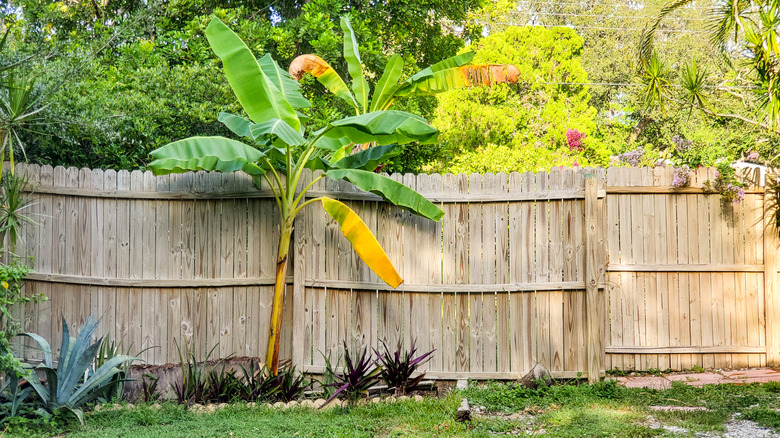
What are commonly referred to as banana trees, the plants from which bananas come, are easily grown and offer several benefits beyond the fruit they yield. However, banana trees are not actually trees at all. They have no wood and are actually perennial herbs. So, the term banana can refer to the fruit or to the plant that bears it. Semantics aside, bananas are versatile, low-maintenance, fast-growing plants that add a tropical flair to yards wherever they are grown.
In addition to the fruit, the leaves of banana plants are often used in recipes and for wrapping dishes such as fish, meat, and vegetables for steaming, baking, roasting, or grilling. These same leaves provide a valuable windbreak while still attached to the plant. Homesteaders can also use them to feed grazing animals, such as horses and cows.
Choose your banana wisely
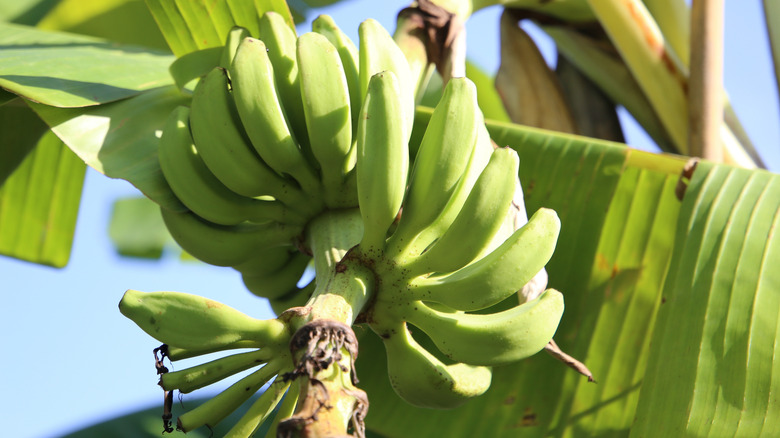
Bananas come in both edible and ornamental varieties. What most people think of in terms of edible banana fruit comes from plants that do best in hardiness zones 9-11. If you happen to live in the warm-weather regions of the United States, such as Florida, Texas, Louisiana, Arizona, California, or Hawaii, you can grow varieties such as the Cavendish banana, which is what most people recognize as a banana. The dwarf cavendish is also widely grown throughout these areas.
Anyone living in hardiness zones 4-11, which is to say almost the entire United States, can grow various varieties of ornamental bananas. These are also sometimes referred to as cold hardy bananas and include both edible and purely ornamental strains. Common versions of cold hardy bananas include the Japanese fiber banana and Siam ruby.
However, the vast majority of ornamental bananas are not grown for human consumption, as they are heavily laden with seeds and do not taste like what most Americans think of as banana flavor. Some people, however, do utilize them for cooking in the same manner in which they would use plantains. That is not to say ornamental bananas are without their purpose. They still provide all the same aesthetic benefits as edible bananas. Additionally, these bananas can be used to attract hummingbirds and the banana peels are useful as garden fertilizer.
How to grow bananas the right way
Regardless of the type of banana you choose to plant, the best practices for growing them are pretty much the same. For starters, banana plants need fertile, well-drained soil with a pH in the 5.5 – 6.5 range. Before planting, test your soil with a Rapitest Soil Test Kit or similar pH soil tester and amend as necessary. Keep in mind that if you live in an area that features primarily sandy or loamy soil, you will likely need to fertilize often. Additionally, the plant site needs to be in full sun for the majority of daylight hours.
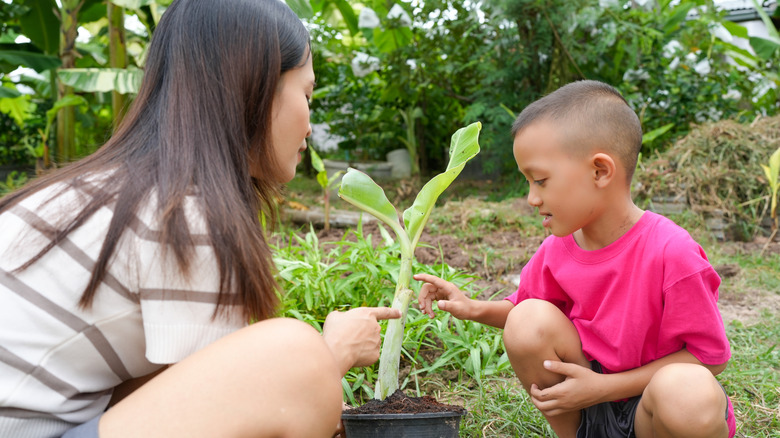
Once the site is selected and a young sapling or pup banana plant is secured, dig a hole that is a couple of feet deep and equally as wide. Mix in a bit of compost with the soil that's been removed from the hole just to ensure it's plenty fertile for the newly planted banana. Next, place the plant in the middle of the hole, spread out its roots, and backfill the hole with the dirt and compost mix. Finally, give it a good watering before topping the area around the base of the plant with a layer of mulch. If you intend to plant more than one banana, leave several feet of space between each plant.
After planting your banana, it will likely grow rapidly and require lots of water. Typically, for optimum growth and fruit production, bananas need about 1.5 inches of water per week. This means it is necessary to water often, particularly during dry spells. As the plant grows, it will produce offshoots. It is often necessary to remove some of these pups, which can be transplanted elsewhere, to prevent overcrowding. You will also need to regularly prune dead leaves from the plant. Doing so will help stimulate new growth.