

Don't Throw Away Pineapple Skins: Add Them To Compost For Healthier Soil
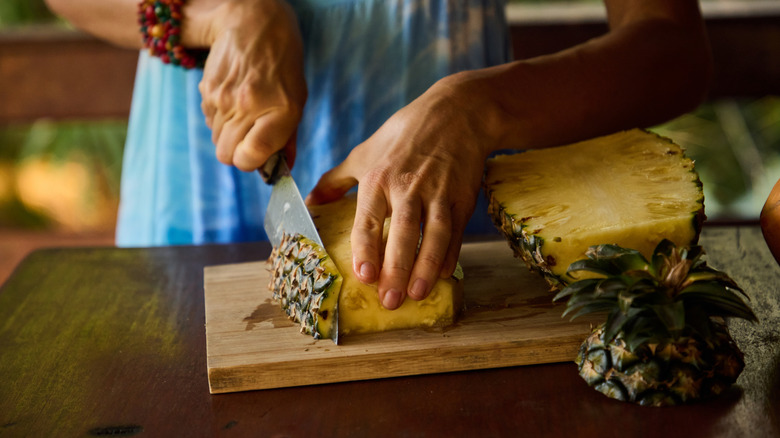
While you may already make a point of composting banana peels, apple cores, and similar fruit scraps to use in your garden, one thing that might be off your radar is pineapple. Some may think the acidity in pineapple as a whole might make it one of the things you should never put in compost, concerned that too much citrus could throw off the balance of microorganisms needed to break down the compost. But the fact is, the entire pineapple is compostable, including all those gnarly, coarse rind pieces (presumably, you'll have eaten the tasty interior). But there are some caveats depending on how you're composting. Once composted, those pineapple peels create a nutrient-rich soil amendment that benefits certain acid-loving flowering plants such as azaleas and hydrangeas, and veggies like corn and squash.
Unless it's an organic pineapple, the rind may contain traces of pesticides and other farming-related chemicals, so it's a good idea to wash the outside, or run the peels under water before adding them to compost. What you're trying to avoid is a possible build-up of chemicals in the fruits and vegetables you're growing with this compost. If you decide to compost the leaves and crown along with the rinds, wash those for the same reasons. One good thing, though, is the condition of your pineapple doesn't matter: Fresh or frozen, bruised and moldy. It's all fine to add to the compost heap!
Improving soil by adding pineapple-skin compost
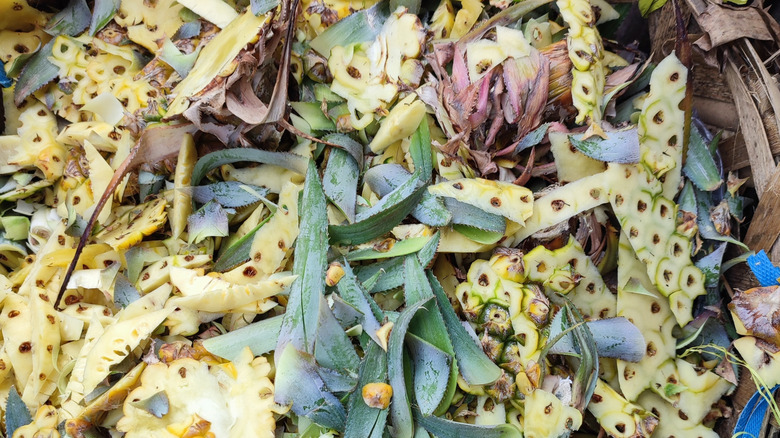
To successfully incorporate pineapple skins into a compost pile, first cut them into pieces an inch or smaller so they'll break down faster. The dry, tough rinds take a while longer to break down than the juicy flesh, so chopping up peels will help speed up the process. If your peels still have bits fruit on them, these chunks will contribute both nitrogen and carbon to the compost pile. The sweet-tart fruit nitrogen-rich, adding greens to your compost, while the rind and crown could be considered carbon-rich brown components. Any fruity bits will also contribute acid to the compost pile, ultimately benefiting plants that prefer acidic soil, such as tomatoes and cucumbers. You can test your soil's pH level first to determine if it needs to be more acidic for the plants within it.
The sugars in the fruit also attract earthworms, who help kickstart the composting process. However, if you're specifically composting in a worm bin, be careful: Worms thrive in low to neutral acidity (pH 6.0 to 7.0), but too much acidity can harm them. The peels will be fine, but add fruit sparingly.
Bury the pineapple parts deep down in a pile of compost materials to help deter pests and rodents looking for a tasty snack. To make a nice, healthy compost mix, aim for about 30 parts brown or carbon-heavy material (including the pineapple skins) to one part green matter. Layering browns and greens can help keep odors to a minimum. Once the compost breaks down a bit, add some of it to the soil around acid-loving plants. Plan ahead: It could take up to a year to completely break down the peels.