

Pond Fishing Secrets: The Best Spots To Catch More Fish
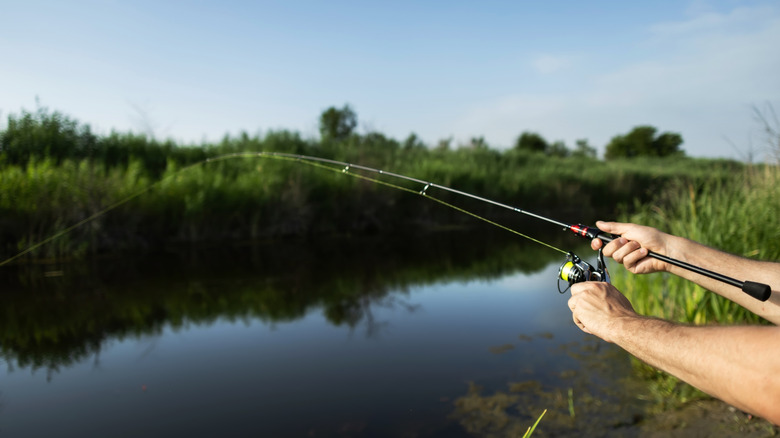
Throughout the country, the landscape is dotted with ponds. Many of these relatively small water bodies are loaded with various species of fish that are popular with recreational anglers, such as largemouth bass, bluegill, crappie, and catfish. In addition to choosing the right bait and picking the best time of day to fish, knowing the best spots on which to focus your efforts can help you catch more fish in ponds. Although these small bodies of mostly still water vary greatly in terms of size, depth, and features, there are some general guidelines that will apply to any pond fishing situation. Chief among these is locating structure or cover of some sort.
Structure is key to catching more fish because, well, that's where fish will be found most of the time. Fish gravitate to structure for a couple of reasons. One, it provides cover and habitat. Two, it attracts a variety of smaller species upon which the ones you're seeking prey. Trees, rocks, aquatic vegetation, and the contour of the pond itself can all serve as fish attracting structures. Additionally, many pond owners create structure in their ponds to improve fish habitat and fishing opportunities.
When it comes to locating fish-hosting structure in ponds, the best place to look is often, quite literally, right under your feet. Banks and shorelines are among the best spots to find fish in ponds. This can be true whether the bank steeply drops or is more gradual: As long as the water near the bank is deep enough for fish to swim, there's a good chance they will be there. So, rather than focusing on how far you can cast your lure or bait away from the shoreline, instead focus on casting down, or parallel, to the bank.
Vegetation is valuable cover for fish in ponds
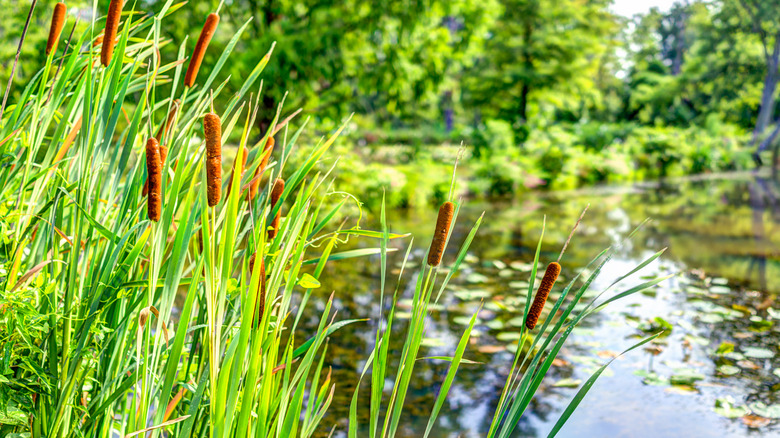
In many ponds, vegetation is a great source of structure and cover, particularly during the warmer parts of the year. Vegetation in ponds may or not be visible above the waterline, as some varieties are submerged and never grow to the surface. On the other hand, others either float or grow on the surface or extend well above it. Any aquatic vegetation should be considered possible fish-holding structure. Plants living in ponds attract insects and small aquatic critters, which, in turn, attract predator fish such as bluegill and bass. At the same time, these plants provide structure and cover for the larger fish.
Emergent vegetation such as reeds and cattails will typically be found ringing the edges of ponds or in shallow coves. Rooted floating vegetation, such as lily pads, will also typically be found closer to the edges of the ponds. Underwater grasses like milfoil and eel grass can grow at a variety of depths so long as the water is clear enough to allow adequate sunlight to penetrate the water. Ponds and lakes, in many states also have hydrilla, which is an invasive species not native to the U.S., but has become well-established in many parts of the country.
When it comes to providing cover, reeds, cattails, and aquatic grasses provide a vertical structure for fish. Vegetation that covers the surface, such as lily pads and mats of hydrilla, provide a shaded area during hotter portions of the year, which is also attractive to fish.
Ponds are often full of hard structure
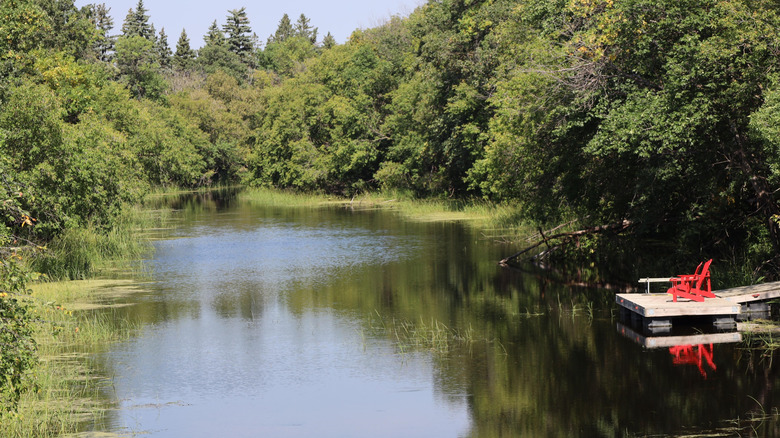
Hard structure varies in and throughout ponds — some is visible, some submerged. Likewise, some hard structure is vertical, while other is horizontal. Each type has the possibility of attracting fish. Because of this, using a versatile fishing rod is key to efficiently fish all types of hard structure in ponds.
Rocks are one example of hard structure, and can be found both above and below the surface. Submerged rock piles may not be visible from above. So, you may need to either know where they are or use electronics to locate them. However, they can attract plenty of fish, so they are worth scouting out. Similarly, concrete blocks and bricks are commonly sunk by fishermen to serve as fish-attracting structure. Rip-rap shorelines and large rocks that protrude above the water can also attract fish as both protection and feeding grounds. These areas provide particularly good fishing when it's cold out, as the heat the rocks absorb during daylight hours tends to keep the surrounding water a bit warmer, which attracts both baitfish and game fish.
Standing trees, stumps, and dock pilings are all good examples of vertical structures which attract fish in ponds. Fallen trees, lying across the bottom of a pond, are productive submerged structures, while the horizontal platforms on docks provides fish-attracting shade during the summer. Trees growing on the bank, but hanging over the water, can also produce shade and attract fish.