

Repurpose These Two Kitchen Essentials For A Simple DIY Fertilizer
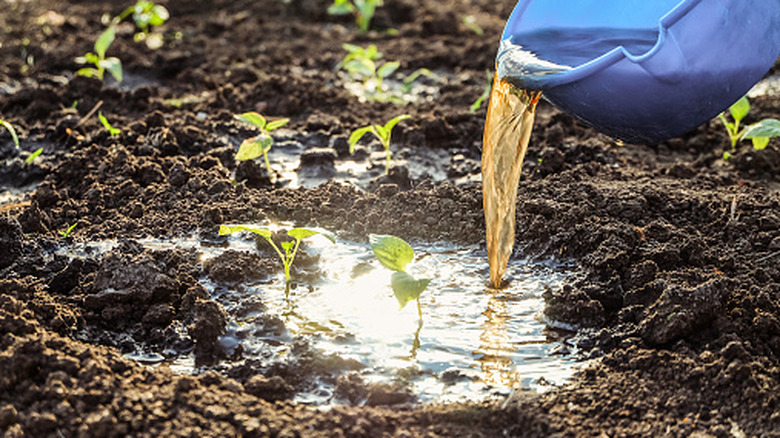
Whether you're growing plants in patio pots, raised beds, or directly in the ground, they sometimes need extra help in the form of fertilizer. You could visit a local garden center to find fertilizers tailored to your plant and soil needs, but that isn't always necessary. Whipping up a DIY fertilizer is a convenient hack to improve garden soil on a shoestring budget, especially when it relies on some common kitchen scraps and staples.
Banana peels and vinegar can be combined to create a liquid fertilizer that contains minerals such as calcium and magnesium, plus antioxidants, thanks to the peels. The vinegar helps extract those nutrients so they end up in the liquid. Vinegar also lowers the soil's pH temporarily, making it more acidic. This could come in handy with plants that prefer acidic soil, such as blueberries, hydrangeas, roses, and even tomatoes. A highly-rated soil pH tester can help determine your garden's acidity levels.
One benefit of this recipe is that it works with any number of banana peels, as long as there is enough vinegar to fully cover them. Keeping the peels fully submerged helps prevent mold from forming.
Making fertilizer from banana peels and vinegar
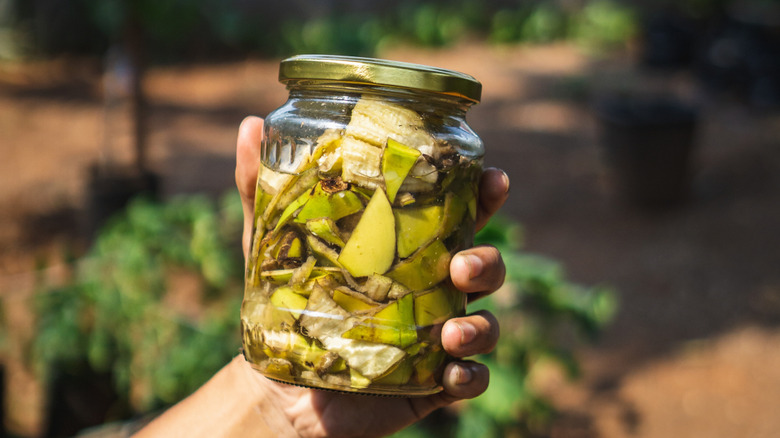
To make a DIY fertilizer from banana peels and vinegar, rinse the outside of the peels to remove any chemical residue, or wipe them down with a damp cloth before peeling the bananas. Cut the peels into manageable pieces and stick them in a clean jar, then fill the jar with white vinegar or apple cider vinegar. Make sure there's enough liquid to cover all the peels. Close the jar and let the peels soak for at least two full days. If you have extras, banana peels come in handy around the garden and can be used to make a fertilizer powder or banana-peel tea for your plants.
When you're ready to use your banana peel vinegar in the garden, pour the liquid into a separate container and add an equal amount of water, because full-strength vinegar could harm the plants. Apply the diluted liquid around the base of plants that prefer acidic soil, about once a week or as needed. Pouring it around the plants, rather than on them, can help avoid damaging them. If desired, test it on one plant for a few weeks to confirm it responds well before applying it more widely.