

Saving Seeds? Here's How To Store Them Properly
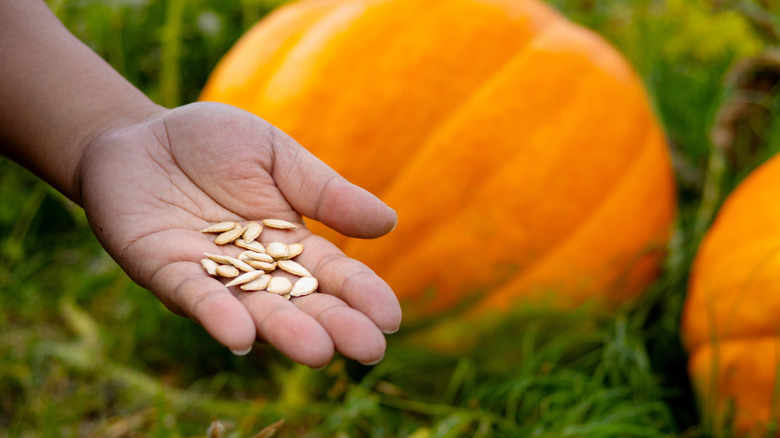
Seed saving can be traced back 30,000 years, when nomadic humans selected cereal grains for the next growing season to encourage a preferred non-shattering trait. It's a simple process that modern humans can easily use: You're essentially propagating your own heirloom varieties that helps contribute to biodiversity, and saves you money. But once you've got the seeds, you need to make certain they're stored properly so they're ready whenever you decide to germinate and plant them. Properly stored, dried, seeds can remain viable for years, so getting this step right is vital.
The process starts with fully ripened fruit, pods, or finished flowers. Some podded seeds can just hang out and dry out in the garden. Tomatoes need to ferment to become viable seeds. Once you've prepared, cleaned, and fully dried your seeds it's time to store them. Of course, keep all the discards, as they are a useful ingredient for a thriving compost.
Make sure the seeds are completely dry before storing. Any lingering moisture can rot the seeds while in storage. Spread cleaned seeds on an old window screen or paper plate in a warm, vented area that is away from direct sunlight until they're dried. After that, the main thing is keeping them in a cool dry place. A closet is fine, but even the refrigerator works! You also want to develop a system to keep your seeds organized and labeled so you can keep track of your future crops.
Label seeds and customize your storage
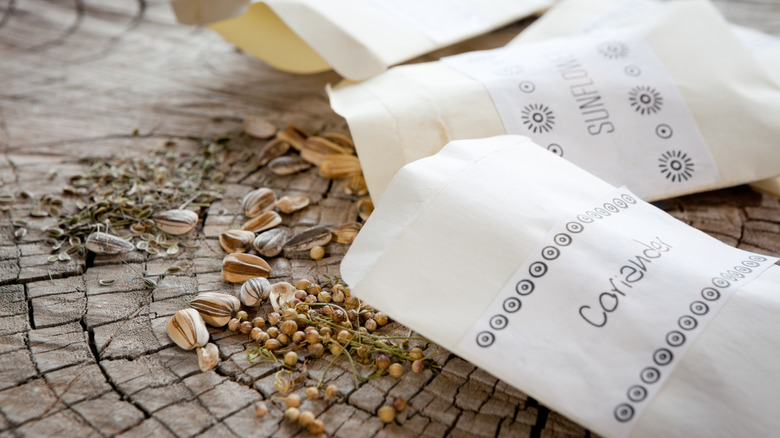
Seeds last longest in cool, dry environments away from direct sunlight. A good guideline is that adding up the temperature (Fahrenheit) and relative humidity should total less than 100, but some seeds last longer in specific environments. You'll want to store different varieties and species, separately. Storing seeds in opaque packets in the refrigerator (ideally inside a sealed plastic container) is perhaps the easiest option. You can even print up seed envelopes, decorating them to identify what's inside. A sealed glass jar or an airtight container works too, but it's good insurance to add small desiccant packets to absorb excess moisture. Whichever method you choose, clearly label each container, and include the dates harvested and best "use by" date.
Just like purchased seeds, home-saved ones vary in how long they can be stored, but many germination rates begin to decrease after the first year or so. For example, different microgreens — like mustard or shiso — last longer in different temperature ranges. Properly jarred tomato or bean seeds remain perfectly fine for years in a variety of situations. In general, however, it's just easier to keep track of, and quickly improve, your seed bank if you plant the following season, and it ensures you have the highest germination rates.
You can always perform a quick germination test before planting by sprouting a few seeds on a damp paper towel before sowing the whole packet. By mastering this ancestral practice, you create a sustainable, full-circle gardening life cycle. Not only do you save money on annual seed purchases, but you cultivate much-needed biodiversity and a deeper connection to your garden.