

Skip Dangerous Pesticides - Reach For This Pantry Staple Instead

We may receive a commission on purchases made from links.
The presence of certain pests tells you a lot about the health of your beloved plants. So it's important to set your plants up for success by providing the right amounts of sunlight, soil nutrients, space, and water. But once pests get out of hand, it may feel like commercial insecticides or pesticides are the only option for saving your garden. Some chemicals used in store-bought pesticides are toxic to humans and other non‑target organisms, such as pets and wildlife. Others are detrimental for the environment. Also, there are a few insects you never want to kill, and the broad use of pesticides can't selectively avoid them. Instead consider a natural option sitting in your kitchen cupboards: A mix of vegetable oil and liquid soap.
Many gardeners prefer safer, non-toxic, or natural methods to deter unwanted insects while staying environmentally friendly. One approach includes certain plants that naturally repel pests. However, if destructive bugs have already found their way into your garden or onto your house plants, a natural pesticide might be your best option. Thankfully, the ingredients for one foolproof natural pesticide recipe are likely right in your pantry. All you need is a mild soap, vegetable oil, and water. This quick combo from your kitchen is particularly effective on common leaf and stem pests like aphids, spider mites, lacebugs, and other soft-bodied insects.
How soap and oil works on pests
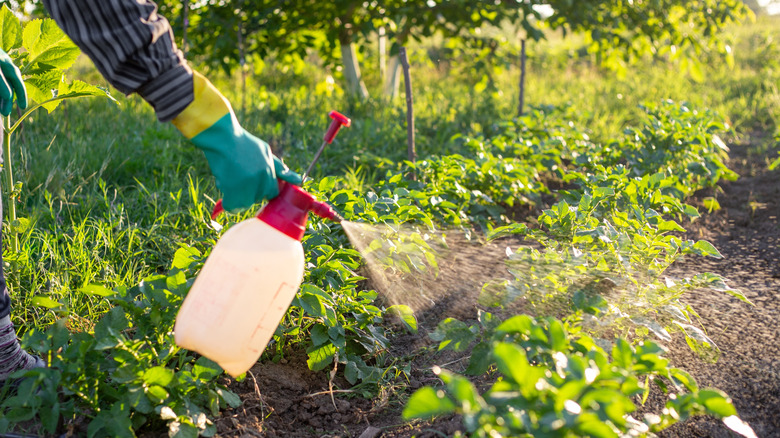
Together, these pantry staples make a non-toxic but effective insecticidal soap. The magic of insecticidal soap involves the natural reactions of an alkali, such as potassium hydroxide, on a fat. Fats are composed of fatty acids, and insecticidal soaps work because these acids break down the insect's cell membranes, causing the cells to dehydrate. As the saying goes, "hydrate or die-drate." Insecticidal soaps are most effective against soft-bodied insects such as aphids, mites, thrips, and whiteflies, but don't work against eggs or hard-bodied insects such as beetles. In some ways, that's good, because some beneficial hard-bodied insects like ladybugs chow down on aphids.
To make a simple pantry insecticide, mix 2.5 tablespoons of castile or coconut soap with 2.5 tablespoons of vegetable oil. Then add this to 1 gallon of water and pour into a spray bottle. If you don't have liquid soap like Dr. Bronner's Pure-Castile soap, a tablespoon of mild detergent (like dish soap) can be mixed with 1 cup of vegetable oil. Avoid super-duty or ultra-type dish soaps, as they may be too strong and can strip plant leaves of their natural waxy protective cuticle layer.
You can also make smaller batches: Take 1 teaspoon of your oil-and-soap mix, and add it to 1 cup of water in a spray bottle. Spray directly onto the pests. Then spray thoroughly (leaves, stems, and all) but not enough to cause runoff, and avoid applying it when the sun/heat is at its peak (as the extra moisture and oil can burn the plant). While this trick works on tiny, soft-bodied insects, if deer are the issue, you can use a specific bar soap to deter them.