

Removing A Rock From Your Fire Is The Trick To Achieve Warmer, Cozier Winter Camping
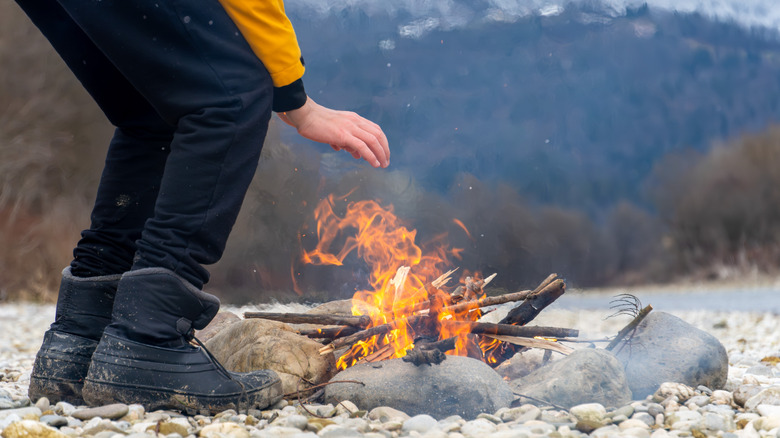
If you're camping during the winter, particularly a very cold, high-elevation spot, you'll need to do everything you can to stay warm. Not only can the cold be uncomfortable, but it can be dangerous in extreme circumstances. Hypothermia and frostbite should be avoided at all costs by using tips for keeping your tent warm. Having quality gear also helps, but if you're still feeling a bit chilly, particularly at night, grab a few rocks from your campfire and bring them (safely) into the tent with you. You can even use this trick to warm up your sleeping bag without electricity.
Essentially, you're taking one or more rocks from around your campfire, wrapping them up for protection, and using them to keep yourself warm. Think of it like an impromptu hot water bottle, or a fire-free fireplace. Of course, you're not plopping red-hot rocks into your tent: Wait until the fire has died down, or take rocks from the edge of the fire. Don't reach into the fire to remove rocks, and don't use your bare hands to pick the rocks up. Instead, use cooking tongs, heavy fabric gloves, or even just fabric wrapped around your hands. Wrap the rocks in some fabric, such as a thick shirt you aren't wearing, and tuck your warm bundle into your tent or sleeping bag. Depending on their size and how long they were heated, rocks should radiate warmth for at least an hour or two, although they eventually go cold.
Safety in the tent is number one
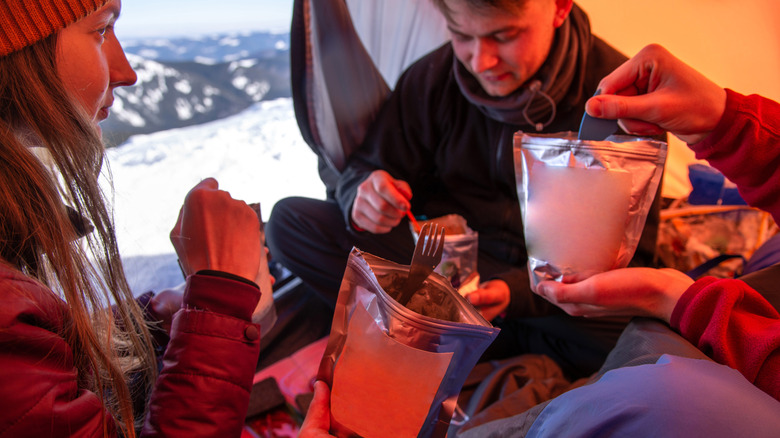
In addition to not burning your hands, you want to avoid burning your tent. Make sure you're only taking hot rocks into the tent, not embers flammable materials like twigs and leaves. Some people prefer using one or two larger (think 8 to 10 pounds) rocks in a blanket, while others use smaller cobbles, inside socks, that can be placed around the tent or in the bag. If you want to be extra safe, pick rocks specifically for heating and act as if you're cooking them. If you have a pan or cooking grate you can set the rocks on them over the fire. This allows the rocks to heat up without the risk of embers or twigs clinging to them.
Another potential concern comes from the type of rock you're using. Rocks that have water trapped in them can sometimes explode when used in fire pits, as the water turns to steam and the pressure has nowhere to escape from. Avoid using river rocks in your fire pits or as hot rocks, and try to stick to using granite or another non-porous rock type over sometimes porous lava rock. That's one common campfire mistake to avoid. If you can't identify the rocks around you, be sure they're at least dry and heat them slowly to "cure" them. Sharp, jagged rocks are also best avoided, as they can tear tents and sleeping bags. Place hot rocks in your tent about 30 minutes before going to bed to ensure everything is nice and toasty when you're ready to call it a night.