

Repurpose Leftover Chopsticks To Help Prevent Delicate Seedlings From Toppling Over
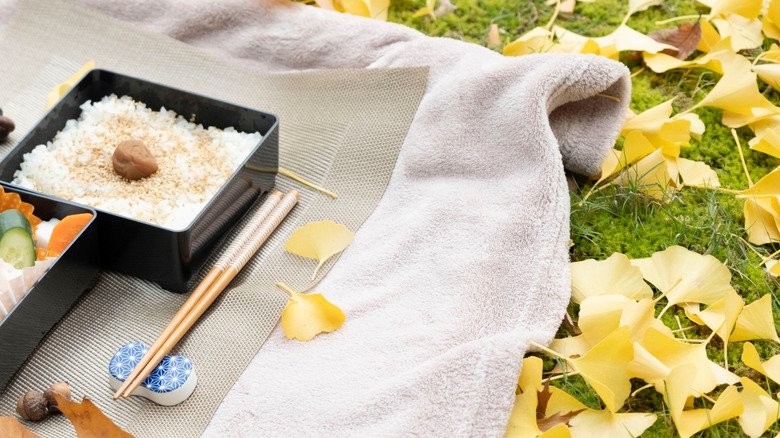
If you enjoy Chinese takeout and, for whatever reason, save all the chopsticks instead of eating your meals with them, there's a fair chance those chopsticks are taking up a lot of space in a kitchen drawer. It's now their time to shine, as those chopsticks come in quite handy for projects around the garden. They might even protect your seedlings from pests, too. One way in which they're immensely and immediately useful is as plant stakes for seedlings. Whether you're growing vining plants such as beans or peas, or just have some scrawny seedlings that need support to stay upright, it's chopsticks to the rescue.
Even a tiny tree seedling benefits from a stake to help it grow upright and strong. If you don't have any clean, unused chopsticks to repurpose as stakes for small plants, bamboo skewers, or even thin dowel rods may be used instead.
Chopsticks and skewers are particularly handy for this project since their narrow ends are easy to push in to the soil. They're also compact enough to use in potted plants and container-garden plants that are still at the seedling stage. If you've just purchased some cherry tomato seedlings, chopsticks are wonderful stakes to use while they're small; the same holds true with other fuss-free plants that are great for beginning gardeners.
Using chopsticks as plant stakes
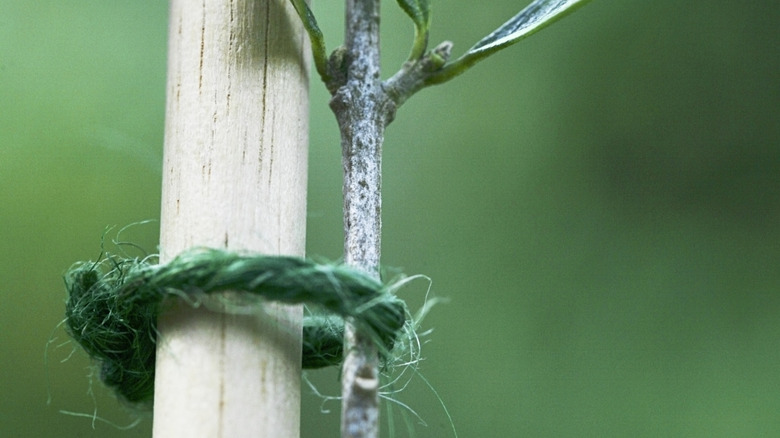
Chopsticks work best as plant stakes when the seedlings are smaller, or at least not much bigger, than the sticks. Some plants might grow significantly larger than the chopsticks after a while, at which point they can be upgraded to larger stakes. To stake a seedling, insert the pointy end of a chopstick into the soil an inch or a little farther from the plant. Push the chopstick down into the soil a couple inches, or far enough that it stays put and won't topple under the weight of a growing plant.
Secure the main stem with a loose loop of twine, or even a zip tie or a bread twist tie, again keeping it loose enough that it won't damage the tender plant. Zip ties help keep plants in check as they grow; a loose loop gives the plant room to grow, allowing the loop to slide upwards as needed. Check the plant from time to time to ensure no plant parts are hindered by the twine or tie. Soft, delicate plants are best held in place with soft ties, such as strips of fabric or yarn.
Untreated chopsticks that have no finish to them are also useful for checking the moisture level in the soilnear your seedlings and other plants. This method is best when the soil has a lot of peat moss, coir, compost, or other moisture-retaining substance in it, which is likely for potted tropical plants. Press a fresh chopstick down close to the roots of the plant. Wait a few seconds, then pull the chopstick out. If it looks wet and pulled up damp soil, the soil is moist. If the stick came out clean and dry, the plant likely needs water.