

DIY Your Own Drip Irrigation System By Repurposing Extra PVC Pipes
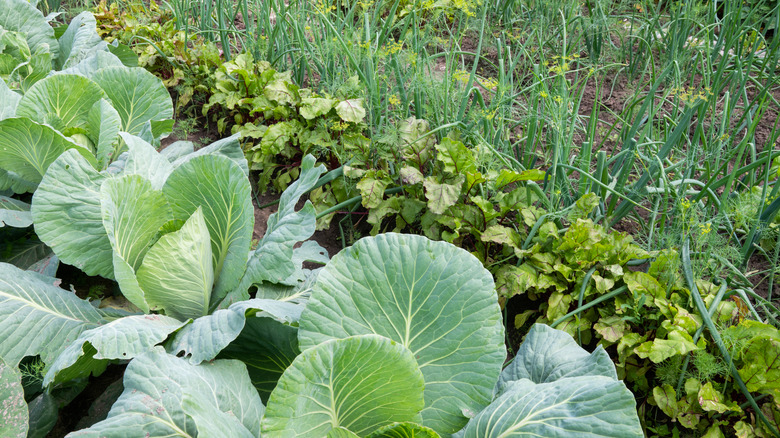
At first glance, a box of accumulated PVC pipes and fittings doesn't look like a set of gardening tools. However, if you have the time and a touch of DIY persistence, those pieces left over from previous projects can become a free or inexpensive drip irrigation system for your garden. The key to a healthy and productive garden isn't rocket science, it's water. Regular, slow, and deep watering is usually the secret to healthy plants. But hand-watering this way can be time-consuming or impossible if you're out of town during a dry spell. Plus, we like the kind of gardening that contributes to your health, not the stress-inducing kind with high-maintenance watering schedules.
Hiring a professional to install a whole irrigation system can cost thousands of dollars, and sometimes requires tearing up your existing yard and gardens. Drip irrigation is a great option because it can be installed easily on the surface, allows you to customize where water percolates, and can be set to a timer. Drip systems also prevent excess surface water buildup, reduce accidental broad watering of weeds, and water roots more directly. It's also environmentally friendly because drip irrigation isn't as prone evaporation, as spray or mist systems. Plus, wet leaves from sprinklers can invite diseases and powdery mildew into your garden, which is one of the common issues with top-down watering, along with shallow watering, which drip systems help prevent.
Attach pipes with fittings and test
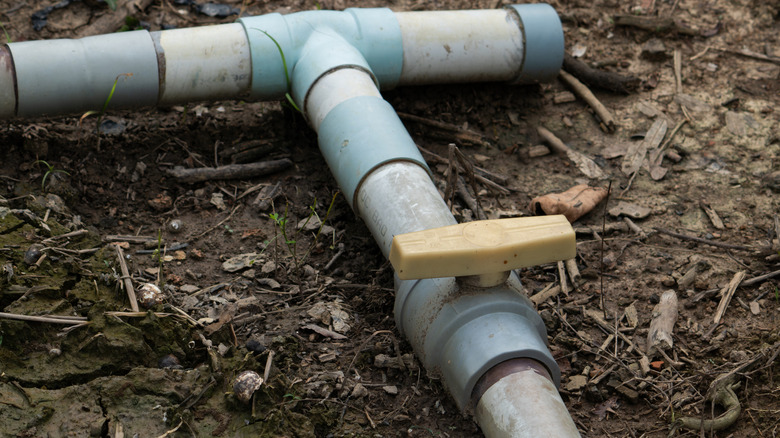
Approach all the PVC pieces like a child with a K'Nex set, where the end game is a beautiful grid of hydrated garden beds. First, collect and organize any unused fittings like couplers, tees, caps, and elbows. Then lay out straight lengths of ¾ inch PVC from the hose or water spigot to where you want the water released. Use the fittings and straight lengths of pipe to bring lines to the beds. Usually, it works to size down to a ½ inch pipe with an end cap or plug for the end of each lateral line inside the beds. Before you know it, you're on your way to dry-fitting a whole garden drip system.
Once you are satisfied with your design, use PVC glue to secure the connections and glue the fittings upstream of any on/off ball valves you installed, as those will contain high-pressure water. The lines in the beds will carry low-pressure water because the pipes will have small holes to release water slowly, so don't need to be glued (making cleaning / clearing easier as needed). Speaking of holes, with a 1/16th drill bit, place holes roughly six inches apart on your garden pipes (2-3 inches for plants that need more deep watering or grow intermittently on vines).
Test your system and make any adjustments before committing with PVC glue. If you are a raised-bed gardener, there are a few additional tricks to getting your PVC drip system just right. Otherwise, you don't need to be a plumber to repurpose extra PVC pipes into a drip irrigation system. You just need a drill, some PVC cement, and a water line or hose. Though it doesn't hurt to watch a few tips and tricks videos online.