

Keep Ants And Mosquitoes Out Of Your Garden With The Help Of This Kitchen Essential
We may receive a commission on purchases made from links.
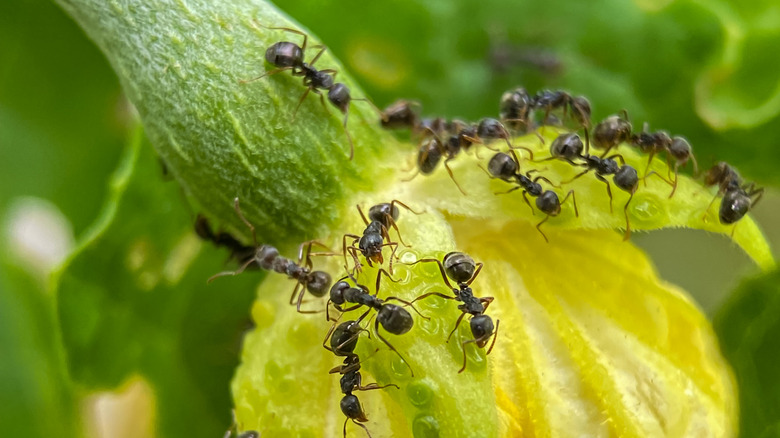
Ants and mosquitoes are among the more common pests gardeners routinely face. While there is no shortage of insecticides on the market, many gardeners hope to resolve their pest problem without harmful chemicals. For those looking for alternatives to chemical pesticides, you likely have everything you need to get rid of ants in your kitchen. Ditto for mosquitoes. For example, you can use black pepper to banish ants from your garden or cloves to repel mosquitoes. There are a number of other kitchen staples that can be used as natural insect repellents. Among the more effective is ginger, which actually keeps both ants and mosquitoes out of your garden.
Ginger has long been a popular spice and important trade commodity. While it was originally grown in Southeast Asia, it is now cultivated in warm, humid regions throughout the world. Through the centuries, people have utilized ginger not only as a spice, but for an array of health-related treatments, most notably as an anti-inflammatory. But its use as an insect repellent dates back at least 100 years and its effectiveness has been verified in a number of modern scientific studies.
The reason ginger is effective against insects is because of a trio of bioactive compounds it contains: gingerol, shogaol, and zingiberene. These compounds can inflict a number of harmful, even deadly, impacts on insects, including disrupting or damaging nervous, reproductive, and digestive systems, as well as causing respiratory issues and slowing growth in young insects. Not only does it work against ants and mosquitoes, it can also repel aphids. As a result, ginger can be quite effective as both a repellent and insecticide when used properly.
Using ginger to combat ants and mosquitoes
While some tout growing ginger in your garden as a way to prevent mosquitoes and ants, the live plants themselves tend to have limited use in this regard, as the compounds that act as insecticides are inside the ginger root and must be extracted to be effective (different extraction methods result in different efficacies). One simple method involves using ground ginger, which can sprinkled around the base of plants, the perimeter of your garden, and near any areas where there is evidence of ant activity. An additional bonus to this method is placing ground ginger around the base of plants can also help their growth, by adding nutrients to the soil and helping prevent fungal growth at the stem.
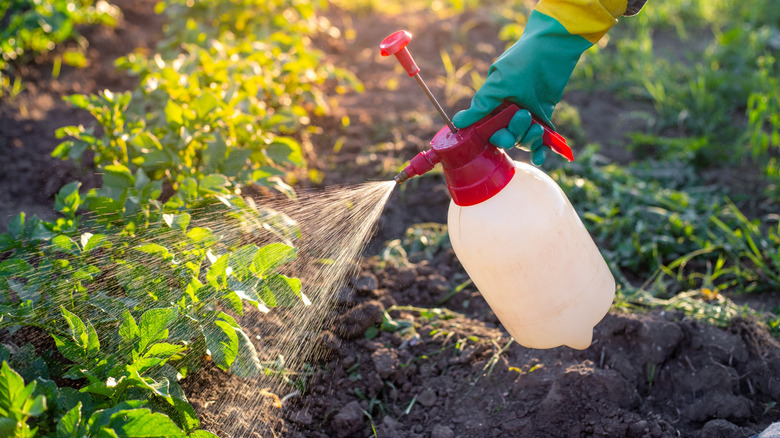
Another way to apply ginger involves using a liquid spray containing the compounds found in ginger. There are several ways you can make a ginger spray. One easy way is to use ginger powder mixed with water. It doesn't take much: Just a few sprinkles of ginger to a couple cups of water. You can also use ginger essential oil, like the Handcraft Blends ginger essential oil. The oil can be used full strength or diluted with water. You can also steep or boil pieces of ginger root (or steep in warm or hot water for about an hour). Strain out the solid chunks, in order to get a usable liquid.
Once you have your liquid ginger concoction, place it in a mister bottle or handheld spray. Liberally spray your plants' leaves and stems, and the perimeter of your garden. Keep in mind, you will need to apply this spray often for it to maintain its effectiveness (especially after rains), so it's a good idea to keep the sprayer bottle handy.